Global EV professionals call for collaboration, not protectionism
More China-EU cooperation taking place despite uncertainty over tariffs
By in Haikou Published: Sep 27, 2025 09:05 PM

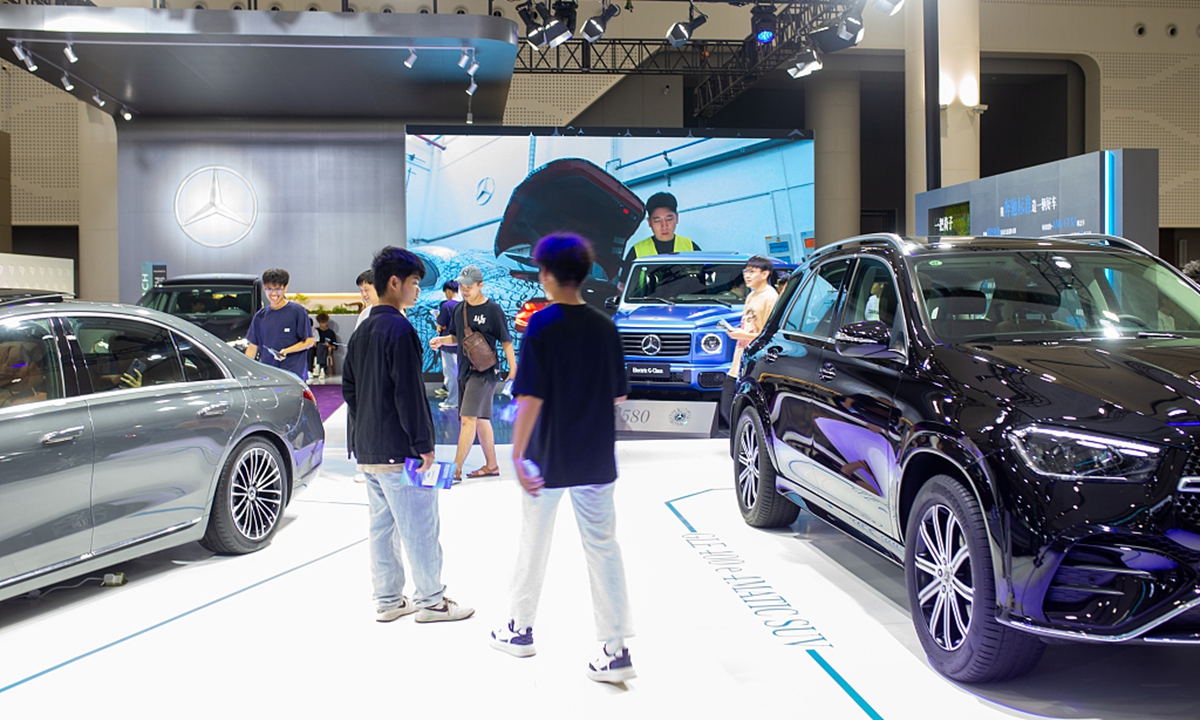
People visit cars on display at the 7th World New Energy Vehicle Congress (WNEVC) at the Hainan International Convention and Exhibition Center in Haikou, South China's Hainan Province, on September 27, 2025. Photo: VCG
Chinese and European electric vehicle (EV) makers and experts have called for global cooperation and expressed opposition to trade protectionism at the ongoing 2025 World New Energy Vehicle Congress (WNEVC).
Chinese and European automakers are currently engaging in a deeper level of cooperation in both markets through investment and research and development (R&D), despite the imposition of tariffs on Chinese new- energy vehicle (NEV) imports by the European Commission.
Wan Gang, president of the China Association for Science and Technology and president of the WNEVC, said in a speech that the automotive industry has always been globally open and competitive and that competition is the norm in the automotive world.
"The goal of competition is to meet market demand and, more importantly, to achieve a green and sustainable future. This is our shared goal. Competition leads to a better foundation for cooperation, while cooperation enriches the content of competition," Wan said. "In this process of competition, we achieve our shared aspirations."
Despite the tariffs creating uncertainties for bilateral trade and investment, a rising level of cooperation has not gone unnoticed by participants at the WNEVC, with many highlighting the complementarity of the Chinese and European automotive industries. Participants also noted the enthusiastic participation by Chinese companies at IAA Mobility 2025, which was held in Munich, Germany earlier this month.
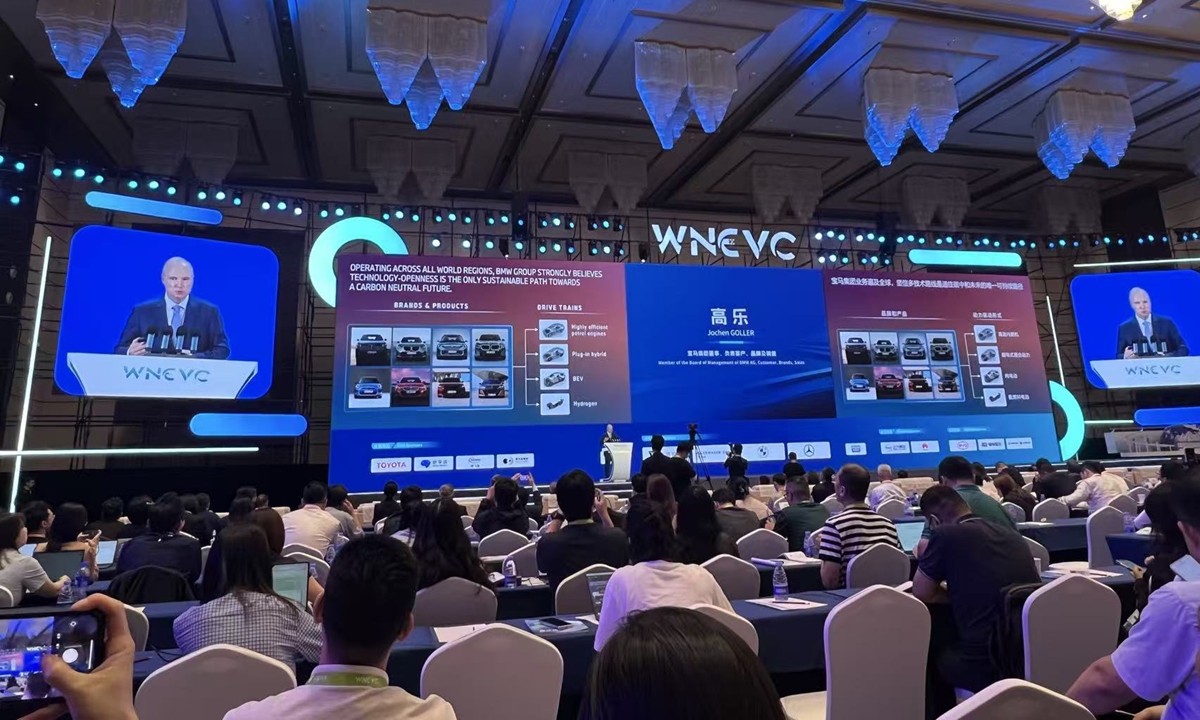
People attend a seminar during the 2025 World New Energy Vehicle Congress (WNEVC 2025) in Haikou, South China's Hainan Province, on September 27, 2025. Photo: Chu Daye/GT
Over 100 Chinese exhibitors from sectors including power batteries, autonomous driving, lidar and smart cockpits attended this year's IAA, offering broad representation of Chinese auto supply chains, according to media reports.
Hildegard Mueller, president of the German Association of the Automotive Industry (VDA), told reporters that the VDA supports open markets and believes Germany and the EU should not support protectionism.
Over two-thirds of German automakers plan to continue investing in China, with a focus on R&D, production and marketing, she said, noting the continued commitment of German automakers to the vital Chinese market.
The VDA also welcomes Chinese automakers to enter the German and European markets, Mueller noted. "It is important that there should be no mandatory production base requirements, but rather that foreign companies voluntarily choose to operate in Europe because of its attractive competitive conditions," she said.
Chris Mason, CEO of FISITA, an international network for automotive engineers, emphasized the significance of the growing China-EU collaboration despite tariff uncertainty and expressed optimism that the auto sector can surmount the challenges.
Mason told the Global Times on Saturday that events like the WNEVC bring engineers together to share knowledge and learn from each other in the pre-competitive environment, in which collaborating companies work together on fundamental technologies.
"Tariffs have been a factor in international trade for a long time, as have times of challenge and hardship," Mason said. However, "engineers always find their way to operate successfully... As a matter of fact, we've seen the growth of that collaboration over the past decade."
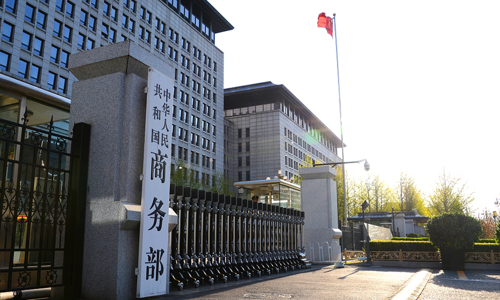
When asked to comment on the EU's vigorous development of its electric vehicle industry while still imposing anti-subsidy duties on Chinese NEVs, China's Ministry of Commerce (MOFCOM) on September 18 urged the EU to refrain from weaponizing tariffs. It also said the EU should eliminate market barriers, encourage fair competition, follow the general trend of industrial cooperation, and jointly create a fair, non-discriminatory and stable market environment for industrial development.
EU consumers demand a wide range of products with advanced performance and affordable prices, said MOFCOM spokesperson He Yadong. Chinese EVs are driving the industry's electrification and intelligent transformation, and EU automakers are fully capable of adapting to market competition and participating in this industry transformation, He said.
Following a summit meeting in July, leaders of China and the EU issued a joint statement on climate change, recognizing that strengthening China-EU cooperation on climate change is important for the well-being of people on both sides. It is also vital for upholding multilateralism and advancing global climate governance, the statement said.
The two sides pledged to accelerate global renewable energy deployment and facilitate access to quality green technologies and products, so that they can be available, affordable and beneficial for all countries, including developing countries, per the statement.
With a theme of "Industrial Transformation and Sustainable Development," the 2025 WNEVC runs from September 27 to 29 in Haikou, capital of South China's Hainan Province.
RELATED ARTICLES