China Barometer logo
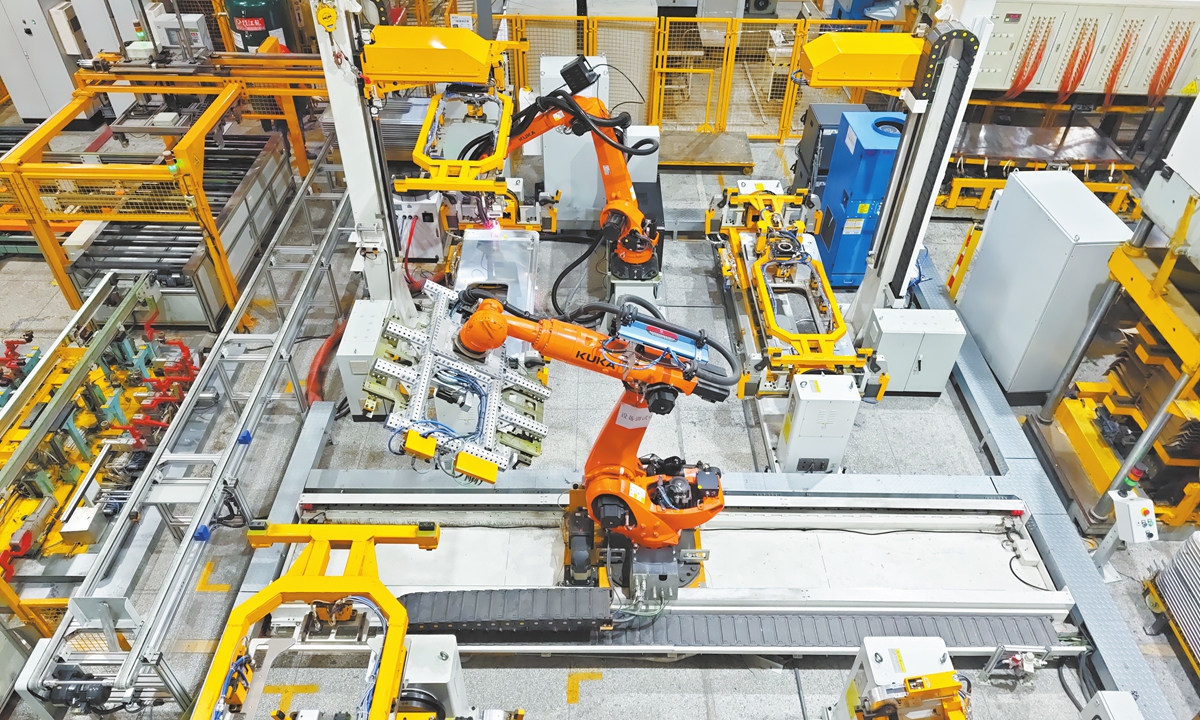
Robotic arms operate in a factory in Nanjing, East China's Jiangsu Province, on September 20, 2025. Photo: VCG
In recent months, despite persistent external uncertainties and risks, China's macroeconomic performance has remained largely stable and moved steadily in a positive direction. The August economic data reaffirmed this trend, with the core indicators giving very encouraging improvement.
In a breakdown, five positive changes stand out in the economy. First, industrial output has maintained solid expansion, with structural upgrading becoming more evident. Value-added industrial output of companies above the designated size grew by 5.2 percent year-on-year. Among the enterprises, high-tech manufacturing rose by 9.3 percent, and equipment manufacturing increased by 8.1 percent, both significantly outpacing the overall industrial growth rate.
In particular, production of new-energy vehicles, industrial robots, and 3D printers has posted double-digit growths. The figures highlight the strong resilience of China's industrial supply chains.
Second, the services sector has kept on recovering with regained momentum, led by modern services. In August, the service sector production expanded by 5.6 percent year-on-year. Information transmission, software and digital services, financial services, as well as transport and logistics all reported strong gains, collectively boosting the tertiary sector.
Third, the consumer market is marked with steady growth, led by a surge in services consumption.
Retail sales rose by 3.4 percent year-on-year in August. Although it was slightly slower than in earlier months, the overall trend has remained steady. From January to August, services-related sales climbed by 5.1 percent year-on-year. Categories such as cultural and leisure services, travel consulting, and transportation services grew at an even quicker pace.
Fourth, exports have demonstrated stronger-than-expected resilience, with the country's trade structure continuing to improve.
In August, exports in yuan terms expanded by 4.8 percent year-on-year. This higher-than-expected performance underscores the robust competitiveness of China's export industries. Trade with Belt and Road Initiative partner countries rose by 5.4 percent, while private enterprises' imports and exports rose 7.4 percent, accounting for 57.1 percent of the national total - 2.1 percentage points higher than a year earlier.
Exports of mechanical and electrical products surged 9.2 percent, making up 60.2 percent of total exports. These results highlight the ongoing optimization of China's trade structure.
Fifth, the core consumer price index (CPI) has been improving lately, with market prices largely stable, which leave ample room for macroeconomic policy adjustments. In August, the core CPI (excluding food and energy) rose by 0.9 percent year-on-year. This moderate price trend not only safeguards Chinese people's living standards but also creates favorable conditions for the continued implementation of the proactive fiscal policy and prudent monetary policy.

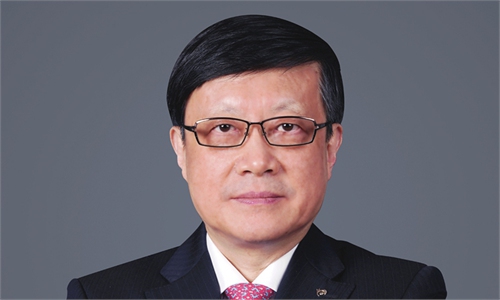
Lian Ping Photo: Courtesy of Lian Ping
At the same time, some challenges remain. For instance, the fixed-asset investment growth, especially real estate sector investment, has slowed noticeably.
Since the beginning of 2025, the external environment has been increasingly complex and severe. Global growth momentum has weakened, and trade barriers have risen sharply. Against this backdrop, China's economy has demonstrated remarkable resilience. Overall, it has shown a pattern of steady progress: exports outperformed expectations, consumption growth accelerated, and manufacturing sector investment maintained steady growth.
To consolidate the foundation of China's economic growth, its macroeconomic policy should become "more targeted and forceful," ensuring that key measures are implemented more swiftly.
On the monetary policy front, there is still room for further interest rate cuts. Although the US Federal Reserve cut its benchmark interest rates recently, China's monetary policy will follow its own pace. This would help bring down businesses' financing costs and support the real economy.
On the fiscal policy side, accelerating the rollout of pro-growth measures is essential. The authorities could even consider fast-tracking some of the measures originally planned for implementation next year to this year. This would allow fiscal resources to be more effectively matched with the market demand for due investment, helping drive growth in fixed-asset investment.
If related policies are implemented promptly and the planned projects are launched more quickly in the upcoming months, a notable rebound in overall investment will set in. With China's GDP growth reaching 5.3 percent in the first half of the year, even if the growth moderates to some extent in the third and fourth quarters, the full-year growth target remains well within reach.
The author is director and chief economist of the Guangkai Chief Industry Research Institute. bizopinion@globaltimes.com.cn
RELATED ARTICLES