China waives tolls for National Day and Mid-Autumn Festival holidays; Shanghai warns of 35-hour gridlock
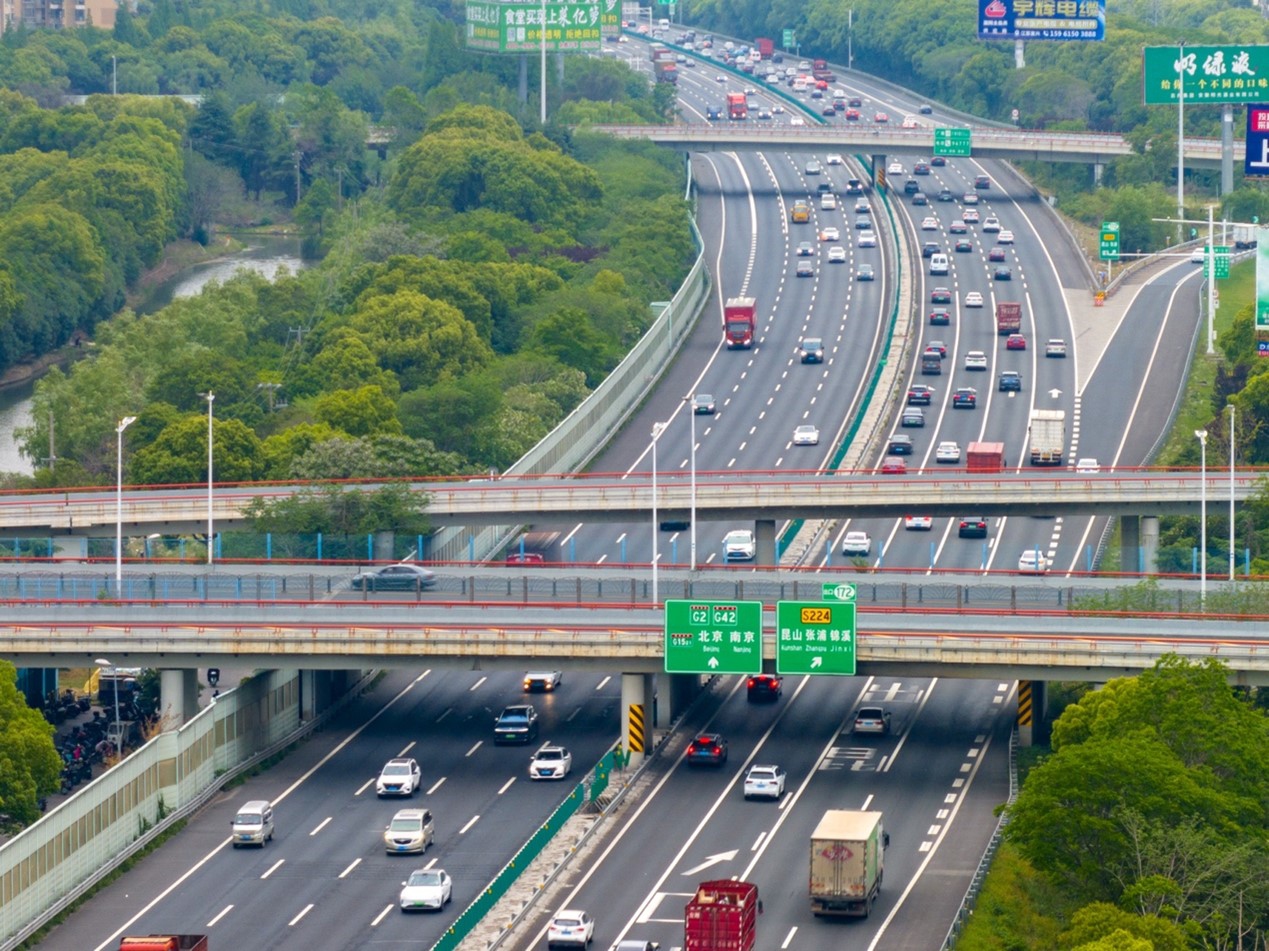
An expressway in Kunshan, East China's Jiangsu Province Photo: VCG
A nationwide toll waiver for small passenger vehicles will be in effect during the upcoming eight-day National Day and Mid-Autumn Festival holidays, starting from Wednesday. Several cities have already released peak congestion forecasts. In Shanghai, local authorities warned that outbound expressways could face jams lasting up to 35 hours.
According to China's Ministry of Transport, during the oncoming holiday period, small passenger vehicles with seven seats or fewer will enjoy toll-free passage on national toll roads, The Paper reported on Sunday.
According to regulations, the toll-free period begins at 12 am on October 1, the first day of the holiday, and ends at 12 pm on October 8, the final day of the holiday. Vehicles exiting toll roads within this window will be exempted from toll charges.
For vehicles still traveling on expressways near the end of the toll-free period, drivers may choose to exit at the nearest toll station based on their actual location and time.
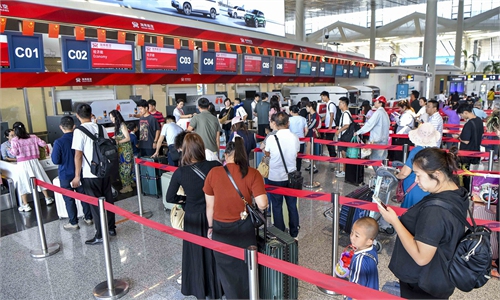
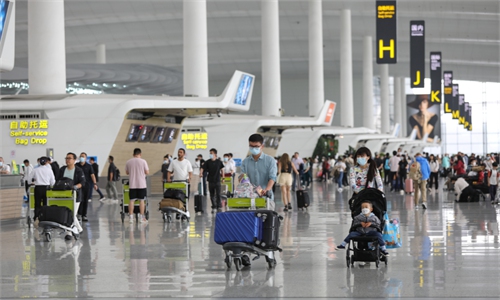
To facilitate travel planning, many regions across China have proactively released projected passenger flow data in advance.
Beijing estimates that the average daily passenger flow into and out of the city will reach approximately 4.29 million trips in 2025, representing a year-on-year increase of 4.5 percent, the Beijing Municipal Government said on Saturday.
The peak passenger flow day will fall on October 1, with the volume hitting 4.79 million person-times — expected to set a new all-time high for single-day passenger flow during National Day holidays, according to the government.
Travel guidance released by Shanghai traffic command center indicates congestion-prone periods for outbound expressways, with some sections predicted to experience delays starting as early as 9 am on September 30. In some sections, the longest congestion duration could extend up to 35 hours, until 11 pm on October 1, The Paper reported.
For expressways, the average daily traffic volume during the upcoming holidays is forecast to reach 1.61 to 1.66 million vehicle trips, with year-on-year growth within three percent, according to the report.
Chengdu, Southwest China's Sichuan Province, expects peak travel on September 30, the day before the holidays, between 3:30 pm and 8 pm. On October 6, the day of the Mid-Autumn Festival, a smaller peak is expected as the convergence of tourist traffic and some early return traffic, Sichuan Daily reported.
Cities located at provincial borders, known for their geographical convergence and cultural diversity, have emerged as popular travel destinations this year, the state broadcaster CCTV News reported. Data from online travel platforms shows a 58 percent year-on-year increase in holiday bookings for interprovincial border cities.
Among them, Zhaotong — at the junction of Southwest China's Yunnan, Guizhou, and Sichuan Provinces — saw a 95 percent surge in bookings. Ganzhou, East China's Jiangxi Province, attracting visitors with its unique Hakka culture and revolutionary history, recorded a 70 percent year-on-year growth in orders, becoming a key cross-provincial cultural tourism destination.
"The upcoming eight-day National Day and the Mid-Autumn Festival holidays are the last long break of 2025 and represent the best extended travel window before the winter tourism season," said Dai Bin, director of the China Tourism Academy, CCTV News reported.
Dai added that based on comprehensive data analysis, this year's National Day and Mid-Autumn Festival holidays are expected to set a new historical record in both tourist numbers and travel spending, reaching an unprecedented peak.
Global Times
RELATED ARTICLES