China's submarine oil, gas pipelines reach 10,000 kilometers in total length: media report
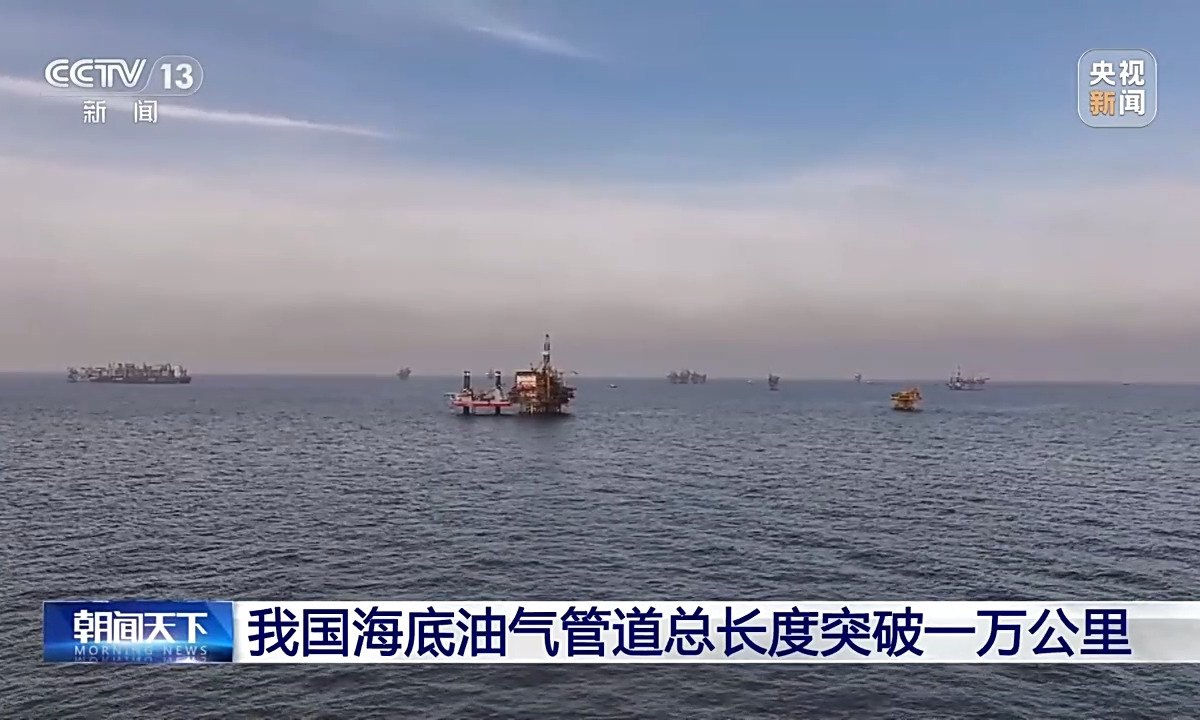
China's total length of submarine oil and gas pipelines exceeded 10,000 kilometers in total length. Photo: Screenshot from China Media Group
As the Binhai 109 pipe-laying vessel laid the final pipe in the southern waters of the Bohai Sea on Sunday, China's total length of submarine oil and gas pipelines exceeded 10,000 kilometers, ranking among the top in the world, China Media Group (CMG) reported.
So far this year, China has achieved multiple breakthroughs in submarine pipeline construction. Two submarine pipelines supporting the Dongfang 13-3 development project in the Yinggehai sea, off the coast of Hainan Island, were put into operation, achieving interconnection of submarine pipelines around the island, according to the CMG report.
The Bohai Bay, China's largest crude oil production base, has established the densest submarine pipeline network in the country, with submarine oil and gas pipelines totaling more than 3,200 kilometers, said the report.
With the commissioning of the newly laid pipelines in the southern waters of the Bohai Sea, the density of the Bohai pipeline network has reached more than 4 kilometers of pipeline per 100 square kilometers in the sea area, Song Yanlei, deputy manager of the pipeline center at CNOOC's offshore oil engineering installation company, said in an interview with CMG.
China has installed nearly 200 kilometers of new submarine oil and gas pipelines this year, Song said.
According to plans, the total length of the country's submarine pipelines is expected to exceed 13,000 kilometers by 2030. In the context of the new-energy transition, these pipelines also have the potential to transport clean energy such as hydrogen and shale gas, providing flexible support for optimizing the country's energy structure, said the CMG report.
Global Times
RELATED ARTICLES