Illustration: Tang Tengfei/GT
As autumn advances across northern China, it's harvest time for fall-winter vegetables. CCTV News reported on Sunday that Dianbu township - widely known as "carrot town" in East China's Shandong Province - posts annual sales of more than 500,000 tons of carrots, generating output worth more than 1 billion yuan ($140.2 million). Notably, about 60 percent of the harvest is exported. For local farmers, this ordinary root vegetable has become a valuable cash crop and steady driver of income.Behind these figures is the upgrading of China's agricultural value chain. In recent decades, the country has promoted the cultivation of green and specialty produce, encouraged improvements in agricultural processing and supported the growth of specialized farming clusters. This has given rise to a more structured and industrialized system - one that not only serves domestic demand but is also becoming increasingly competitive in global markets.
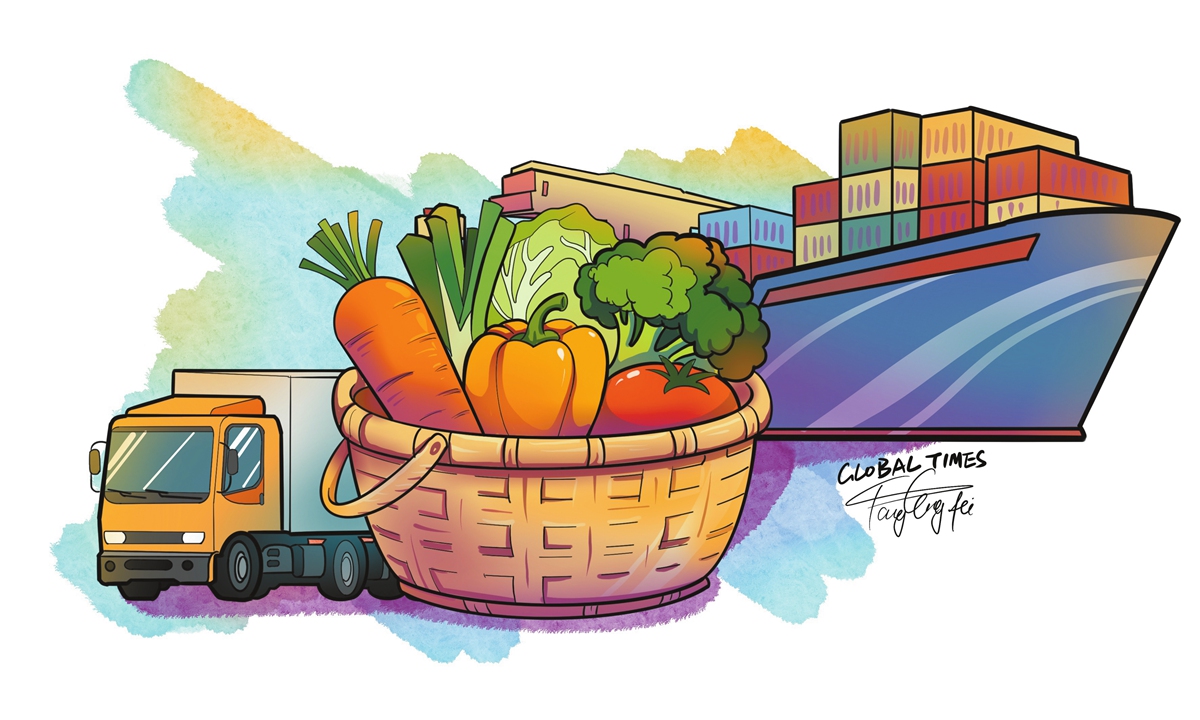
The development of Dianbu is a microcosm of this trend. Carrots now span a complete value chain from seed development and cultivation to processing and sales. CCTV News reported that to support exports, the town has built more than 300 cold storage facilities. Once cleaned and processed, the carrots are packed directly into containers for shipment abroad. With the support of an efficient logistics network, they can reach South Korea in three days, Japan within a week and Dubai in just over 20 days.
In the first eight months of this year, China's agricultural exports totaled $65.8 billion. Behind this number are countless local stories like that of Dianbu, each reflecting how agricultural production is being reshaped in the country. Taken together, they point to a rapid growth and transformation of China's agricultural value chains, which are advancing toward greater scale, efficiency and international reach.
What is happening in Dianbu is not unique. Across many towns in China, agriculture is driving related industries to take root. The rise of farming clusters has encouraged investment in logistics, cold storage and food processing, bringing elements of industrial development into rural areas. This gradual spread of supporting industries is reshaping local economies and giving small towns a more active role in value-added production and international trade alongside their traditional farming base.
In many towns, agriculture is providing the basis for new industrial activity. Facilities for sorting, packaging and processing have developed alongside farms, while services such as transportation, storage and equipment supply are expanding. As a result, local employment is no longer confined to cultivation alone, with opportunities emerging in logistics, quality control and food processing. This diversification is gradually supporting the development in areas once reliant mainly on traditional farming.
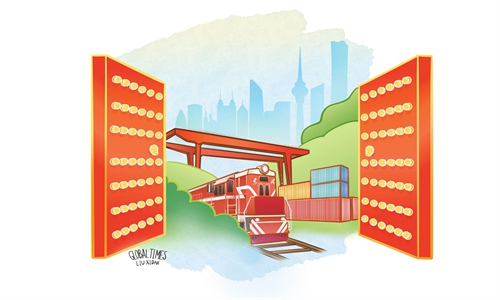
China's vast rural areas suggest that agriculture-led industrialization carries significant potential. As farming supports the growth of processing, logistics and related industries, the effects extend beyond local communities. They also strengthen the presence of Chinese agricultural products in both the domestic and international markets. In this way, agriculture is contributing to a "dual circulation" dynamic, where domestic demand and external trade reinforce each other.
The industrial modernization unfolding in villages and towns is reshaping local economies in several ways. It is generating strong demand for investment in agriculture-related industries while at the same time gradually raising the spending power of rural communities. In recent years, recognition of the consumer potential in lower-tier cities, counties and rural markets has been growing.
The development of China's villages and towns may also carry wider international implications. Beyond the export of farm products, it opens the door to broader forms of cooperation, including agricultural investment and imports. As rural industries expand, they further strengthen two-way exchanges between China and global markets.
From January to August, China's agricultural trade deficit reached $70.09 billion, highlighting the scale of its import demand. This makes the country an important market for agricultural producers worldwide. The modernization of farming and industry in China's villages and towns is therefore not only a domestic development but also one with international significance, offering opportunities for deeper agricultural cooperation.
The author is a reporter with the Global Times. bizopinion@globaltimes.com.cn
RELATED ARTICLES