Zhejiang showcases tech-driven transformation to Chinese, ASEAN media and scholars via digital services
From September 23 to 29, the "AI-empowered Service, Welfare Enhancement: A Close Look at China 2025" Zhejiang visit was held, bringing together think tank scholars and media professionals from ASEAN countries including Malaysia, Indonesia, Laos, Vietnam and Myanmar, alongside their Chinese counterparts.
With the theme of "digital and intelligent services for improving people's livelihoods," the tour offered delegates an immersive look at Zhejiang's innovative practices in integrating the digital economy with social governance.
At Scantech (Hangzhou) Co, delegates were introduced to one of the world's most advanced 3D scanning technologies. The company's palm-size scanners can reproduce nearly 100 percent of an object's details within one minute, a capability already applied to industrial projects and cultural heritage preservation in China and abroad. As the scanner generated a strikingly realistic 3D model of her, Po Po Heather, a host from Myanmar International Radio, expressed her amazement: "It's incredible. We need technology like this to tackle different problems."
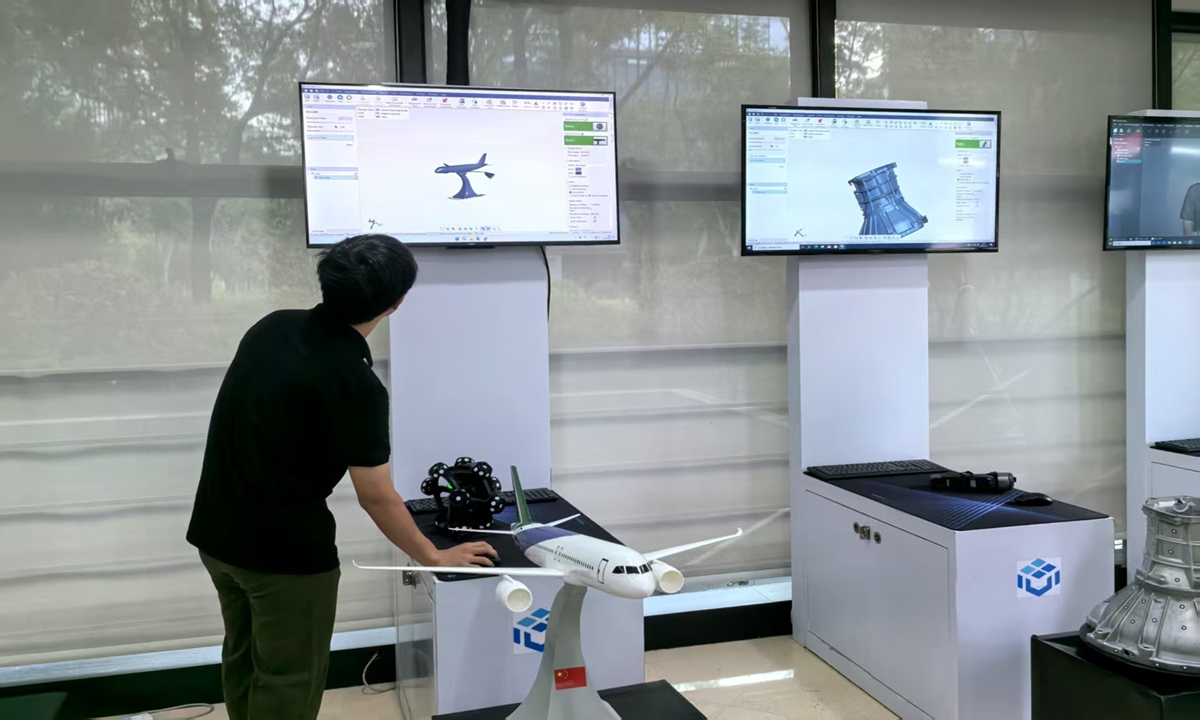
According to Scantech engineer Xu Zixiang, the laser scanners can work in confined spaces or on massive structures, detecting tiny cracks invisible to the human eye. The company's products have been used in national projects such as the China Space Station and the C919 passenger jet, as well as in digitizing relics at Sanxingdui and Yungang Grottoes. Xu added that Scantech is also contributing to a joint China-Egypt project, using 3D scanning to preserve artifacts at the Saqqara Bastet Temple, including human-shaped coffins and steles.
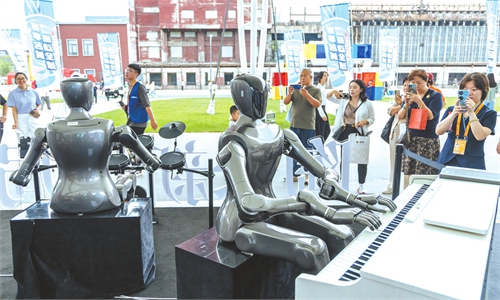
The delegation also toured Hangzhou Shenhao Technology Co, where an array of inspection robots — from wheeled to suspended track models — demonstrated the breadth of China's robotics innovation. Pointing to a wheeled robot, software director Sun Changhao explained that it once took part in training for the 2019 National Day military parade. By employing machine vision and body detection algorithms, the robot could monitor PLA soldiers' posture and alignment, helping instructors improve efficiency.
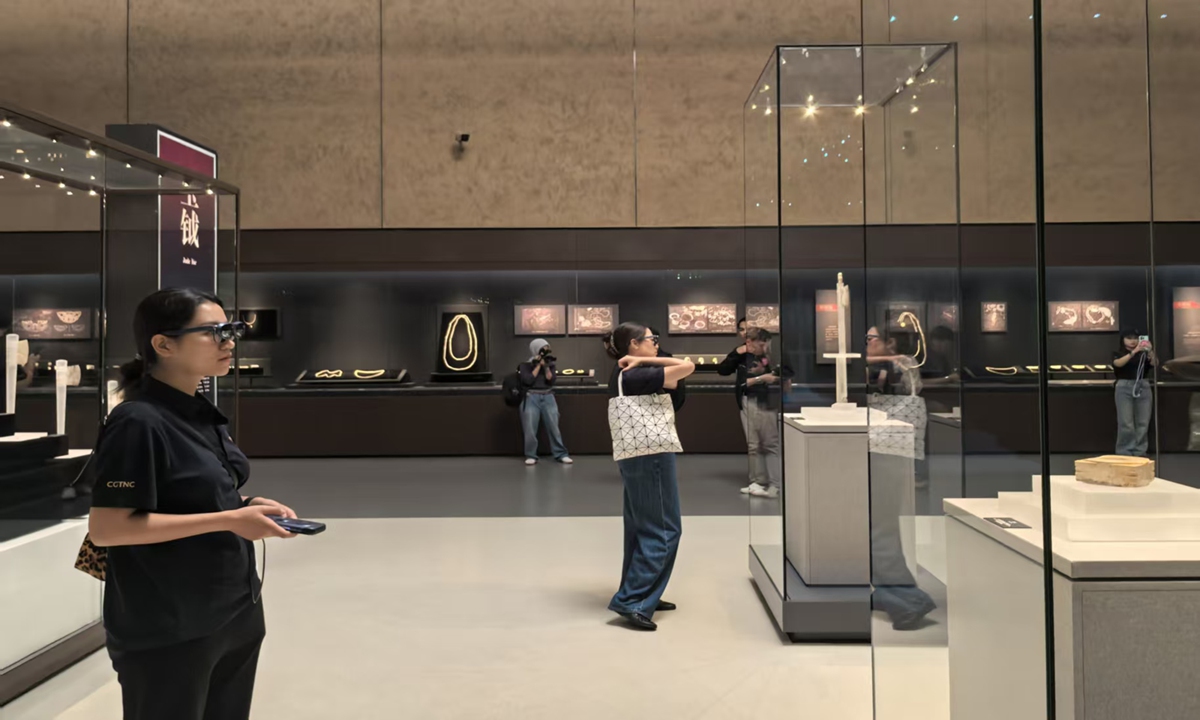
At the Liangzhu Museum and Archaeological Ruins, technology merged with heritage as delegates donned AI-powered AR glasses. Ancient relics seemed to move and interact, offering spectators an immersive journey into Liangzhu's prehistoric world. Roy Anthony Rogers, director of Department of Strategic and International Studies, Universiti Malaya, was impressed, saying, "AR glasses powered by AI bring real-life scenes into the museum and make history far more accessible."
In addition to cultural displays, the Liangzhu site has also adopted big data and smart technologies for heritage protection. According to the site's administrative committee, the "Liangzhu Heritage 5000+" digital platform covers the entire lifecycle of preservation, with applications for spatial governance, security monitoring, value research sharing, and "cultural relics +" smart services, fostering collaborative and intelligent protection. The system is connected to over 1,000 cameras, drone stations, fiber-optic sensors and environmental monitors, while satellite imaging, drone patrols, and ground sensors provide regular surveillance. With these tools, response times to potential risks have been cut from three days to just 30 minutes.
From Scantech's precision 3D scanners to Shinhao's adaptive robots, from immersive AR experiences at Liangzhu to Xiaoshan's integrated governance systems, the delegation witnessed how Zhejiang is putting technology at the heart of development. The tour underscored how digital and intelligent services are not only improving efficiency but also safeguarding heritage, enhancing healthcare and expanding trade opportunities. For ASEAN participants, the visit provided more than a glimpse of local innovation — it offered a window into China's modernization path, where technological progress and human well-being advance hand in hand.
Experts noted that these exchanges also point to vast potential for China and ASEAN to deepen cooperation in digital technologies and smart services, creating new opportunities for shared development across the region.
With the theme of "digital and intelligent services for improving people's livelihoods," the tour offered delegates an immersive look at Zhejiang's innovative practices in integrating the digital economy with social governance.
At Scantech (Hangzhou) Co, delegates were introduced to one of the world's most advanced 3D scanning technologies. The company's palm-size scanners can reproduce nearly 100 percent of an object's details within one minute, a capability already applied to industrial projects and cultural heritage preservation in China and abroad. As the scanner generated a strikingly realistic 3D model of her, Po Po Heather, a host from Myanmar International Radio, expressed her amazement: "It's incredible. We need technology like this to tackle different problems."
A technician from Scantech (Hangzhou) Co demonstrate 3D scanning technology on site during the Zhejiang visit on September 23, 2025. Photo: Zhang Yiyi/GT
According to Scantech engineer Xu Zixiang, the laser scanners can work in confined spaces or on massive structures, detecting tiny cracks invisible to the human eye. The company's products have been used in national projects such as the China Space Station and the C919 passenger jet, as well as in digitizing relics at Sanxingdui and Yungang Grottoes. Xu added that Scantech is also contributing to a joint China-Egypt project, using 3D scanning to preserve artifacts at the Saqqara Bastet Temple, including human-shaped coffins and steles.
The delegation also toured Hangzhou Shenhao Technology Co, where an array of inspection robots — from wheeled to suspended track models — demonstrated the breadth of China's robotics innovation. Pointing to a wheeled robot, software director Sun Changhao explained that it once took part in training for the 2019 National Day military parade. By employing machine vision and body detection algorithms, the robot could monitor PLA soldiers' posture and alignment, helping instructors improve efficiency.
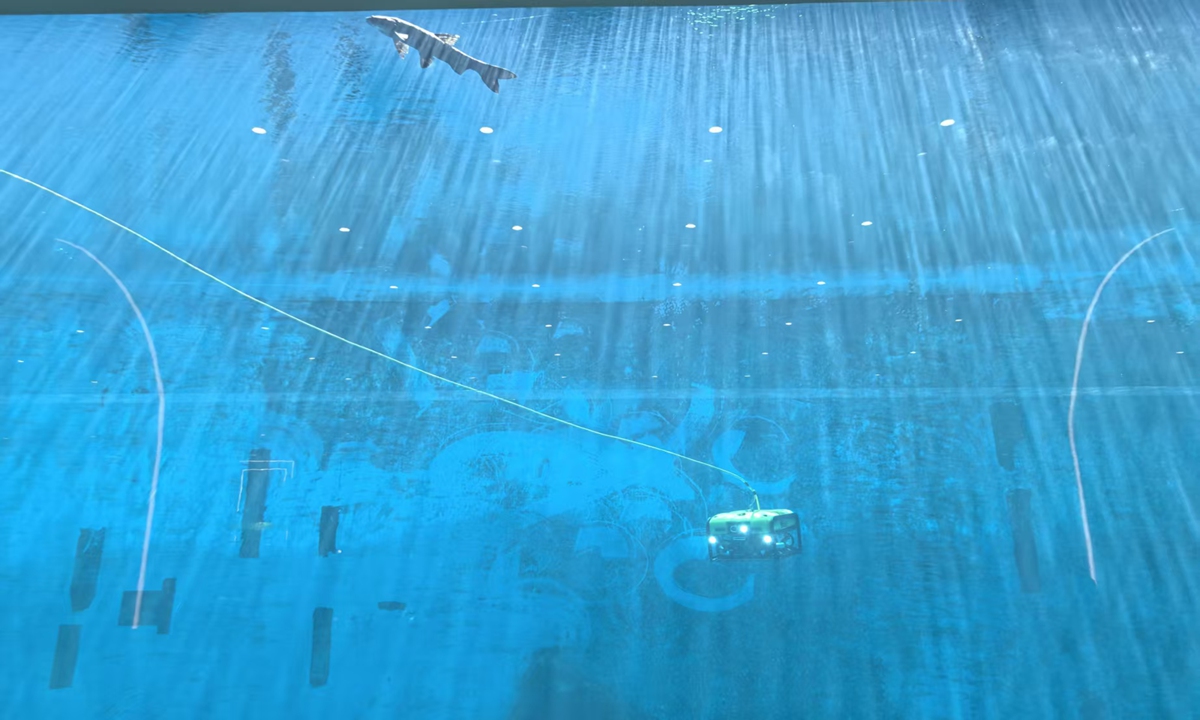
An underwater inspection and maintenance robot developed by Shenhao Technology operates in a 10-meter-deep tank in Hangzhou, East China's Zhejiang Province on September 25, 2025. Photo: Zhang Yiyi/GT
Shenhao entered the robotics sector in 2013, taking advantage of Zhejiang's vibrant innovation ecosystem to focus on software and functional customization rather than basic hardware. Its robots have already been exported to Vietnam and Singapore, with plans to expand into Central Asia, Europe and the Americas. "We are ready to accelerate our global outreach," Sun said.At the Liangzhu Museum and Archaeological Ruins, technology merged with heritage as delegates donned AI-powered AR glasses. Ancient relics seemed to move and interact, offering spectators an immersive journey into Liangzhu's prehistoric world. Roy Anthony Rogers, director of Department of Strategic and International Studies, Universiti Malaya, was impressed, saying, "AR glasses powered by AI bring real-life scenes into the museum and make history far more accessible."
In addition to cultural displays, the Liangzhu site has also adopted big data and smart technologies for heritage protection. According to the site's administrative committee, the "Liangzhu Heritage 5000+" digital platform covers the entire lifecycle of preservation, with applications for spatial governance, security monitoring, value research sharing, and "cultural relics +" smart services, fostering collaborative and intelligent protection. The system is connected to over 1,000 cameras, drone stations, fiber-optic sensors and environmental monitors, while satellite imaging, drone patrols, and ground sensors provide regular surveillance. With these tools, response times to potential risks have been cut from three days to just 30 minutes.
Chinese and ASEAN media and scholars experience AR glasses to view cultural relics at the Liangzhu Museum in Hangzhou, East China's Zhejiang Province on September 23, 2025. Photo: Zhang Yiyi/GT
The visit also highlighted Zhejiang's achievements in digital governance. At the Xiaoshan District Government Service Center, self-service kiosks and online platforms offered citizens a wide range of procedures at their fingertips. Olivia Ferari Nurul Fazri, an Indonesian journalist from News Reporter of Rajawali TV (RTV) commented, "We don't have such an integrated platform back home," noting how Zhejiang's model reduces paperwork and improves convenience.From Scantech's precision 3D scanners to Shinhao's adaptive robots, from immersive AR experiences at Liangzhu to Xiaoshan's integrated governance systems, the delegation witnessed how Zhejiang is putting technology at the heart of development. The tour underscored how digital and intelligent services are not only improving efficiency but also safeguarding heritage, enhancing healthcare and expanding trade opportunities. For ASEAN participants, the visit provided more than a glimpse of local innovation — it offered a window into China's modernization path, where technological progress and human well-being advance hand in hand.
Experts noted that these exchanges also point to vast potential for China and ASEAN to deepen cooperation in digital technologies and smart services, creating new opportunities for shared development across the region.
RELATED ARTICLES