Exclusive: Australian industry keen to trade rapeseed to China, says Australian industry group chief
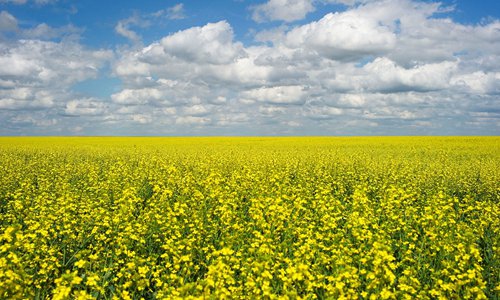
A canola crop used for making cooking oil sits in full bloom on the Canadian prairies near Fort Macleod, Alberta, Canada. File photo: VCG
There is a potential opportunity for trade for Australian canola, also known as rapeseed, to China and the Australian industry is keen to have the opportunity to trade to China, head of an Australian oilseed industry group told the Global Times in a recent exclusive interview.
In an exclusive written interview with the Global Times, Rosemary Richards, Chair of the Australian Oilseeds Federation, said Australia has not traded to China in recent years due to restrictions around blackleg diseases.
Commenting on the significance of the Chinese market for Australian rapeseed, and potential plans to strengthen Australia's position there, Richards said that "it has been significant in the past and if the market reopens it would be expected that would see trade to China from Australia."
In 2020, China imported 3.114 million tons of rapeseed, up from 2.737 million tons the previous year, an increase of 0.377 million tons, with most of the additional imports coming from Australia, according to the industry information platform oilcn.com, citing a report from the China National Grain and Oils Information Center.
Richards' remarks came after China's Ministry of Commerce (MOFCOM) announced in August its preliminary decision that rapeseed imports originating in Canada had been dumped and decided to impose provisional anti-dumping measures in the form of deposits on those imports. It later extends the anti-dumping investigation into Canadian rapeseed until March 9, 2026, citing the complexity of the case.
Canada is one of China's key agricultural product suppliers. In 2024, China imported 6.39 million tons of rapeseed worth $3.44 billion, with Canada accounting for as much as 96 percent of that total, according to China Chamber of Commerce of Import & Export of Foodstuffs, Native Produce & Animal By-products.
Recently, a Chinese company reportedly booked a cargo of about 50,000 metric tons of new-crop Australian rapeseed, Reuters reported in August, citing two unnamed traders, just days after Beijing imposed temporary levies on top supplier Canada.
The purchase would mark China's first imports from Australia since 2020 when Australia, the world's second-largest canola exporter, was locked out of the Chinese market, largely due to phytosanitary restrictions aimed at preventing the spread of fungal plant disease, according to the report.
China had long relied almost exclusively on Canadian rapeseed, but now its supply chain has become more diversified and secure, with countries such as Australia emerging as a potential option, Chen Hong, a professor and director of the Australian Studies Centre at East China Normal University, told the Global Times.
The anti-dumping levies on Canadian rapeseed created a gap in exports, opening the door for Chinese importers to turn to other potential suppliers such as Australia, Chen said. "Diversifying import channels also helps China safeguard supply chain security," the expert added.
Global Times
RELATED ARTICLES