SOURCE / PRESS RELEASE
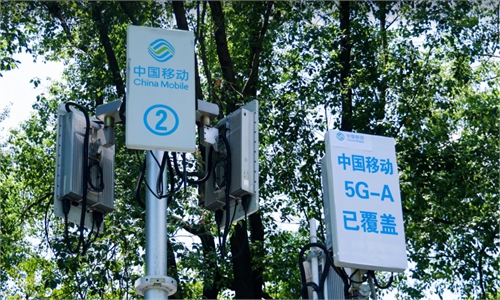
5G-A high-speed cellular network drives cruise tourism in Shanghai
When neon lights illuminate the Huangpu River in Shanghai as the sun sets, a "Junzilan" cruise departs from the Bund, offering tourists the city's bustling scenery. On deck, passengers snap selfies, stream live videos, and slip on VR glasses to share the beautiful scenes online.
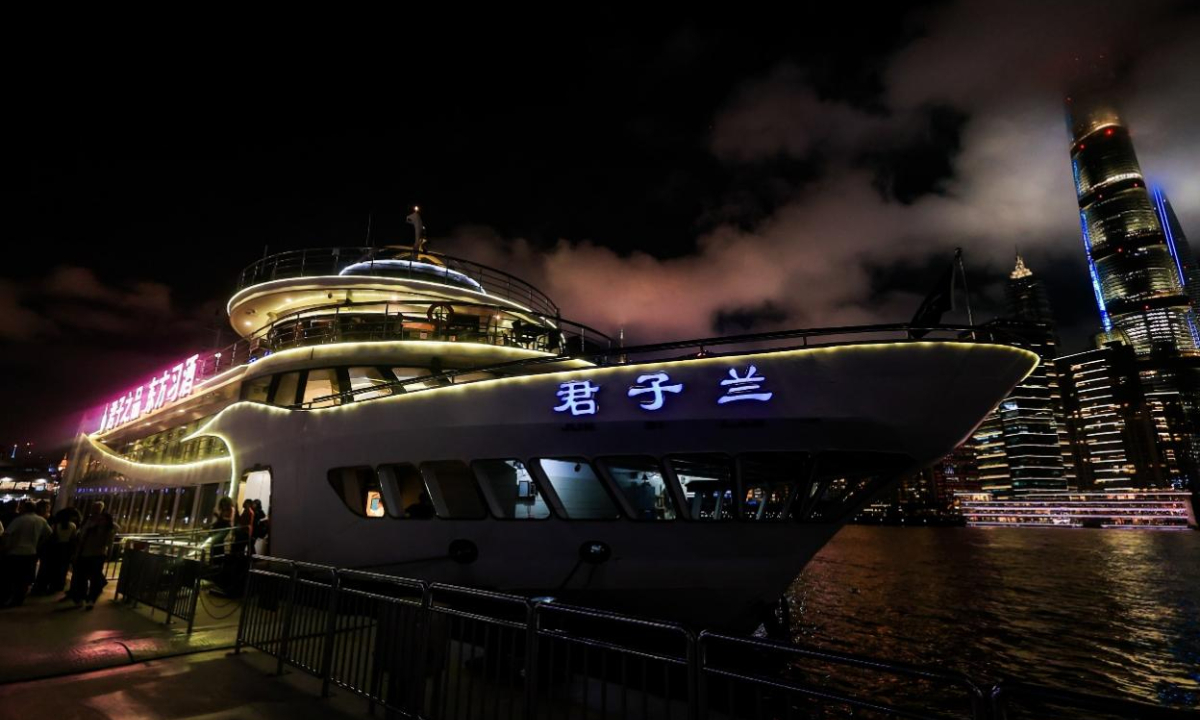
Even before the cruise docks, their posts appear instantly on social media, enabled by a 5G-A high-frequency network delivering 3Gbps downlink and 300Mbps uplink speeds, enhancing the onboard digital experience.
The full name of 5G-A is 5G-Advanced. It's built on the foundation of 5G and leverages three-component carrier (3CC) aggregation and mmWave communications technologies, which ensure faster speed, lower latency, wider connectivity, and more accurate sensing.
"Cruises on the Huangpu River are popular tourist attractions in Shanghai but face complex signal reflection on the river surface, posing the risk of co-channel interference for the current network spectrum," Zhu Yilei, general manager of Shanghai Jiushi Tourism Group Co, told the Global Times.
Zhu added that Shanghai's tourism industry used to face challenges including the need to improve mobile network experiences for cruise passengers on the Huangpu River—such as live streaming—limited translation resources for foreign tour groups speaking minority languages, and a need for innovative services to spur growth.
"In order to solve challenges such as these, we made up our mind to strengthen the construction of the 5G-A network by joining hands with Huawei, providing a solid network foundation for mobile artificial intelligence (AI) services," Wang Jianbin, director of the Technology Evolution Department of the Joint Construction and Sharing Working Group of China Telecom, told the Global Times.
With 5G-A, uplink speeds can reach 1Gbps or more, while potential downlink speeds surpass 10Gbps—approximately 10 times faster than 5G, Wang noted.
"In the construction of the 5G-A network, we are continuously improving the network layout and increasing investments in base station deployment. So far, we have built over 110,000 5G-A base stations, covering more than 300 key cities nationwide. Along the Huangpu River, our deployment of the 5G-A network now fully supports diverse application scenarios such as high-definition video streaming, VR, and AR, delivering cutting-edge technological support and setting a benchmark for Shanghai's smart city development," Wang said.
It's worth noting that China Telecom and Huawei have worked together to make numerous breakthroughs in 5G-A innovation in recent years.
At Mobile World Congress Shanghai 2025, China Telecom and Huawei unveiled the 5G-A Intelligent Ultra Pooling Uplink technology, which enables spectrum decoupling and pooling. This innovation allows 5G-A network capabilities to be precisely predicted, reducing latency by over 30 percent, improving uplink speeds by over 15 percent, and enhancing cell-edge user experience by over 15 percent, while maximizing network energy efficiency.
As the commercialization of 5G-A progresses, its business value is becoming increasingly evident.
"A total of 10,000 of China Telecom's 5G-A base stations have been built in Shanghai, underscoring the importance we attach to the city and the technology's application potential. Emerging industries such as the low-altitude economy, AI-integrated computing, and embodied intelligence all demand ultra-high bandwidth and ultra-reliable connectivity," Zhang Lei, deputy general manager of Shanghai Telecom's Mobile Internet Department, told the Global Times.
Zhang said the company will explore 5G-A applications in businesses, aiming to position Shanghai as a showcase city for its 5G-A applications.
By the end of 2025, over 120 smartphone models and consumer smart devices are expected to support 5G-A, providing more than 100 million users with an extraordinary mobile network experience. 5G-A has achieved significant results in fields such as smart living, transportation, and manufacturing, injecting new momentum into economic and social development.
"Junzilan" cruise ship
Even before the cruise docks, their posts appear instantly on social media, enabled by a 5G-A high-frequency network delivering 3Gbps downlink and 300Mbps uplink speeds, enhancing the onboard digital experience.
The full name of 5G-A is 5G-Advanced. It's built on the foundation of 5G and leverages three-component carrier (3CC) aggregation and mmWave communications technologies, which ensure faster speed, lower latency, wider connectivity, and more accurate sensing.
"Cruises on the Huangpu River are popular tourist attractions in Shanghai but face complex signal reflection on the river surface, posing the risk of co-channel interference for the current network spectrum," Zhu Yilei, general manager of Shanghai Jiushi Tourism Group Co, told the Global Times.
Zhu added that Shanghai's tourism industry used to face challenges including the need to improve mobile network experiences for cruise passengers on the Huangpu River—such as live streaming—limited translation resources for foreign tour groups speaking minority languages, and a need for innovative services to spur growth.
"In order to solve challenges such as these, we made up our mind to strengthen the construction of the 5G-A network by joining hands with Huawei, providing a solid network foundation for mobile artificial intelligence (AI) services," Wang Jianbin, director of the Technology Evolution Department of the Joint Construction and Sharing Working Group of China Telecom, told the Global Times.
With 5G-A, uplink speeds can reach 1Gbps or more, while potential downlink speeds surpass 10Gbps—approximately 10 times faster than 5G, Wang noted.
"In the construction of the 5G-A network, we are continuously improving the network layout and increasing investments in base station deployment. So far, we have built over 110,000 5G-A base stations, covering more than 300 key cities nationwide. Along the Huangpu River, our deployment of the 5G-A network now fully supports diverse application scenarios such as high-definition video streaming, VR, and AR, delivering cutting-edge technological support and setting a benchmark for Shanghai's smart city development," Wang said.
It's worth noting that China Telecom and Huawei have worked together to make numerous breakthroughs in 5G-A innovation in recent years.
At Mobile World Congress Shanghai 2025, China Telecom and Huawei unveiled the 5G-A Intelligent Ultra Pooling Uplink technology, which enables spectrum decoupling and pooling. This innovation allows 5G-A network capabilities to be precisely predicted, reducing latency by over 30 percent, improving uplink speeds by over 15 percent, and enhancing cell-edge user experience by over 15 percent, while maximizing network energy efficiency.
As the commercialization of 5G-A progresses, its business value is becoming increasingly evident.
"A total of 10,000 of China Telecom's 5G-A base stations have been built in Shanghai, underscoring the importance we attach to the city and the technology's application potential. Emerging industries such as the low-altitude economy, AI-integrated computing, and embodied intelligence all demand ultra-high bandwidth and ultra-reliable connectivity," Zhang Lei, deputy general manager of Shanghai Telecom's Mobile Internet Department, told the Global Times.
Zhang said the company will explore 5G-A applications in businesses, aiming to position Shanghai as a showcase city for its 5G-A applications.
By the end of 2025, over 120 smartphone models and consumer smart devices are expected to support 5G-A, providing more than 100 million users with an extraordinary mobile network experience. 5G-A has achieved significant results in fields such as smart living, transportation, and manufacturing, injecting new momentum into economic and social development.
RELATED ARTICLES