Reported EU forced tech transfers from Chinese companies protectionist, discriminatory: Chinese FM
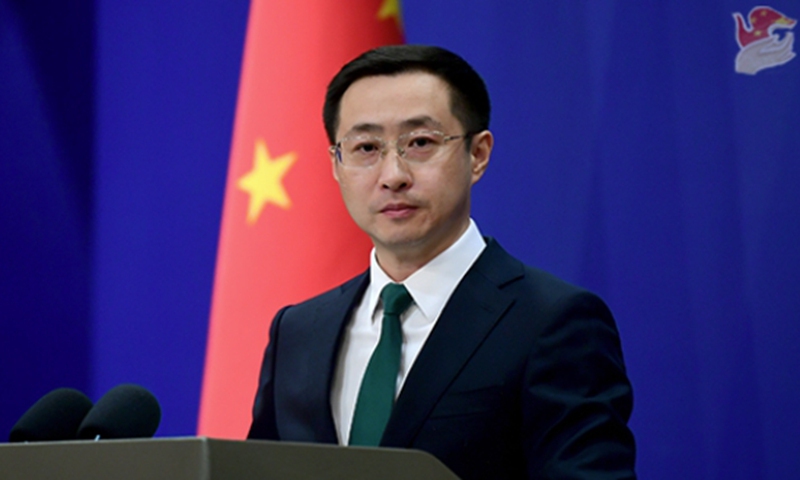
Photo: Chinese Foreign Ministry spokesperson Lin Jian
China opposes protectionist and discriminatory practices taken under the pretext of enhancing competitiveness, a Chinese Foreign Ministry (FM) spokesperson said on Wednesday.
The comment came in response to a media inquiry over a reported plan by the EU to force Chinese firms to hand over technology to European companies if they want to operate locally.
China, more broadly, supports trade and investment cooperation between Chinese and European companies based on market principles and for win-win results, FM spokesperson Lin Jian told a routine press conference on Wednesday.
"China opposes forced technology transfer against WTO rules, interference in companies' normal operations, and protectionist and discriminatory practices taken under the pretext of enhancing competitiveness," Lin said.
The reported forced tech transfers for Chinese investment in the EU are unfair and unreasonable, which could have a negative impact on bilateral trade and economic cooperation if implemented, a Chinese expert told the Global Times on Wednesday.
The plan was reported by Bloomberg on Tuesday. It is expected to be proposed in November and reportedly aims to make the EU's industry more competitive. It would technically apply to all non-EU firms, and the goal is to keep China's manufacturing might from overwhelming European industry, according to Bloomberg.
The measures would apply to companies seeking access to key digital and manufacturing markets like cars and batteries, according to Bloomberg, citing people familiar with the plans. The rules would also require the firms to use a set amount of EU goods or labor, and to add value to the products on EU soil, it said.
Jian Junbo, director of the Center for China-Europe Relations at Fudan University's Institute of International Studies, told the Global Times on Wednesday that the EU's reported plan to propose new rules forcing non-EU companies to hand over their tech know-how to local operators is unfair and unreasonable.
According to the Bloomberg report, EU Trade Commissioner Maros Sefcovic said that the bloc was welcoming foreign direct investment under the condition that it is real investment, "as European companies have been doing when they've been investing in China."
These conditions include the creation of "real value added" in the EU, the creation of "real jobs", and that there "will be real technology and real intellectual property "transferred, as European companies [have] been doing when they've been investing in China," according to the South China Morning Post.
Jian noted that in the past, technology exchanges between Chinese and Western companies were voluntary and mutually beneficial, with Chinese firms using the acquired technology as a basis for further innovation. "However, the technology transferred by Western companies is not the most advanced. Chinese companies have gradually improved and developed their technology on this basis through their own efforts and technological innovation," Jian added.
"The situation is different now, as market protectionism in some Western countries is increasingly strong," Jian emphasized. "Some Western countries are now demanding that Chinese companies transfer their most advanced technologies. This is a clear case of coercion, which violates WTO rules and market principles."
In recent years, Chinese companies have made significant strides in sectors such as electric vehicles, photovoltaics, and batteries, posing a competitive challenge to European industries. The EU's reported measures might dampen Chinese companies' enthusiasm for investing in Europe, affecting cooperation in these areas, Jian added.
Given that Chinese investments have already created numerous jobs and economic value in Europe, the EU should adopt a more open and cooperative attitude toward Chinese enterprises instead of resorting to discriminatory practices, the expert said.
RELATED ARTICLES