China hands over world’s first fully DC-powered ultra-large wind turbine installation vessel
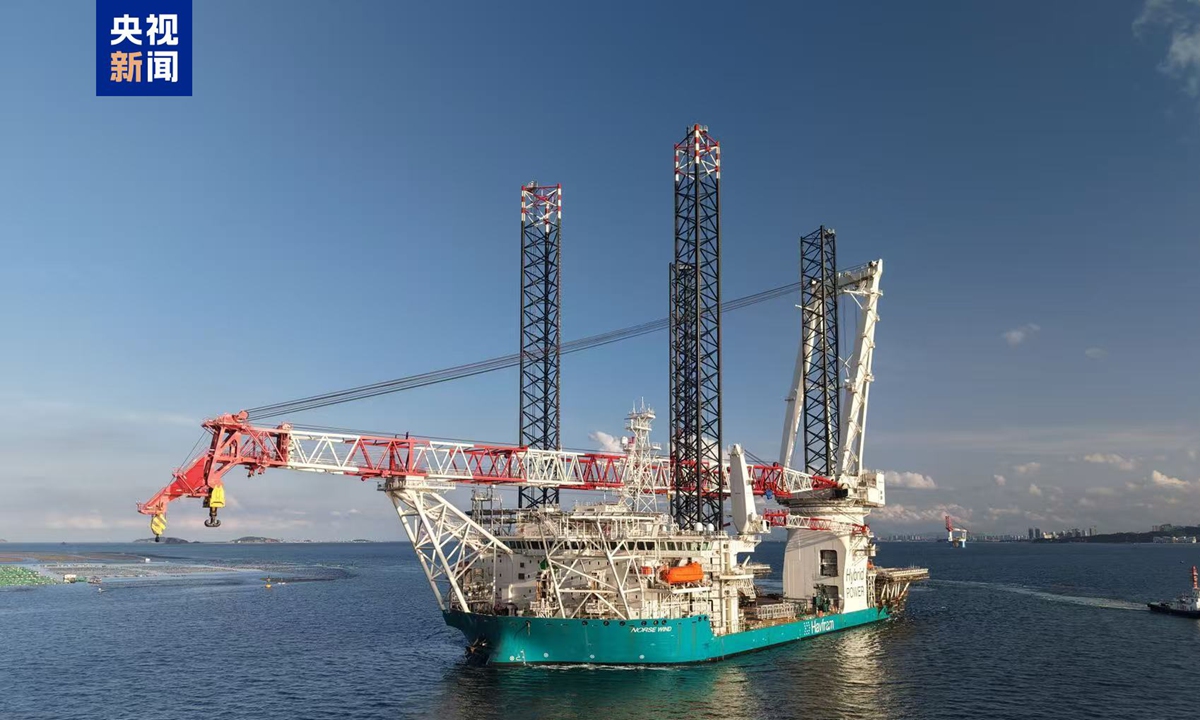
The Norse Wind Photo: CCTV News
The Norse Wind, world's first all-direct-current-powered wind turbine installation vessel with a lifting capacity exceeding 3,000 tons, was delivered in Yantai, East China's Shandong Province. The delivery has filled a global technological gap for ultra-large all-direct-current-powered wind installation vessels, the CCTV News reported on Wednesday.
According to the report, the successful delivery marks the nation's mastery of core technologies in ultra-large wind turbine installation equipment, providing a key advantage for Chinese offshore engineering equipment in the global market.
The vessel is 146 meters long, with a maximum displacement of 56,000 tons. It is equipped with a 3,200-ton main crane and a dynamic positioning class 2 system, allowing it to remain stable even in severe conditions such as Beaufort scale 8 winds, rough seas and temperatures as low as minus 15 C in the North Sea, the report said. It can also transport and install mainstream 15-megawatt and 20-megawatt wind turbines.
Compared with traditional wind turbine installation vessels, the all-direct-current power system makes the Norse Wind lighter and capable of carrying heavier loads, while also help reducing carbon emissions.
While alternating-current systems require continuous power from diesel generators, the direct-current system allows the generators to charge batteries, which then supply power to all onboard facilities, the CCTV News reported, citing Zhao Liang, a technical manager of the Norse Wind project.
When the battery power runs low, the diesel generators operate intermittently to recharge them, significantly reducing overall fuel consumption, Zhao said.
According to estimates, the Norse Wind produces only about 30 percent of the carbon emissions of a traditional installation ship when installing wind turbines, with carbon emissions per megawatt reduced by more than 70 percent.
Global Times
RELATED ARTICLES