ARTS / CULTURE & LEISURE
Reassessing the contemporary significance of China Studies from a global perspective
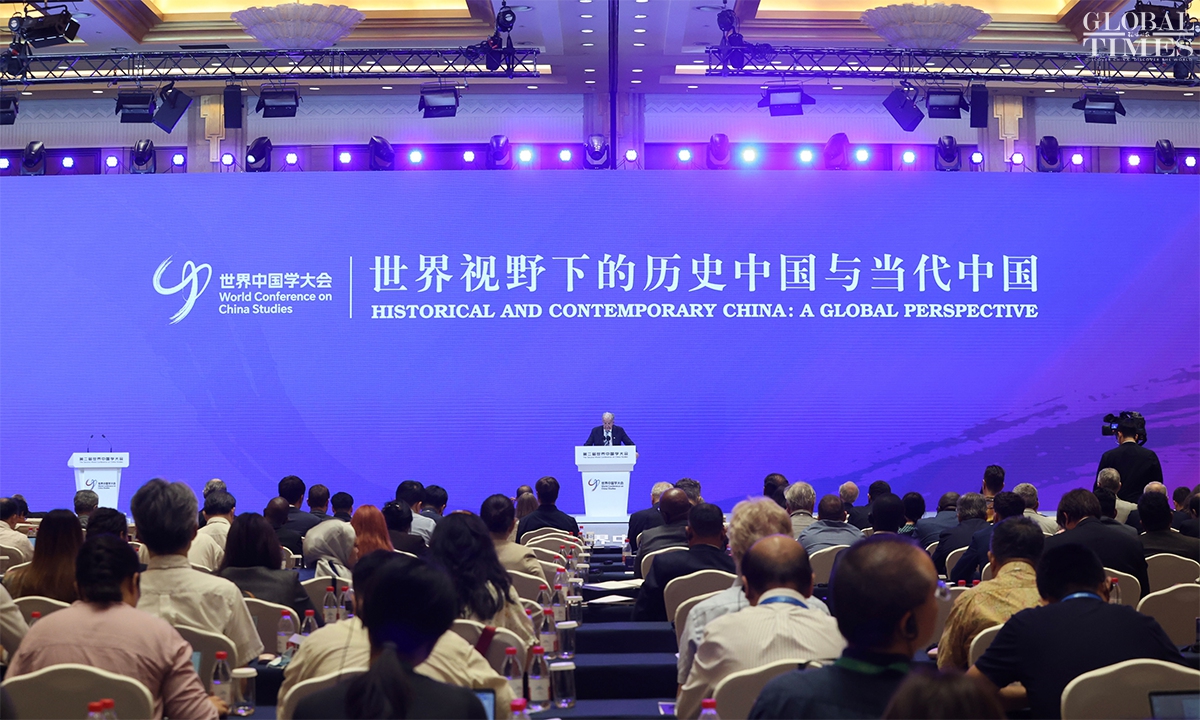
Photo: Chen Xia/GT
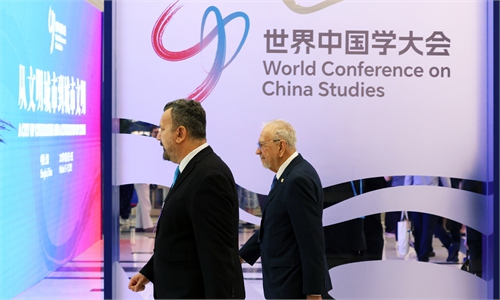
The Second World Conference on China Studies was held at the Shanghai International Convention Center from Monday to Wednesday. Under the theme of "Historical and Contemporary China: A Global Perspective," the event brought together about 500 renowned scholars and experts from China and abroad. The conference bridged historical and contemporary China from an academic perspective, encouraged in-depth exchanges on the continuity and innovation of Chinese civilization and explored the civilizational connotations, experiential insights as well as global implications of China's path to modernization.
From past to present, China Studies have always been a 'global study'
This conference was characterized by its grand scale and vibrant atmosphere. Many media outlets described it as a "gathering of great minds." Among the attendees were senior officials, former political leaders, representatives of international organizations and China Studies experts from around the world. This was not merely an academic gathering. It served as a bridge linking China and the world by bringing China closer to the world and helping the world better understand China.
From the past to the present, China studies have always been grounded in global narratives. This year's conference provided a high-level platform for equal dialogue among Chinese and international scholars, embodying the very essence of China Studies - the pursuit of mutual learning and shared progress through exchanges and explications. As former Italian prime minister Romano Prodi said at the opening ceremony, amid trends of "de-globalization" and the challenges facing multilateral mechanisms like the UN and WTO, there is an urgent need for voices that advocate dialogue and cooperation and rebuilding trust among countries. This gives the convening of the World Conference on China Studies in Shanghai its special significance.
From curiosity to necessity: the changing logic of China Studies
Once, the motivation of many scholars who entered the field of China Studies was a pure fascination with an ancient Eastern civilization. Today, that motivation still holds true globally, but it is no longer the only reason behind the worldwide "Chinese language boom."
Many scholars are now seeking the logic behind China's development in the "genes" of Chinese civilization. Indeed, China's uninterrupted 5,000-year-old civilization and the long-term existence of its vast society have provided the underlying logic for its development. These civilizational roots have enabled China to achieve the dual miracles of rapid economic growth and long-term social stability - and they will continue to shape how China acts in the future.
As China's national strength and international standing rise, China Studies have offered the Global South an independent, practice-tested framework for understanding development. The field has evolved from a focus on historical China to a deeper exploration of China's contemporary development model, supported by a richer and more dynamic logic than ever before.
From digital intelligence to youth: new horizons in China Studies
The research areas of China Studies now extends from ancient manuscripts to the practice of Chinese modernization and integrates cutting-edge interdisciplinary methodologies - a profound transformation in the research paradigm of China Studies.
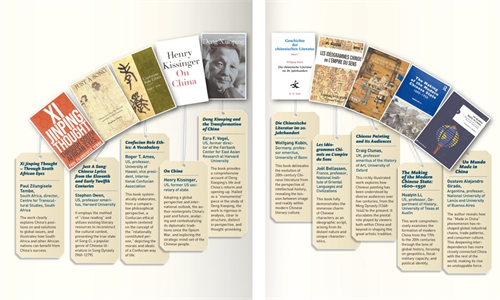
Before the closing ceremony on Wednesday, a list of 54 recommended works on world China Studies from 2005-24 was released. Spanning multiple countries and disciplines, each unique perspective outlines the vast scope and profound depth of China Studies research. Among them were 10 works by young overseas scholars.
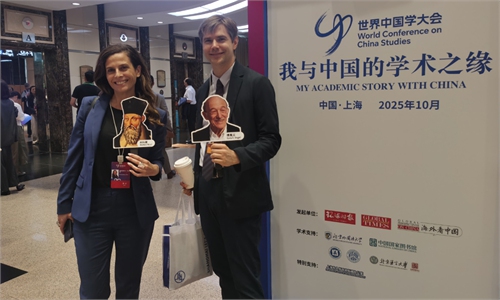
Young scholars were a major highlight of this year's conference. Fluent in Chinese, intellectually open and actively engaged, they have confidently taken up the torch of China Studies. Young scholars - both Chinese and international - have unique advantages: Their interdisciplinary research approach, mastery of digital technologies and ability to engage with diverse audiences position them as bridges connecting academic analysis with global discourse.
From robot center to museum: China Studies as a journey through time
Inside the conference hall, the intellectual exchanges among leading China Studies experts repeatedly reshaped global perceptions of the field. Outside, the city of Shanghai silently demonstrates the ever-expanding contemporary relevance of Chinese Studies through its seamless integration of innovation and tradition.
On Monday afternoon, participants followed a special tour route themed on Chinese modernization. From the futuristic robot innovation center to the historically significant Shanghai Museum East, the tour unfolded a distinct narrative of China.
The robot innovation center, now a globally influential robotics innovation cluster, vividly showcases the power of "Made in China." After witnessing the pride of Chinese modernization, the journey through the Shanghai Museum felt like stepping through a cultural gateway that bridges ancient and modern times, connecting ancient China with the contemporary world. As scholars from around the globe stood before bronze wares and porcelain, they saw not only the artifacts themselves but also the enduring vitality of Chinese civilization.
From city to garden: living heritage as China Studies
Another group of participants visited the Party-mass service center at the Xuhui riverside and Yuyuan Garden, witnessing the persistence of Chinese culture across time and space - from modern urban governance to classical garden art.
At the service center, scholars observed how this bridge between government and citizens exemplifies China's people-centered governance philosophy. Carlos Martinez, a British writer, researcher and political activist, said he was most impressed that ordinary people can enjoy high-quality public infrastructure here - something many countries could learn from China.
The spirit of openness and inclusiveness - absorbing nutrients from diverse civilizations - is precisely what makes Chinese civilization so distinctive. China's development resonates more deeply with the world, and its institutional and governance strengths are increasingly visible internationally. This, in essence, represents one of the most important contemporary significances of China Studies.
As a cultural landmark of Shanghai's old city, Yuyuan Garden has borne witness to both history and memories, serving as a classic case of heritage conservation within modern urban governance. Scholars there experienced the profound depth of Chinese culture and witnessed the successful integration of traditional heritage with contemporary urban development.
From Shanghai, the reflection on China Studies continues, flowing from the depths of history into the realities of the present, from the halls of academia into the fabric of the city. The World Conference on China Studies has thus written a vivid new chapter in China's effort to build a community with a shared future for humanity, responding actively to the world's growing recognition of and engagement with Chinese culture and philosophy, while inviting more participants to join this journey.
RELATED ARTICLES