Trump claims Modi agreed to halt Russian oil imports; a move aimed at increasing pressure on Moscow, says expert
By Published: Oct 16, 2025 11:47 AM

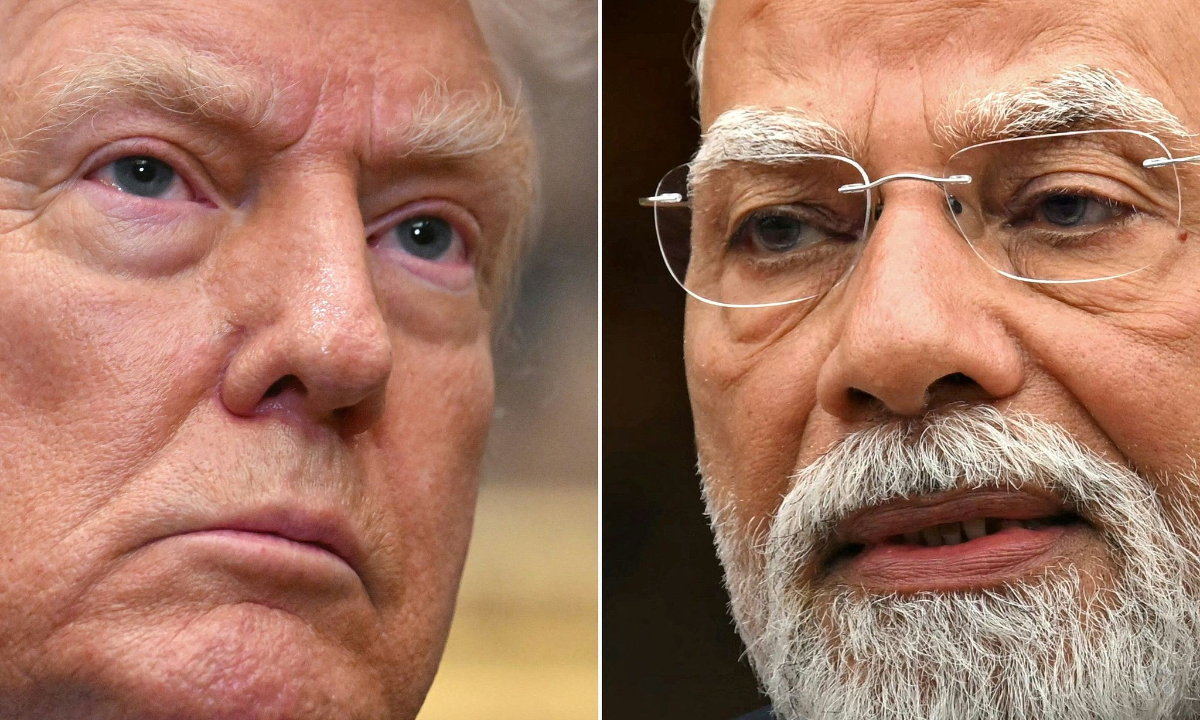
US President Donald Trump and India's Prime Minister Narendra Modi. Photo: VCG
President Donald Trump told reporters at the White House that Indian Prime Minister Narendra Modi had assured him earlier Wednesday that India would halt imports of Russian oil. According to a Chinese analyst, Trump's remarks appear to be aimed at increasing pressure on Russia, particularly as his efforts to influence the Russia-Ukraine conflict have so far yielded little progress.
"He's assured me there will be no oil purchased from Russia - I don't know, maybe that's a breaking story, can I say that?" Trump said from the Oval Office, according to CNN. He continued, "there will be no oil, he's not buying his oil from Russia, it started - you know, you can't do it immediately, it's a little bit of a process, but the process is going to be over with soon."
Trump has for months been calling on India to cease purchasing Russian oil, citing India's continued purchases of cheap Russian oil in escalating his trade war. In August, Trump announced a 25 percent tariff on India as a penalty for importing Russian oil and gas, building on a previously announced 25 percent tariff rate.
In a follow-up exchange on Wednesday, Trump called Modi "a great man, and he loves Trump."
India is in discussions with the US about energy sourcing, said India's Ministry of External Affairs, adding that New Delhi's policies have always been guided by the interests of the Indian consumers. The MEA response came after Trump's claim, according to Business Today.
MEA spokesperson Randhir Jaiswal said, "India is a significant importer of oil and gas. It has been our consistent priority to safeguard the interests of the Indian consumer in a volatile energy scenario. Our import policies are guided entirely by this objective."
"Ensuring stable energy prices and secured supplies have been the twin goals of our energy policy. This includes broad-basing our energy sourcing and diversifying as appropriate to meet market conditions," he added.
Trump's claim that Modi had agreed to halt imports of Russian oil is likely a move aimed at pressuring Moscow, Qian Feng, director of the research department at the National Strategy Institute at Tsinghua University, told the Global Times. After all, Trump's involvement in the Russia-Ukraine conflict has so far failed to produce any tangible progress, Qian Feng, director of the research department at the National Strategy Institute at Tsinghua University, told the Global Times.
By releasing such information, Washington appears to be signaling to Moscow in hopes of nudging it toward a cease-fire on terms set by the US, Qian said, noting that however, given the close ties between Russia and India, the effectiveness of this strategy remains uncertain.
The US has long sought to pressure India on this issue, yet considering India's long-term foreign policy priorities and national interests, it is unlikely to fully abandon energy cooperation with Russia in the near future, Qian emphasized.
RELATED ARTICLES