US Treasury Secretary’s rhetoric involving Chinese trade rep ‘seriously distorts the fact:’ MOFCOM
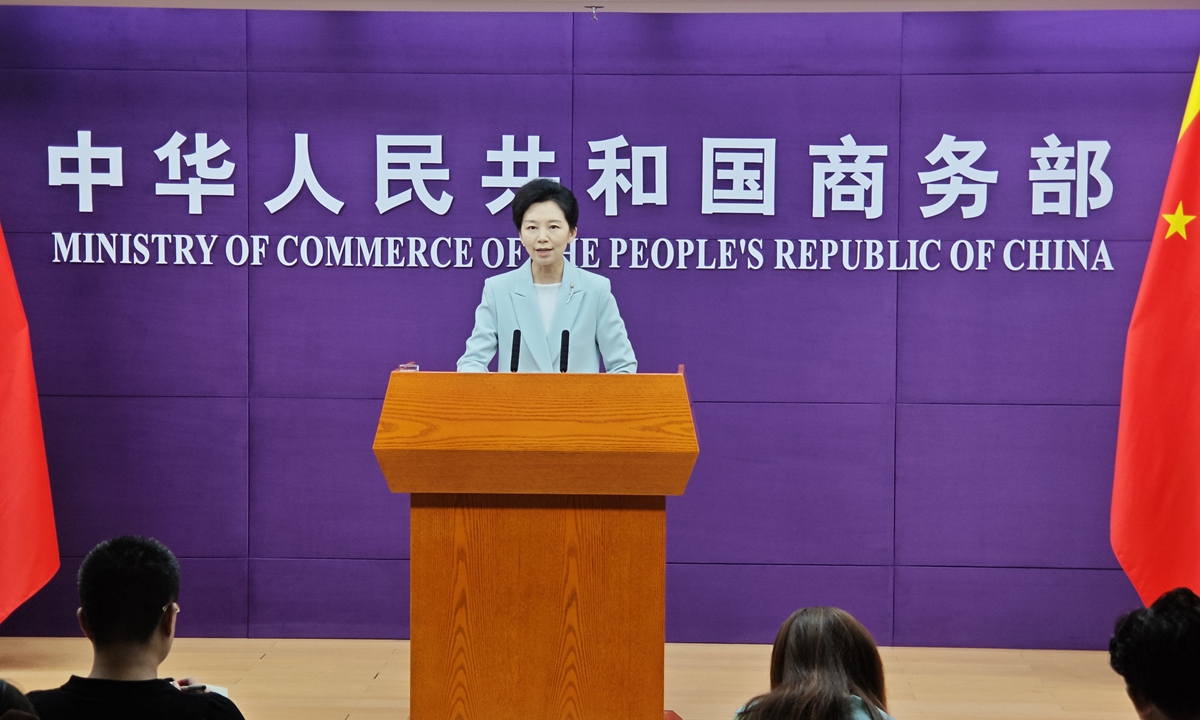
China's Ministry of Commerce spokesperson He Yongqian Photo: Yin Yeping/GT
Responding to a media question on US Treasury Secretary Scott Bessent's rhetoric involving Li Chenggang, China international trade representative with the Ministry of Commerce and vice minister of commerce, a spokesperson of Chinese Commerce Ministry (MOFCOM) spokesperson said on Thursday that Bessent's rhetoric "has seriously distorted the fact."
"From August 27 to 29, Li visited the US, where he engaged with the US side on implementing the consensus reached in the phone call between the leaders of China and the US, and exchanged views on issues related to bilateral relations and the implementation of the consensus from the China-US economic and trade talks. He also raised concerns with the US side regarding measures such as the US Section 301 investigation restrictions on China's shipbuilding and other industries," MOFCOM spokesperson He Yongqian said at a press briefing on Thursday.
In a speech, Bessent alleged that Li "showed up uninvited" in Washington and threatened that "China would unleash chaos on the global system" if the US didn't abandon docking fees for Chinese ships, according to a New York Post report.
According to He, recently, in accordance with the consensus reached in the phone call between the leaders of the two countries and the China-US economic and trade talks, the Chinese side has proactively engaged in consultations and communications with the US side on the restrictive measures under the Section 301 investigations, maintaining a constructive stance and proposing relevant cooperation suggestions.
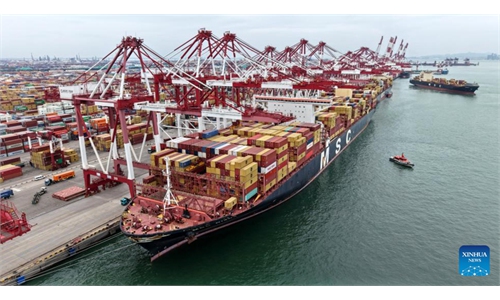
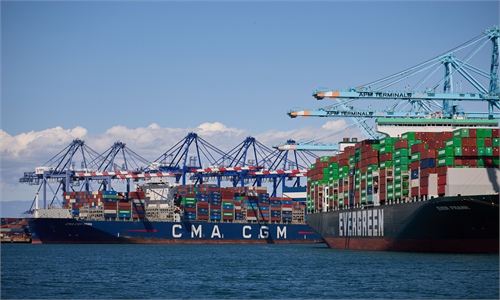
"However, the US side has adopted a negative attitude and insisted on implementing the restrictive measures, forcing the Chinese side to take countermeasures, including imposing port fees on US vessels in accordance with regulations," He said.
He noted that the US Section 301 investigations and restrictive measures on China's shipbuilding and other industries are typical acts of unilateralism and protectionism, which not only severely harm the interests of relevant Chinese industries, but also drive up the US inflation and undermine the competitiveness of US ports and employment.
He particularly pointed out that the implementation of the US measures has indeed disrupted the stability of global supply chains and caused chaos in the global shipping industry, while the relevant countermeasures taken by the Chinese side are "passive defensive actions and a necessary step to safeguard a fair competitive environment in the international shipping and shipbuilding markets."
"China hopes that the US side will recognize its own erroneous actions, meet China halfway, and return to the correct track of dialogue and consultation," He said.
Global Times
RELATED ARTICLES