Chinese gadgets with AI gain popularity
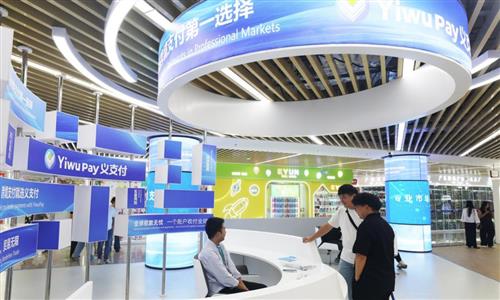
China’s Yiwu, used to be global supermarket of inexpensive goods, sets eyes on AI-powered transformation
Inside a brightly lit toy shop in Yiwu International Trade City, Sun Lijuan fielded an international call from an overseas client, confirming a last-minute order for a batch of AI-guided dolls.
"They all want their shipments before impending Christmas," she said, smiling as she checked her inventory list. September and October are the busiest months of the year, and this season, AI dolls — capable of speaking multiple languages, recognizing human faces and responding to touch — have become the hottest items among foreign buyers.
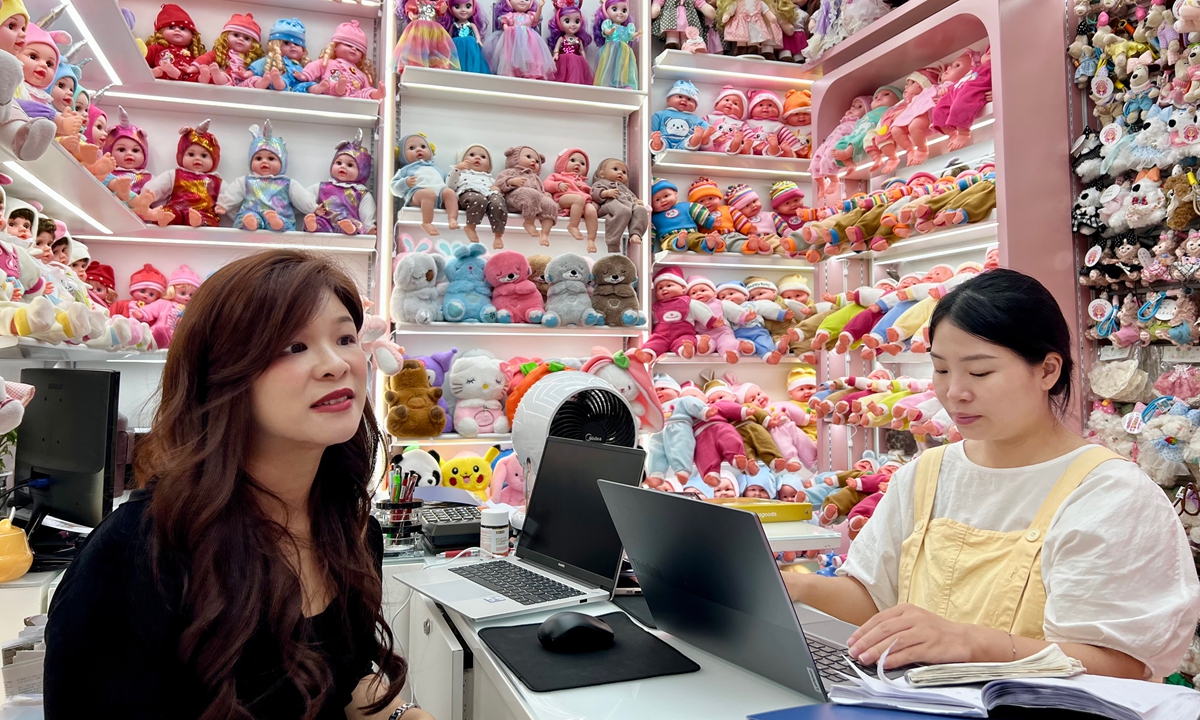
The shelves behind her are stacked with hundreds of latest models: from palm-sized kittens and puppies to nearly half-human-sized humanoid dolls in different skin tones and outfits. Each is embedded with microchips that enable voice conversations in more than 10 languages, including English, French, and Spanish.
"They can interact when you pat them, talk to them, or even frown at them," Sun said. "It's no longer just a toy — it's an emotional companion."
Smart upgrade, global reach
Sun Lijuan, owner of Hongsheng Toys, was among the first in Yiwu to integrate AI in processing trade. She and her husband began from a 13-square-meter stall selling plush toys in 2010. "I wanted to make dolls, he wanted to make robotic dogs — so we decided to combine the two," she recalled. That idea led to their first AI doll, embedding a processor chip into a traditional toy that help them to open a new market niche.
Across Yiwu's vast trading hub, similar transformations are unfolding.
Citronics (Yiwu) Co has turned the humble backpack into a fashionable gadget. Its LED smart backpacks can sync with smartphones to display custom designs or selfies — a feature particularly loved by young consumers in South America and elsewhere.
At East Chini Electronics, sales workers demonstrate a palm-sized AI translator supporting as many as 27 languages. It works both online and offline, providing real-time translation at a fraction of major brands' prices.
Wang Junwen, CEO of Yangyang Digital Technology Co, said that her firm launched AI-powered smart glasses in April targeting overseas markets. "We get the most inquiries from India and Spanish-speaking countries like Colombia and Chile," Wang noted.
The glasses provide real-time voice translation, photography, and recording in 18 languages. In June, an Indian businessman placed an order for 850 pairs, with total sales now exceeding 30,000 units.
In another shop, a furry AI companion shaped like a puppy sits on the counter, responding to touch. "It can answer questions, show emotions, and even comfort people," said Li Jun, manager of Xiaole Intelligence. "It's not only for kids — many adults also love it."
Redefining 'Made in China'
E-commerce data, sales of AI toys in China surged almost sixfold in the first half of 2025, with year-on-year growth exceeding 200 percent. The consumer base has broadened from children to all age groups.
Zhang Yi, CEO of the iiMedia Research Institute, told the Global Times that Yiwu's transformation reflects a broader national trend. "Yiwu's small commodities were once defined by low price and fast supply," he said. "But as profit margins shrank and products homogeneity increased, upgrading through technology became essential. By integrating AI technology, small commodities are now moving up the value chain."
He added that adding AI elements will help Chinese products better resonate with global consumers. "Foreign buyers are drawn to novelty and interactivity," Zhang said. "China's strong AI foundation gives Yiwu a natural edge in combining advanced technology with creativity — redefining 'Made in China' as smart, green, connected, and emotionally engaging."
Sun said she and many Yiwu merchants are not only selling AI-powered products but also using AI tools for designing, marketing, and routine business operations, creating a "one-stop" AI-assisted business model.
Liu Dingding, a Beijing-based technology analyst, told the Global Times that Yiwu's strength lies in its early and agile embrace of digital solutions. "Long before the AI boom, many Yiwu merchants were already heavy users of emerging tech innovations," he said. "More than 20 years ago, they were among China's first to go online and join e-commerce platforms. When livestreaming took off, they quickly adapted and became some of the earliest small-business live-streamers."
Liu noted that the tech-savvy mindset has evolved naturally into the new AI era. "Now they're integrating generative AI into every part of our operations — from production and marketing to customer service," he explained. "Some use digital avatars to livestream 24/7, others rely on AI fitting models to showcase clothing or accessories, and translation powered by large language models enables seamless global sales. These merchants are turning digital innovation into real productivity gains."
In Yiwu, more than 30,000 merchants are integrating AI into designing, marketing, and production — turning what was once a marketplace for low-cost goods into a showcase of China's smart manufacturing, according to local officials.
"The AI boom here feels like a scene from a sci-fi film," Sun said, as another overseas phone call came in. "Our dolls may be small, but they carry big dreams — proof that even the smallest products can reshape global trade when driven by innovation."
"They all want their shipments before impending Christmas," she said, smiling as she checked her inventory list. September and October are the busiest months of the year, and this season, AI dolls — capable of speaking multiple languages, recognizing human faces and responding to touch — have become the hottest items among foreign buyers.
Sun Lijuan (left), owner of Hongsheng Toys, and an employee speak with an international buyer during a video call in Yiwu, East China's Zhejiang province, on Sept 26, 2025, coordinating freight speed ahead of the Christmas season. Photo: Zhang Yiyi/GT
The shelves behind her are stacked with hundreds of latest models: from palm-sized kittens and puppies to nearly half-human-sized humanoid dolls in different skin tones and outfits. Each is embedded with microchips that enable voice conversations in more than 10 languages, including English, French, and Spanish.
"They can interact when you pat them, talk to them, or even frown at them," Sun said. "It's no longer just a toy — it's an emotional companion."
Smart upgrade, global reach
Sun Lijuan, owner of Hongsheng Toys, was among the first in Yiwu to integrate AI in processing trade. She and her husband began from a 13-square-meter stall selling plush toys in 2010. "I wanted to make dolls, he wanted to make robotic dogs — so we decided to combine the two," she recalled. That idea led to their first AI doll, embedding a processor chip into a traditional toy that help them to open a new market niche.
Across Yiwu's vast trading hub, similar transformations are unfolding.
Citronics (Yiwu) Co has turned the humble backpack into a fashionable gadget. Its LED smart backpacks can sync with smartphones to display custom designs or selfies — a feature particularly loved by young consumers in South America and elsewhere.
At East Chini Electronics, sales workers demonstrate a palm-sized AI translator supporting as many as 27 languages. It works both online and offline, providing real-time translation at a fraction of major brands' prices.
Wang Junwen, CEO of Yangyang Digital Technology Co, said that her firm launched AI-powered smart glasses in April targeting overseas markets. "We get the most inquiries from India and Spanish-speaking countries like Colombia and Chile," Wang noted.
The glasses provide real-time voice translation, photography, and recording in 18 languages. In June, an Indian businessman placed an order for 850 pairs, with total sales now exceeding 30,000 units.
In another shop, a furry AI companion shaped like a puppy sits on the counter, responding to touch. "It can answer questions, show emotions, and even comfort people," said Li Jun, manager of Xiaole Intelligence. "It's not only for kids — many adults also love it."
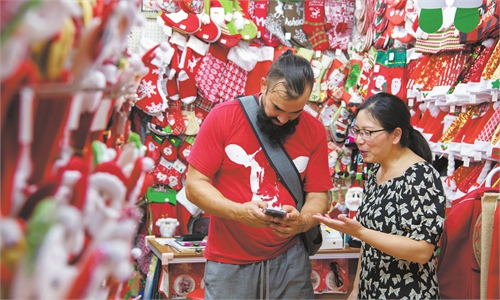
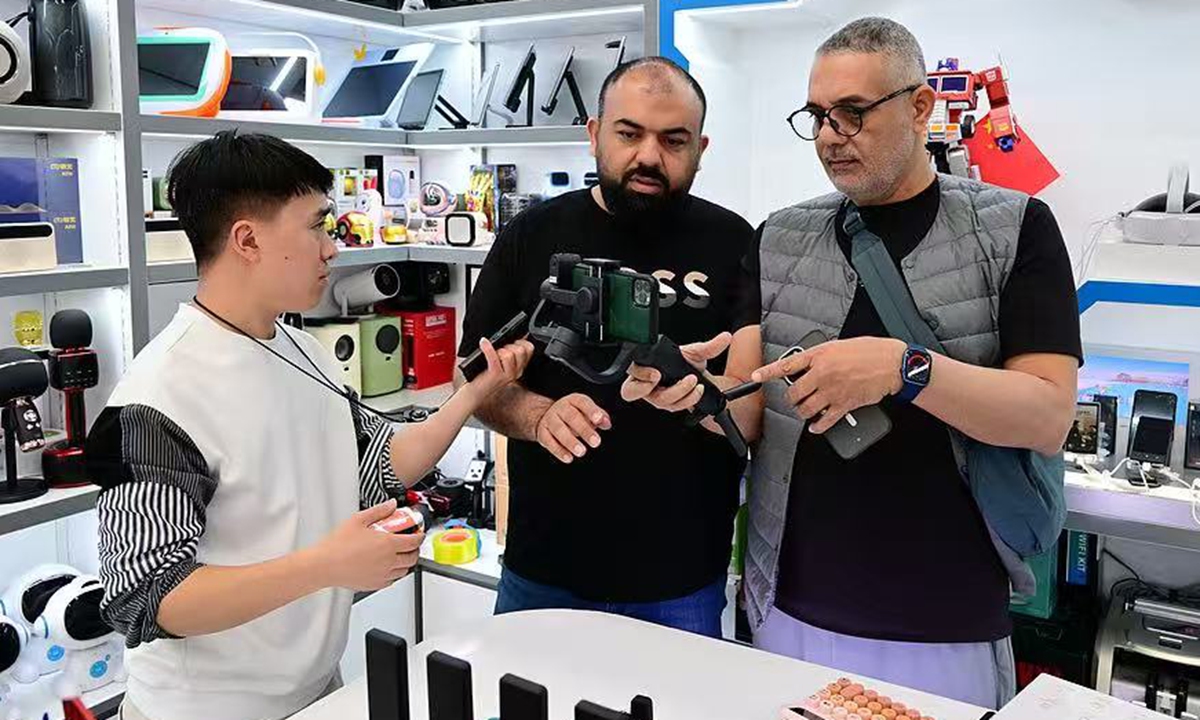
Libyan buyers negotiate with a supplier over the purchase of AI-powered smartphone stabilizers at Yiwu International Trade City in Jinhua, East China's Zhejiang Province, on April 15, 2025. Photo: VCG
Redefining 'Made in China'
E-commerce data, sales of AI toys in China surged almost sixfold in the first half of 2025, with year-on-year growth exceeding 200 percent. The consumer base has broadened from children to all age groups.
Zhang Yi, CEO of the iiMedia Research Institute, told the Global Times that Yiwu's transformation reflects a broader national trend. "Yiwu's small commodities were once defined by low price and fast supply," he said. "But as profit margins shrank and products homogeneity increased, upgrading through technology became essential. By integrating AI technology, small commodities are now moving up the value chain."
He added that adding AI elements will help Chinese products better resonate with global consumers. "Foreign buyers are drawn to novelty and interactivity," Zhang said. "China's strong AI foundation gives Yiwu a natural edge in combining advanced technology with creativity — redefining 'Made in China' as smart, green, connected, and emotionally engaging."
Sun said she and many Yiwu merchants are not only selling AI-powered products but also using AI tools for designing, marketing, and routine business operations, creating a "one-stop" AI-assisted business model.
Liu Dingding, a Beijing-based technology analyst, told the Global Times that Yiwu's strength lies in its early and agile embrace of digital solutions. "Long before the AI boom, many Yiwu merchants were already heavy users of emerging tech innovations," he said. "More than 20 years ago, they were among China's first to go online and join e-commerce platforms. When livestreaming took off, they quickly adapted and became some of the earliest small-business live-streamers."
Liu noted that the tech-savvy mindset has evolved naturally into the new AI era. "Now they're integrating generative AI into every part of our operations — from production and marketing to customer service," he explained. "Some use digital avatars to livestream 24/7, others rely on AI fitting models to showcase clothing or accessories, and translation powered by large language models enables seamless global sales. These merchants are turning digital innovation into real productivity gains."
In Yiwu, more than 30,000 merchants are integrating AI into designing, marketing, and production — turning what was once a marketplace for low-cost goods into a showcase of China's smart manufacturing, according to local officials.
"The AI boom here feels like a scene from a sci-fi film," Sun said, as another overseas phone call came in. "Our dolls may be small, but they carry big dreams — proof that even the smallest products can reshape global trade when driven by innovation."
RELATED ARTICLES