Timor-Leste joins ASEAN as 11th member; experts say move boosts regional stability and influence
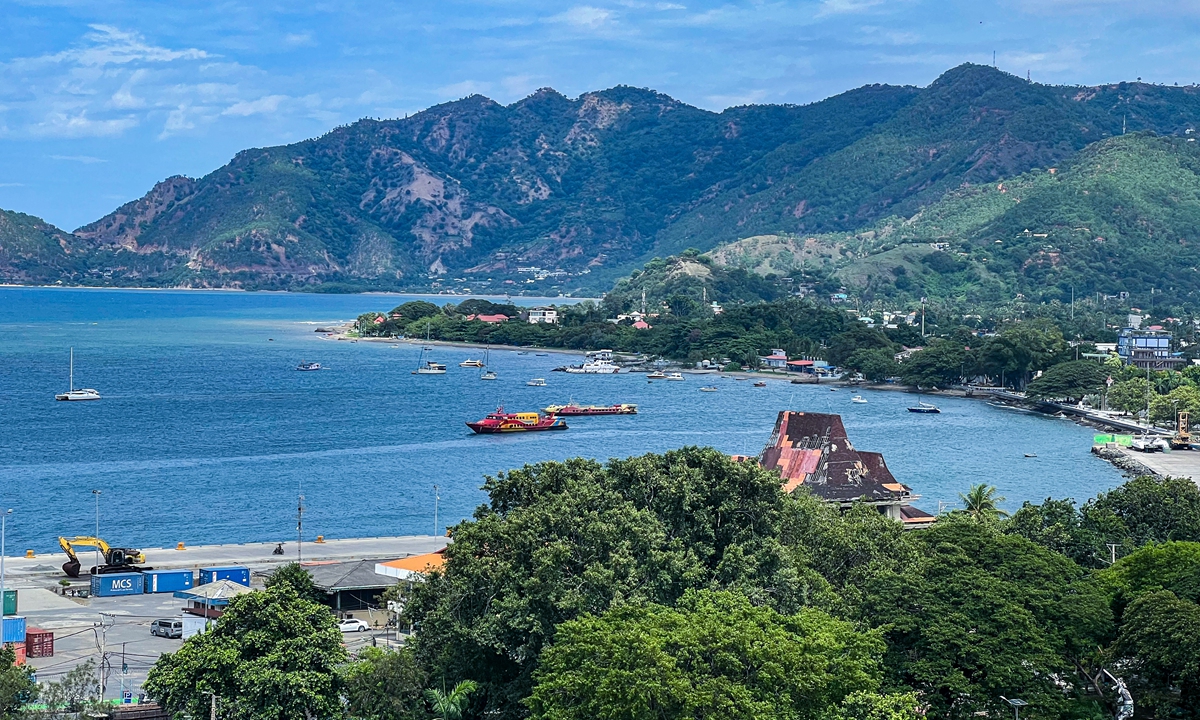
An aerial view of Dili, capital of Timor-Leste Photo: VCG
The 47th ASEAN Summit opened in Kuala Lumpur on Sunday, with Timor-Leste admitted as the bloc's 11th member - its first expansion since 1999. Chinese experts say the move will enhance ASEAN's global influence and create new opportunities for China-Timor-Leste cooperation.
Timor-Leste's President Jose Ramos-Horta and Prime Minister Xanana Gusmao were present at the signing of the Declaration on the Admission of Timor-Leste into ASEAN, according to the Xinhua News Agency.
Timor-Leste, located in the easternmost part of the Lesser Sunda Islands in Southeast Asia, applied for ASEAN membership in 2011. In November 2022, ASEAN member states agreed in principle to admit Timor-Leste as a new member of the regional grouping. Established in 1967, the grouping now has 11 members - Brunei, Cambodia, Indonesia, Laos, Malaysia, Myanmar, the Philippines, Singapore, Thailand, Vietnam and Timor-Leste.
Ge Hongliang, deputy dean of the College of ASEAN Studies at Guangxi University for Nationalities, told the Global Times on Sunday that Timor-Leste's entry follows 14 years of assessments since it applied in 2011. He said ASEAN's decision reflects whether Timor-Leste met the bloc's political, economic, and socio-cultural criteria. He added that this marks ASEAN's first expansion since the signing of the ASEAN Charter in 2007 and the launch of the ASEAN Economic Community in 2015.
Ge said Timor-Leste's accession as ASEAN's 11th member reflects the bloc's continued growth and consolidation. Amid intensifying major-power competition and global change, ASEAN seeks to strengthen itself and enhance its regional influence. He added that ASEAN has long hoped to bring Timor-Leste closer into the fold, and its inclusion will help maintain regional stability. "Timor-Leste's membership will also expand ASEAN's international reach," Ge said, "as it can serve as a bridge for dialogue with Portuguese-speaking countries."
"Timor-Leste's accession will help ASEAN expand its international influence," Yu Lei, a professor of Shandong University's College of Northeast Asian Studies, told the Global Times on Sunday. "Its membership strengthens ASEAN's centrality and leadership in regional governance. Previously, Timor-Leste was outside the bloc, acting as a 'loose nail' in integration. Now fully integrating the country, ASEAN's legitimacy in regional affairs is reinforced."
Yu added that Timor-Leste is rich in oil and gas, and with Southeast Asia's fast-growing industrial demand, its resources are increasingly important. "Joining ASEAN will support the bloc's energy security, de-dollarization efforts, and broader regional integration."
Ge said for Timor-Leste, the region's youngest and one of its smallest economies, joining the regional organization offers better growth prospects. Since independence, Timor-Leste has sought regional and international cooperation, but being sandwiched between Australia and Indonesia means it needs strong external support. Before membership, countries like Singapore had already offered assistance, which is expected to increase now that it is an ASEAN member, Ge said.
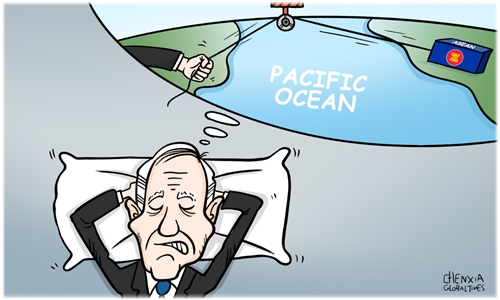
Yu noted that Timor-Leste has long been contested by Indonesia and Australia, affecting regional stability and economic integration. "Australia traditionally framed Timor-Leste as a Pacific rather than Southeast Asian nation, reflecting outside powers' differing intentions for the region. ASEAN membership will strengthen Timor-Leste's economic ties with Indonesia and Southeast Asia, while resisting external interference and provocation."
According to China's Ministry of Foreign Affairs, China and ASEAN began their dialogue in 1991. Over more than 30 years, political trust has deepened and cooperation across sectors has flourished. Both sides regard their relationship as the most substantive and dynamic among ASEAN's partnerships, with broad prospects for the future. Economically, China-ASEAN trade reached 6.99 trillion yuan ($964 billion) in 2024, up 9 percent year-on-year, accounting for 15.9 percent of China's foreign trade, with the two sides remaining each other's largest trading partners for a fifth straight year.
Ge added that ASEAN membership will expand China-Timor-Leste cooperation beyond a purely bilateral track. "As a member, Timor-Leste will observe ASEAN rules while benefiting from opportunities within the ASEAN framework."
RELATED ARTICLES