China, ASEAN sign Free Trade Area 3.0 Upgrade Protocol, marking new chapter in strategic partnership
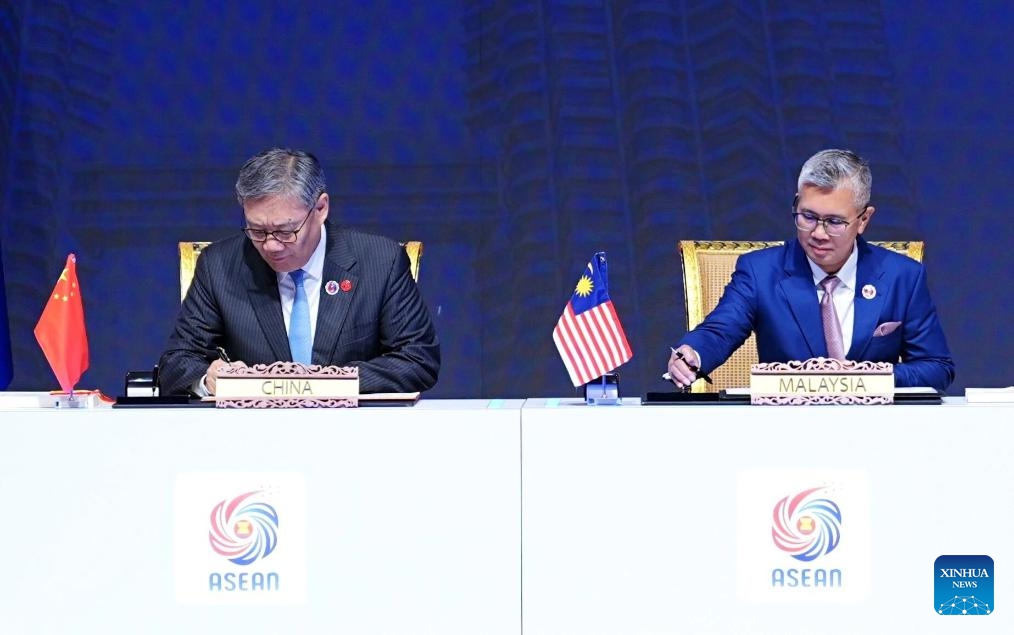
China and ASEAN sign Free Trade Area 3.0 Upgrade Protocol in Kuala Lumpur, Malaysia, Oct. 28, 2025. (Photo: Xinhua)
The 3.0 Upgrade Protocol covers nine major areas, adding five new ones — digital economy, green economy, supply chain connectivity, competition and consumer protection, and support for micro, small and medium-sized enterprises. The protocol reflects both sides' shared commitment to jointly shaping global trade rules and deepening cooperation in emerging sectors, CCTV News reported on Tuesday.
According to China's Ministry of Commerce, the two sides will now complete their respective domestic approval procedures to ensure the protocol takes effect as soon as possible.
Lin Feng, director-general of the Department of International Trade and Economic Affairs at China's Ministry of Commerce, said the signing demonstrates both sides' firm commitment to multilateralism and free trade through concrete action. It serves as an important example of joint efforts to oppose unilateralism and protectionism, advance deeper regional economic integration, and build an open, inclusive, and rules-based regional market — further strengthening the China-ASEAN community with a shared future.
Wichai Kinchong Choi, senior expert at Thailand's Kasikorn Bank, told the Global Times on Tuesday that after decades of rapid growth, China's focus on high-quality development across economic, social, cultural and environmental spheres has become increasingly evident. The government has introduced clear measures to promote steady and balanced progress, emphasizing innovation-driven growth, green development, and win-win cooperation under globalization and multilateralism.
"In Thailand, we've seen that recent Chinese investment is shifting toward high-tech, new energy, and connectivity — sectors where China holds clear advantages in technology and cost efficiency," Choi said. "These high-quality investments bring higher value-added, stronger market competitiveness, and more sustainable growth."
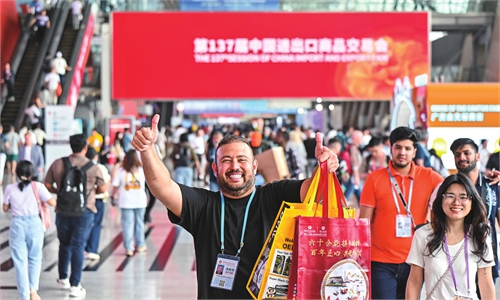
He added that China's continued efforts to open its market — including major trade promotion events such as the China International Import Expo and the China International Fair for Trade in Services — have created vast opportunities for global and ASEAN businesses. "Thailand's active participation in these platforms reflects the strong momentum in China-Thailand cooperation," he said, noting that China's new foreign investment law, increased financial openness, and steady capital liberalization will further boost confidence and global integration.
Rich Too, CEO of independent thinktank SEEDS Malaysia, told the Global Times on Tuesday that the signing of the China-ASEAN Free Trade Area (FTA) 3.0 Upgrade Protocol holds profound significance for ASEAN economies, particularly after the US imposed tariffs on the region. He said the agreement will further strengthen China-ASEAN trade ties, deepen regional integration, and inject new momentum into multilateral free trade in the region.
Too said the upgraded FTA marks a new milestone in China-ASEAN cooperation, expanding from traditional trade and investment to emerging fields such as the digital and green economies and industrial and supply chain connectivity. "This will spur a new wave of infrastructure development, enhance supply chain integration, and support long-term, stable regional growth," he noted.
"As global uncertainty rises, closer China-ASEAN trade cooperation is both necessary and inevitable," Too said. "The 3.0 FTA will help lower trade barriers, enable freer flows of goods and capital, and foster an open, fair, and inclusive market benefiting both sides."
According to Too, the Protocol presents new opportunities for China-Malaysia trade cooperation, paving the way for a new wave of growth in emerging sectors such as the digital and green economies. It will also broaden space for talent development, particularly in the digital sector, while deepening cooperation in technology, capacity building, and sustainable development, further expanding bilateral trade in both scope and volume.
An official from the Department of International Trade and Economic Affairs under China's Ministry of Commerce said the signing of the China-ASEAN FTA 3.0 Upgrade Protocol holds great significance amid growing challenges to the rules-based global trading system. It demonstrates the two sides' firm commitment to multilateralism and free trade at a time when certain countries have resorted to unilateral tariff measures that disrupt global commerce.
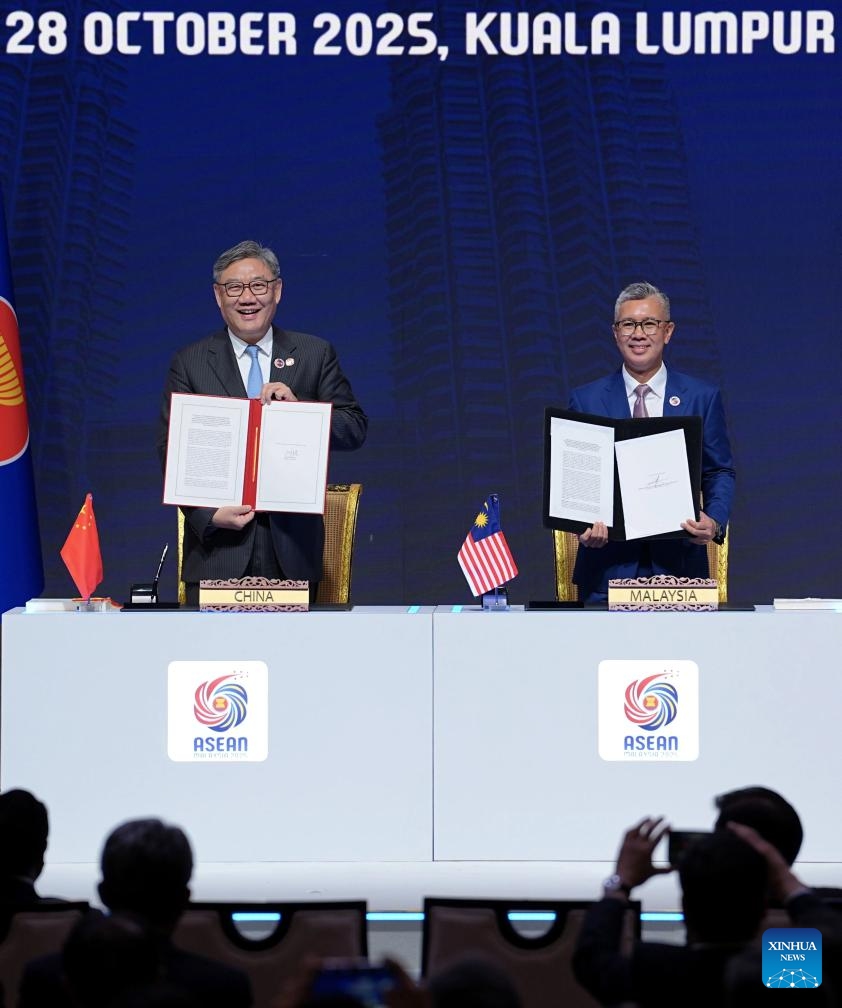
China and ASEAN sign Free Trade Area 3.0 Upgrade Protocol in Kuala Lumpur, Malaysia, Oct. 28, 2025. (Photo: Xinhua)
The protocol serves as a strong example of joint efforts by China and ASEAN to uphold open cooperation, resist protectionism and unilateralism, and inject renewed confidence and momentum into regional and global economic growth, the official said.
Launched in November 2022 and substantively concluded in October 2024, the FTA 3.0 Upgrade Protocol builds upon the existing China-ASEAN FTA and the Regional Comprehensive Economic Partnership (RCEP). It aims to expand mutually beneficial cooperation in new areas, enhance regulatory and standards alignment, and promote greater trade facilitation and inclusive development across the region, according to CCTV News.
Being each other's largest trading partner for the fifth consecutive year, China and ASEAN have scored numerous achievements amid rising external uncertainties. In the first three quarters, China's trade with ASEAN totaled 5.57 trillion yuan ($785 billion), up 9.6 percent year-on-year, with events such as the China-ASEAN Expo successfully held, according to the Xinhua News Agency.
New achievements coincide with the adoption of the Plan of Action to Implement the China-ASEAN Comprehensive Strategic Partnership (2026-2030), which aligns highly with the ASEAN 2045: Our Shared Future and its Strategic Plans. Standing at a new starting point, the region is broadening collaboration on infrastructure, digital and green transition, trade facilitation and people-to-people exchanges, paving the way for deeper regional integration, according to Xinhua.
RELATED ARTICLES