BSE’s qualified investors up 40% since 2024 amid China’s push for building up new quality productive forces
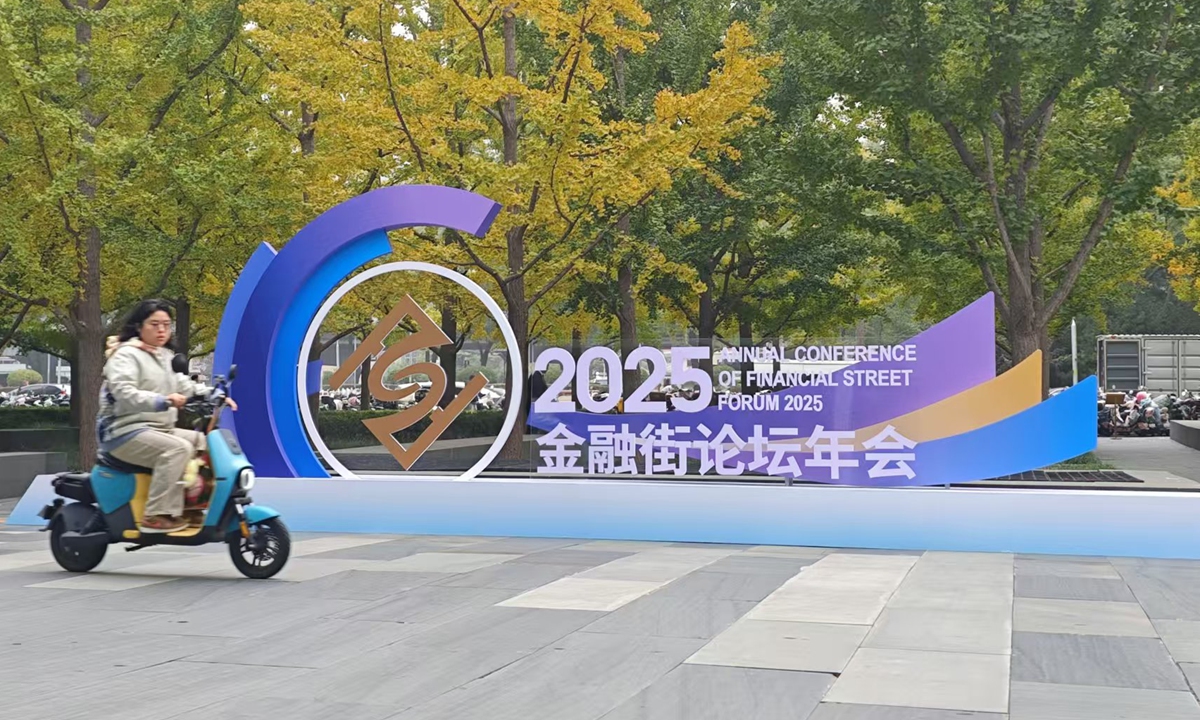
A person rides an electric bike past a display board featuring the logo of the ongoing Annual Conference of Financial Street Forum 2025 in Beijing's Xicheng district on October 29, 2025. Photo: Yin Yeping/GT
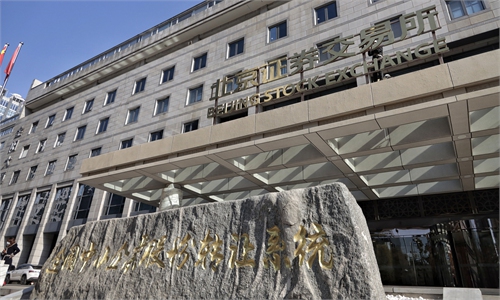
Beijing Stock Exchange (BSE) has seen a 40 percent increase in the number of qualified investors since the beginning of 2024, demonstrating the market's growing vitality and appeal, said an official with BSE at the Annual Conference of Financial Street Forum (FSF) 2025 on Wednesday.
The BSE, which celebrated its fourth anniversary in September, has gained increasing attractiveness for businesses. This trend reflects not only the sustained appeal of China's capital market for investors but also the country's growing efforts to support innovation-oriented small and medium-sized enterprises (SMEs), which account for the main part of the exchange's listings, under the continuous fostering of the new quality productive forces, a Chinese expert said.
Speaking at the FSF 2025, Shang Qingjun, first-level inspector of the department of public company supervision at the China Securities Regulatory Commission (CSRC), updated the latest achievements of the BSE with facts and figures.
Among all the positive outcomes, the clustering effect of innovation-oriented enterprises has become more pronounced, with continued increases in innovation investment, said Shang, noting that among the 280 listed companies on the BSE, over 80 percent are engaged in strategic emerging and advanced manufacturing industries, while 53 percent are recognized as national-level "little giant" enterprises specializing in niche and high-tech sectors.
The average research and development intensity of listed companies stands at 4.5 percent, 2.86 percentage points higher than the average of large-scale industrial enterprises, said the CSRC official. Moreover, the investment and financing ecosystem has been further optimized, leading to a significant boost in market vitality, he said.
Fueled by the strong innovation momentum, the listed companies have experienced a sustained upward trajectory. Shang said that the overall business performance of companies listed on the BSE has been strong, with more than 80 percent of these companies turned a profit during the first half of this year, with a median net income of around 15 million yuan.
Furthermore, listed companies have actively rewarded their investors, distributing a total of around 5 billion yuan in cash dividends, with 13 companies carrying out share buybacks, significantly enhancing investor returns, according to Shang, noting that in the first half of this year, the BSE's average daily turnover approached 30 billion yuan, reflecting growing market vitality and appeal and a steadily improving ecosystem.
"Against the backdrop of China's push to foster new quality productive forces, the BSE, focused on innovation-driven SMEs, has continued to expand... this reflects the exchange's strengthening role in supporting high-potential enterprises and channeling investment into strategic emerging sectors, laying a solid foundation for sustainable growth," Li Changan, a professor at the Academy of China Open Economy Studies at the University of International Business and Economics, told Global Times on Wednesday on the sidelines of the FSF 2025.
Recently, the BSE has just successfully issued its first medium- to long-term corporate bond for a technology innovation company, raising 500 million yuan with a five-year maturity, Xinhua News Agency reported on October 22, demonstrating the exchange's growing ability to support long-term financing for innovative SMEs.
Beijing's policy advantages, strategic location, and robust financial infrastructure reinforce the BSE's role as a key platform, while the development of the BSE serve as a major task during the 15th Five-Year Plan period (2026-30), which has given priority to building a modernized industrial system, Li said, underscoring its broad prospects for the future.
RELATED ARTICLES