Multi-layered, broad China-South Korea co-op a strategic choice for future: KIC China head
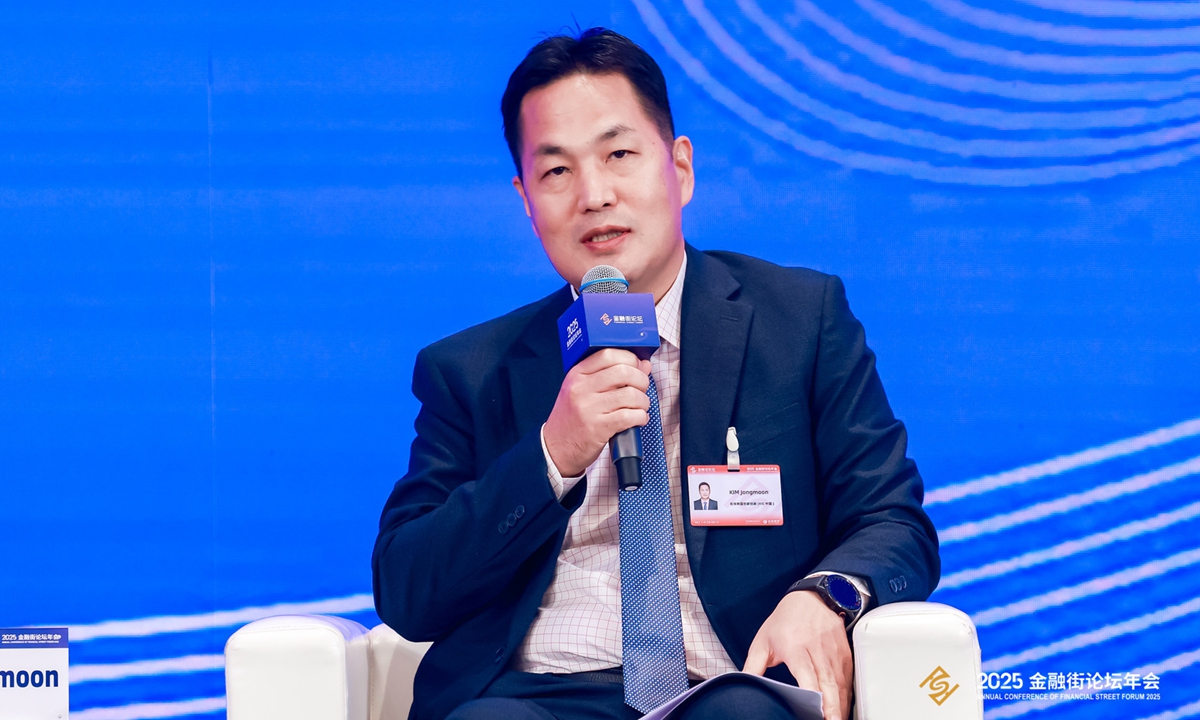
Kim Jong-moon, chief representative of the Korea Innovation Center in China Photo: Kim Jong-moon
"Establishing multi-layered, broad cooperation between China and South Korea is not only a pragmatic move for today but also a strategic choice for the future," Kim Jong-moon, chief representative of the Korea Innovation Center (KIC China), said in an exclusive interview with the Global Times on Wednesday on the sidelines of the Annual Conference of Financial Street Forum 2025.
China has stated to achieve greater self-reliance and strength in science and technology and steer the development of new quality productive forces in the next five years. This represents a major strategic deployment aligned with global trends in scientific and technological transformation, Kim said, noting that it will create new opportunities for mutually beneficial cooperation between China and South Korea.
"China boasts unique advantages in the aspects of market scale, industrialization capabilities and capital environment, while South Korea excels in the fields of core materials, sensors, and smart manufacturing. Through complementary cooperation along the innovation and industrial chains, China and South Korea are well-positioned to build a China-South Korea joint innovation ecosystem in the next phase of the sci-tech innovation landscape, achieving mutual benefit and a win-win outcome," Kim said.
From domestically developed large aircraft and the expansion of China's large vessel fleet to breakthroughs by firms like DeepSeek and Unitree Robotics, China's innovation achievements have captured global attention in 2025.
In China, a series of positive factors, including robust national policy support, rich talent pool, vibrant market demand, dynamic corporate innovation vitality and sustained R&D investment, has provided solid foundation for tech innovations, propelling the country's digital transformation and rapid development in sectors such as renewable energy and artificial intelligence (AI), Kim said.
"In the future, these achievements will support China's high-quality development, enhance its global competitiveness and contribute more 'China wisdom' to global technological progress," he said.
"I believe that establishing multi-layered and broad cooperation between China and South Korea is not only a pragmatic move for today but also a strategic choice for the future," Kim said.
In recent years, China and South Korea have deepened collaboration in the cutting-edge domains like AI and biotechnology, said the representative, stressing that "a cooperation model featuring government guidance, enterprise collaboration and industrial implementation has produced tangible results through technology alliances, joint research and development, and market sharing."
As a bridge and platform for China and South Korea, KIC China plays an active role in promoting substantive cooperation among innovation enterprises, research institutions and investment institutions, hoping to boost the connectivity between technological innovation and industrial ecosystem and jointly forge a future-oriented and sustainable innovation cooperation landscape in the two countries, he said.
KIC China is consistently committed to helping South Korean enterprises enter the Chinese market, while supporting Chinese firms expanding overseas. In such cross-border technology transfer cooperation and exchanges, fully understanding and respecting each other's industrial policies, building trust through sustained communication and long-term collaboration, and enhancing substantive cooperation between professional institutions and experts of both countries are all crucial factors for success, Kim said.
"We maintain close cooperation with the Torch Center of the Ministry of Industry and Information Technology of China and numerous national high-tech industrial development zones, supporting outstanding Chinese enterprises in going global and facilitating the two-way flow and synergistic development of China-South Korea sci-tech innovation factors," he said.
China's current business climate demonstrates great openness and inclusiveness in supporting technological innovation, he said, noting that China continues to refine innovation support mechanisms in its policy system, industrial ecosystem and capital market to provide enormous development space for domestic and foreign sci-tech enterprises.
As China showcases innovation dynamism in emerging sectors such as AI, biopharmaceuticals and green energy, local governments are also rolling out tailored support policies to create advantages for the development of foreign innovation enterprises in China, he said.
"KIC China has keenly felt these positive developments and will continue to serve as a bridgehead, assisting more South Korean innovative enterprises in seizing opportunities within the Chinese market and exploring more innovative cooperation models together with Chinese partners," Kim said.
RELATED ARTICLES