Illustration: Chen Xia/GT
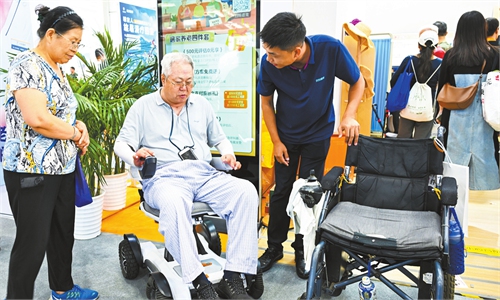
An expo on the senior care industry, currently taking place in Beijing, offers a vivid glimpse into China's expanding silver economy.As Beijing Daily reported on Thursday, rehabilitation and eldercare robots, along with other cutting-edge technologies, have drawn crowds of curious seniors seeking to experience the future of aging services firsthand. Yet the scene is more than a display of novelty. It reflects the shifting nature of China's aging demands and points to the emergence of a new frontier for international collaboration in health and wellness innovation.
As of the end of 2024, the number of people aged 60 and above in China reached 310.31 million, according to the National Bureau of Statistics. Behind this headline figure lies a vast and increasingly diverse range of individual needs spanning healthcare, leisure, smart-home technologies, and more. Companies and innovators capable of addressing these needs stand to benefit from China's growing silver economy.
The ongoing expo in Beijing features a dedicated section for smart eldercare technologies and products, highlighting the increasingly sophisticated demands of China's senior population. Among the innovations on display, an emotional-support robot that can read facial expressions to gauge a person's mood and an adjustable wheelchair that transforms into a walking-assist frame drew notable attention from attendees. These technologies cater to a generation of seniors who are better educated, more digitally literate, and less willing to accept the passive forms of care that were once common.
The implications are clear. As today's 40- to 60-year-olds enter retirement over the next two decades, demand within China's silver economy for smarter, more personalized, and more sophisticated services is expected to deepen. In a country of 1.4 billion people, even niche segments have the potential to become markets of substantial scale, offering opportunities for both domestic and international companies.
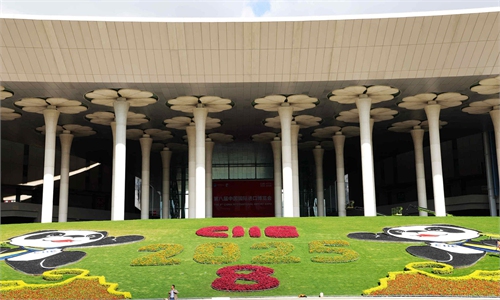
Foreign companies are paying growing attention to China's silver economy, bringing advanced technologies that complement domestic demand. Media reports indicate that some foreign eldercare-focused firms are expected to participate in the upcoming China International Import Expo (CIIE), which runs from November 5 to 10 in Shanghai. They will continue the trend of international engagement in China's silver economy. A notable example from last year illustrates the applicability of such technologies: A German company introduced anti-fall insoles equipped with advanced sensors and intelligent algorithms. This innovation underscores both the relevance of foreign technologies and the growing attention that international firms are paying to China's silver economy.
On the one hand, China's growing senior population is driving increasingly diverse and sophisticated demands. On the other hand, foreign companies are paying growing attention to the Chinese market. A number of collaborations have already taken shape, highlighting the potential for mutually beneficial engagement. The question now is how to foster further two-way interactions that create value for both domestic and international stakeholders.
There are three areas that deserve particular attention.
First, understand the market. To capture the opportunities emerging from China's silver economy, foreign companies need a nuanced understanding of the evolving preferences of elderly consumers, who increasingly seek products that combine quality, functionality, and emotional value. Engaging with the market through trade fairs, expos, and digital platforms is essential. Events such as the CIIE offer global brands valuable opportunities to connect with local distributors, service providers, and consumers.
Second, localize for long-term success. Beyond selling imported products, foreign firms can benefit from deeper integration into China's local ecosystem. Home-care devices may need to fit local housing layouts, dietary supplements could align with Chinese health concepts, and entertainment products might blend cultural familiarity with modern technology. Partnerships with local companies help ensure that products are appealing to Chinese consumers.
Third, ensure price competitiveness. Balancing quality with affordability may require optimizing production efficiency, forming joint ventures with Chinese partners, and leveraging Chinese domestic supply chains.
China's silver economy is more than a single market trend; it represents a sustained commercial opportunity for global firms that engage thoughtfully with local needs. Companies that approach the market with cultural awareness, technological adaptability, and a genuine commitment to seniors' well-being are likely to achieve commercial success while contributing pragmatically to the country's sustainable economic growth.
The author is a reporter with the Global Times. bizopinion@globaltimes.com.cn
RELATED ARTICLES