Aravind Yelery Photo: Courtesy of Aravind Yelery
"Coordination" is an important part of China's new development philosophy, and is adequately reflected in the recommendations of the Central Committee of the Communist Party of China (CPC) for Formulating the 15th Five-Year Plan for National Economic and Social Development, adopted at the Fourth Plenary Session of the 20th Central Committee of the CPC.
Coordinated development has not only significantly enhanced regional synergy within China and injected sustained momentum to the country's high-quality growth over the past decade, but also contributes China's wisdom to building an open world economy amid rising protectionism from certain Western countries.
To adapt to the new normal of economic development, China put forward five new development concepts - innovative, coordinated, green, open and shared development - at the Fifth Plenary Session of the 18th CPC Central Committee in October 2015.
The 2015 reform blueprint marked a historic moment, steering China toward high-quality development - a phase that helps blend innovation, sustainability, and strategic self-reliance in pursuit of Chinese modernization.
"Coordination" carries profound strategic significance - it embodies synchrony, coherence, and collective purpose. The essence of collective effort lies at the very core of the philosophy of the CPC. Every forward-looking endeavor - whether in governance, diplomacy, or institutional reform - depends on the seamless alignment of thought and action. For the CPC, this principle defines the model of achieving success together.
As the CPC has long maintained, meticulous planning may chart the course, but without active and disciplined execution, it remains an unfulfilled intent. Discipline thus forms the moral and operational foundation of coordination, binding diverse efforts into a unified rhythm.
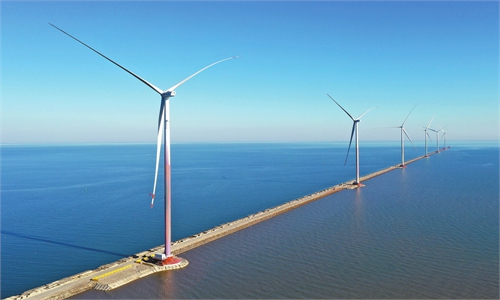
In China, fostering symbiotic growth is highly applied at both the national and provincial levels. For instance, the wind and solar power from the western frontier regions such as Northwest China's Xinjiang Uygur Autonomous Region and North China's Inner Mongolia Autonomous Region are transmitted to the eastern region in China via ultra-high voltage grids.
Also, the Guangdong-Hong Kong-Macao Greater Bay Area's technological prowess is internationally recognized, as the Shenzhen-Hong Kong-Guangzhou region tops the world in the Innovation Cluster Ranking 2025 of the World Intellectual Property Organization.
Intensifying geopolitical pressures and ongoing supply chain realignments demand renewed emphasis on high-quality development. In this context, the Fourth Plenary Session stands as a reaffirmation of the country's resolve to focus on managing its own affairs and sustain long-term economic growth.
In the recommendations of the Central Committee of the CPC for Formulating the 15th Five-Year Plan for National Economic and Social Development, there are multiple measures related to coordination. For example, "implementing the Five-Sphere Integrated Plan and the Four-Pronged Comprehensive Strategy in a coordinated way," "boost China's strength in education, science and technology, and human resources in a well-coordinated manner," and "refine China's regional economic layout and promote coordinated regional development."
All of these efforts demonstrate China's firm commitment to promoting coordinated development and driving high-quality growth at a new starting point. By comprehensively and accurately implementing the new development philosophy, deepening coordinated development across all fronts, and empowering high-quality development through sustainable momentum, China will steadily advance Chinese modernization.
In a global perspective, the principle of coordination becomes indispensable amid the surge in Western protectionism. True coordination implies a collective, timely, and strategic alignment of efforts among the developing nations. It is this shared coherence that can redefine global outcomes - transforming vulnerability into agency and enabling emerging economies to claim their rightful place in the world.
In an interconnected world, genuine progress depends on growing together and growing stronger. The evolving global order must focus on dismantling barriers and restrictions to build a system grounded in inclusivity and shared opportunity. The guiding philosophy of this transformation should not serve the interests of the rich and powerful but advance the collective aspirations of all nations.
In the aftermath of the financial crisis in 2008 and amid intensifying trade disruptions, China's leadership articulated an alternative vision - one aimed at stabilizing global commerce, restoring confidence in multilateralism, and redefining globalization on more equitable and sustainable terms.
China proposed the Global Governance Initiative (GGI) at the Shanghai Cooperation Organization Summit held in Tianjin on September 1. The initiative, along with the three other global initiatives, embodies China's efforts in building sound international relations based on equality, win-win cooperation and common development.
Governance forms the central stem of any effort to reorient the global order toward genuine inclusion. Every initiative, idea, and act of coordination must embody universal values and reinforce cooperation among nations. The essence of the GGI lies precisely in this — to provide coherence, legitimacy, and direction to collective action. In this sense, global governance serves as the umbrella under which all coordinated initiatives converge, offering both the moral foundation and institutional framework needed to drive meaningful transformation.
The author is an Honorary Fellow at the Institute of Chinese Studies in India.
bizopinion@globaltimes.com.cn
RELATED ARTICLES