SPORT / SOCCER
Shao's appointment as head coach of Chinese national football team: Turning point or heavy burden?
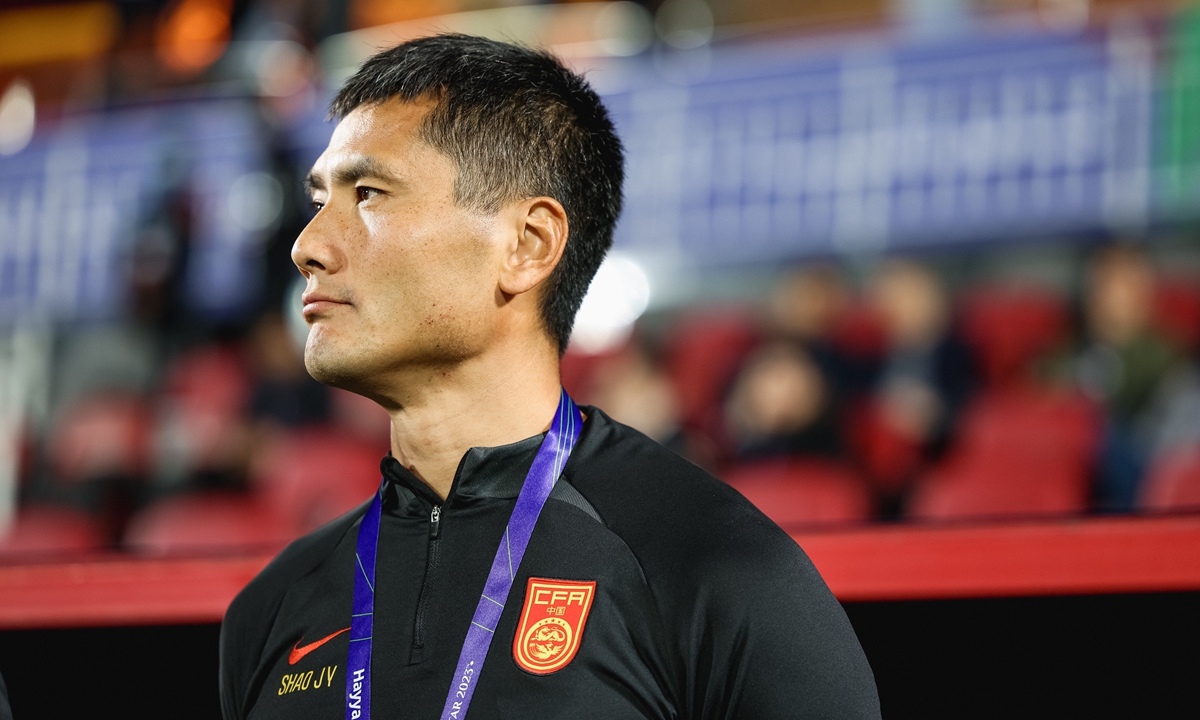
Shao Jiayi as the Chinese senior national team's assistant coach on January 13, 2024 Photo: VCG
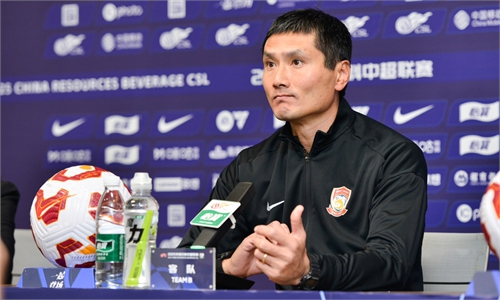
The Chinese Football Association (CFA) announced Wednesday that former China international Shao Jiayi will take over as the head coach of the China men's national football team, marking the first time in many years that the post goes to a domestic coach rather than a foreign hire.Shao's appointment might signal the start of a new chapter, but it also comes laden with enormous expectations and formidable challenges. The real question is whether the change in personnel will lead to a genuine shift in direction or simply offer fresh hope without the structural foundation to back it up.
Born in 1980 in Beijing, Shao represented China at the 2002 FIFA World Cup and spent several years playing in Germany's top two divisions.
In his post-playing career, Shao has also worn a number of different hats such as the assistant coach to the under-19 national team as well as the senior national team. He took charge of Chinese Super League side Qingdao West Coast in July 2024, his first senior head coach role.
Shao brings the advantages of having played at top level abroad, which shaped his understanding of modern football, and having a wide-ranging role experience in domestic football makes him a solid contender for the role. Nevertheless, it is equally true that Shao remains something of a work-in-progress as a head coach on the highest stage. His senior managerial experience is still limited.
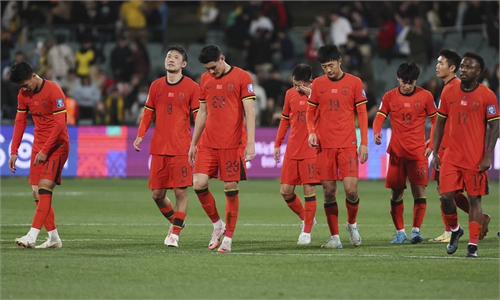
The Chinese national team carries a weight rarely seen in any other single sport. For decades it has represented not just a football squad but a national footballing aspiration. Every foreign coach hire has promised progress, but few have delivered. Public frustration has simmered for years, cynicism has grown, and the phrase "never qualified for the World Cup again" haunts the fan base.
In that sense, appointing a home-grown coach is symbolically important. It suggests a shift: from chasing overseas hot-shots to building something sustainable from within. But symbolism is one thing; practical results are another.
As a domestic coach, Shao will likely face intense scrutiny. Expectations for visible change are high, and every setback will be magnified.
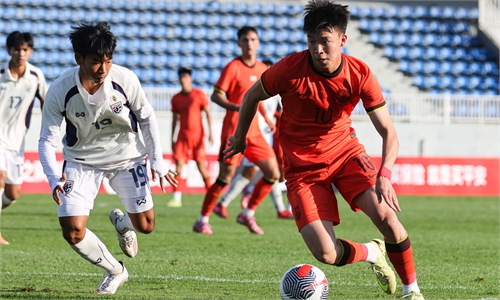
In the past the Chinese national team has often relied on episodic bursts of energy, but less so on clearly defined tactical identity or psychological resilience. When matches matter, issues such as poor mental composure, tactical naivety and inability to adapt often surface.
What the national team now needs is a clear, executable match-style that the players understand, buy into and can train for. It needs a mindset of winning, not just survival. It needs robust systems on both sides of the ball, smart transitions, clarity in roles and the capacity to impose themselves even when opponents press. That is the place where Shao must show his worth.
The CFA's own statement on Shao's appointment emphasized "long-term development" rather than chasing immediate rescue. But in practice the fans will quickly judge based on the next few matches: will we see glimpses of style or coherence? Results may not instantly follow, but the trend must be maintained.
Another important dimension of this appointment is its broader implication for domestic coaches. Traditionally, China has leaned heavily on foreign coaches for its national team. That model might yield immediate technical gains, but has often failed to build long-lasting structures. By entrusting Shao to the job, the CFA is signaling that domestic coaching can be part of the solution, not just an afterthought.
If Shao will succeed, even modestly, it could unlock a new phase: more home-grown coaches trusted with big roles, more alignment between domestic club development and national team identity, more continuity in philosophy across age-groups. That would have value well beyond the current cycle. If things go poorly, the fallout may not simply affect Shao, it may undermine confidence in domestic coaching generally, strengthen calls for foreign "fixers" and reset the clock back to square one.
Despite the promise, the obstacles facing Shao are formidable. China's elite player pool remains narrow compared to leading Asian teams. The gap in top-level experience, exposure to high-pressure matches and tactical sophistication is real and it will limit how much a coach can do, especially in the short term.
When a national team hasn't delivered for years, expectations often flip between hope and cynicism. The public may start giving Shao a chance, but the window is not unlimited. He must show credible momentum. If he can deliver consistent improvement in style and results, Shao's appointment could finally mark a true turning point for Chinese football.
The author is a reporter with the Global Times. life@globaltimes.com.cn
RELATED ARTICLES