Surge in robotics industry events highlights China’s accelerating path toward quality devt
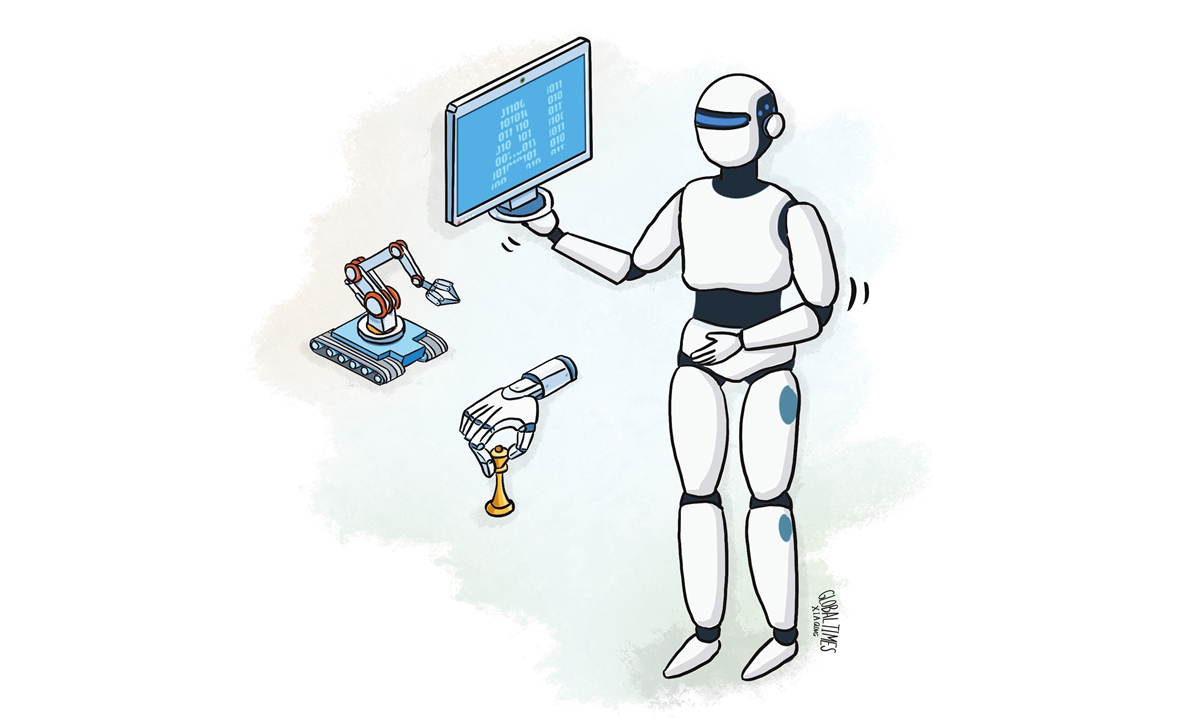
Illustration: Xia Qing/GT
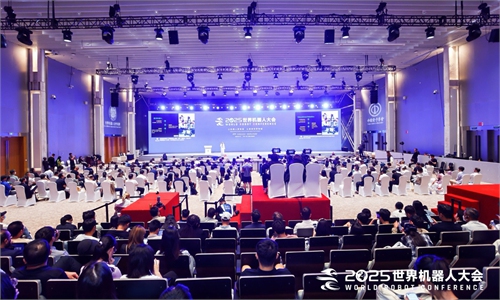
The 2025 China Robot Industry Development Conference is scheduled to be held in Shanghai from Monday to Wednesday, according to a notice posted on the China Machinery Industry Federation's WeChat account on Sunday. The conference will bring together enterprises, research experts, and industry associations to discuss frontier technologies in robotics, artificial intelligence (AI), and industrial innovation.From the Zhongguancun Embodied Intelligence Robot Application Competition to the 2025 China Robot Industry Development Conference in Shanghai, new developments are emerging frequently in the robotics field. From innovation competitions to high-level industrial forums, the frequency and scale of recent activities in China this year underscore a key message: the development of China's robotics industry is accelerating, driven by a combination of policy support, technological breakthroughs, and market momentum.
Industry observers expect more surprises in the robotics field next year. This confidence reflects not only the expected wave of innovation in 2025 but also forward-looking optimism for 2026 and beyond. As embodied intelligence, AI, and manufacturing technologies continue to converge, robots are becoming more intelligent, cost-effective, and seamlessly integrated into everyday human life.
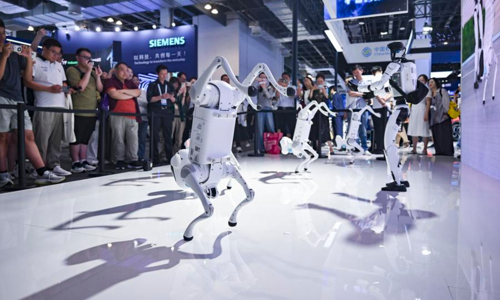
This deep fusion of AI and manufacturing is reshaping China's industrial landscape. Service robots are finding applications in healthcare, logistics, and education, while industrial robots are enhancing precision and productivity in factories, and embodied intelligence technologies are bringing human-like perception and adaptability into machine design. The rapid progress in these areas points to a maturing ecosystem that connects research, commercialization, and consumer adoption.
The industry has continued to expand steadily. The output of China's robotics industry in the first three quarters surpassed the full-year figure in 2024, the China Securities Journal reported. In the first three quarters of this year, the industry's revenue grew by 29.5 percent year-on-year. Output of industrial robots reached 595,000 units, while service robot production hit 13.5 million sets, both surpassing the full-year totals for 2024.
Beyond quantity, the quality of China's robotics industry is improving rapidly. The performance, stability, and precision of domestic robots have advanced significantly. Chinese manufacturers are increasingly focusing on software, control systems, and core components such as sensors and servomotors - key areas that determine competitiveness in high-end robotics. As innovation-driven development takes hold, the industry's value chain is shifting upward toward smarter, more autonomous, and more service-oriented applications.
On the global level, by integrating embodied intelligence, AI, and manufacturing, China is accelerating innovation and shaping international standards, positioning itself as a key driver of the global robotics ecosystem. At the recent 138th China Import and Export Fair (Canton Fair), a dedicated robotics zone was once again featured, showcasing robots that serve all aspects of production and daily life, with overseas orders continuing to rise.
While Chinese robotics products are gaining increasing competitiveness abroad through high quality and cost-effectiveness, they are simultaneously empowering domestic industries, including high-end manufacturing, to upgrade continuously. China has remained the world's largest industrial robot market for 12 consecutive years, according to the China Securities Journal. The World Robotics Report 2025 released by the International Federation of Robotics showed that China's operational robot stock exceeded 2 million units in 2024, ranking first globally.
The coming years are expected to mark more milestones for China's robotics industry. With continued investment in digital infrastructure, greater integration of AI and industrial processes, and deeper collaboration between enterprises and research institutions, the sector is poised to play a central role in China's broader strategy for intelligent transformation and high-quality economic growth.
In line with the strategy of developing new quality productive forces, China's robotics industry is increasingly becoming a pivotal driver for high-end intelligent manufacturing. As the capacities of machine intelligence continue to improve, China's robotics industry is not only shaping the future of manufacturing - it is redefining the future of work and productivity itself.
The author is a reporter with the Global Times. bizopinion@globaltimes.com.cn
RELATED ARTICLES