Illustration: Tang Tengfei/GT
China's growing exports to Europe have again drawn public attention. A European Central Bank study, released on Tuesday, suggested that "weak domestic demand appears to be the missing link in explaining China's strong exports to Europe." This assessment misreads the evolution of China's economy and risks reinforcing outdated assumptions about global trade dynamics. Rather than signaling an imbalance, China's export momentum may instead point to the emergence of new, mutually beneficial opportunities for economic cooperation between China and the EU.According to Chinese customs data, China's exports to the EU rose by 7.5 percent year-on-year in the first 10 months of this year, reflecting Europe's growing demand for high-quality Chinese products. This trend is being driven by European consumers and industries seeking competitively priced, technologically advanced goods that align with shifting market priorities.
Assertions by some Western media outlets that "China is dumping surplus product on European markets" misrepresent this reality and overlook the underlying demand-side factors. In practice, Chinese exports have supplied Europe with cost-effective and innovative products that enhance consumer choice and industrial efficiency.
Understanding this development requires moving beyond a narrow focus on short-term trade balances to the broader transformation of China's growth model. In recent years, the economy has shifted from one largely driven by investment and capital input to one increasingly led by innovation and domestic consumption. China has become one of the world's largest consumer markets, shaped by new preferences - from digital lifestyles to experience- and emotion-driven spending. Western observers who describe Chinese consumption as "weak" often overlook both the scale and sophistication of these trends.
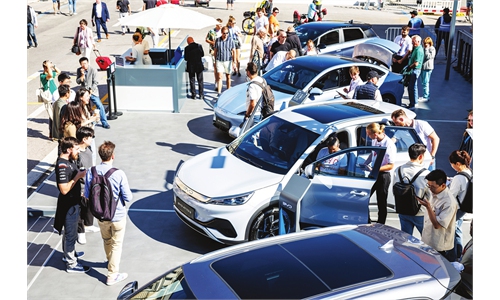
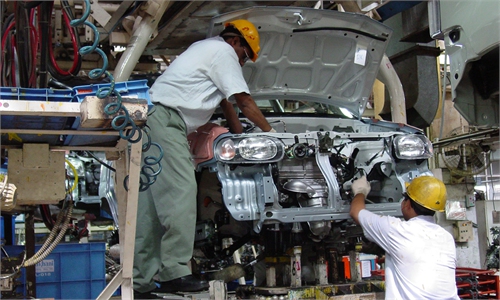
This upgrading of consumption has driven a corresponding transformation in supply. China's manufacturing sector has steadily moved up the value chain, investing in advanced technologies, high-end production, and green manufacturing. Intense domestic competition has fostered firms capable of competing on a global scale. It is therefore unsurprising that many of these products - including electric vehicles (EV) and other high-tech goods - are gaining traction in European markets.
Attributing China's export growth to so-called "weak domestic demand" is misleading and overlooks the broader context. Two underlying factors merit attention: the upgrading of China's consumer market and the modernization of its manufacturing sector. Far from constraining trade, both developments create tangible opportunities for China-Europe economic engagement, giving European businesses access to a sophisticated consumer base and a growing range of high-quality, globally competitive Chinese products.
As Chinese products gain market share in Europe, some Chinese companies are exploring localized production and investment across the continent. Establishing factories and research partnerships could strengthen industrial linkages and regional value chains, while also generating employment and economic growth, resulting in mutually beneficial outcomes for both sides.
Chinese investment in Europe rose for the first time in seven years in 2024, driven by a surge in EV and battery projects in Hungary, the Financial Times reported in May, citing data from the Berlin-based Mercator Institute for China Studies and consultancy Rhodium Group. According to the report, total Chinese foreign direct investment in the EU and UK increased by 47 percent, signaling a renewed wave of capital flows that could support industrial development and deeper economic engagement.
China and Europe have new opportunities for cooperation, driven by the parallel forces of economic growth and technological advancement. Rising Chinese consumption and increasingly sophisticated manufacturing, combined with Europe's strengths in innovation and design, create fertile ground for partnerships. From advanced manufacturing and green technologies to high-end consumer products, these opportunities offer mutual benefits for businesses, consumers, and broader economic ecosystems.
It is understandable that China's export growth to Europe draws attention within European markets. Yet this expansion is only one aspect of a deeper trend: strengthening economic complementarity between China and Europe. The priority should be to recognize the structural drivers behind these exports and to translate them into tangible opportunities, with a view to help rising trade flows support collaboration rather than contributing to concern.
While outlets such as Reuters have noted that "pressure has been growing on the EU to act on surging imports from China," the reality is more nuanced. The task for the EU is to exercise strategic foresight by identifying areas where engagement can create value rather than conflict. How Europe navigates this moment will test its ability to turn these shifts into opportunities for innovation, investment, and deeper economic integration.
RELATED ARTICLES