China’s economic outlook is very good in next 5 years; CPC leadership greatest advantage: Canadian scholar
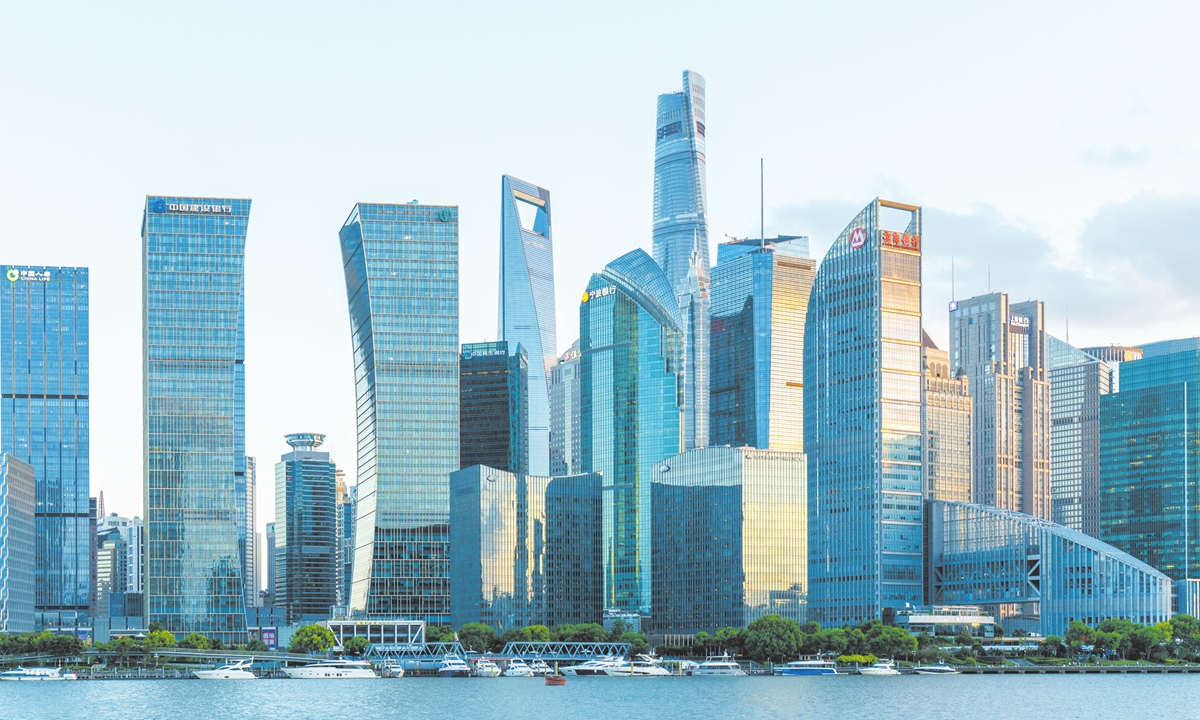
A view of the Lujiazui area in Shanghai on August 27, 2025 Photo: VCG
China's economic outlook is very good during the 15th Five-Year Plan period (2026-30) and my confidence comes from what I know about the Communist Party of China (CPC): it is committed to law-based governance, development, capable of learning from its own mistakes, correcting them and moving forward toward its goals.
The CPC has shown itself to be sensitive to the concerns of its own people and to those of the rest of the world. The vast consultative exercise that was undertaken in the run up to the 15th Five-Year Plan is an exercise in democracy, in the whole-process people's democracy.
At the Fourth Plenary Session of the 20th Central Committee of the CPC recently, the CPC leadership adopted its recommendations for formulating the 15th Five-Year Plan (2026-30), and established the following guiding principles for economic and social development during the 15th Five-Year Plan period: upholding the Party's overall leadership; putting the people first; pursuing high-quality development; comprehensively deepening reform; promoting interplay between an efficient market and a well-functioning government; and ensuring both development and security.
The CPC has to be commended for its vision and its commitment to developing China, improving the lives of Chinese people and also sharing the fruits of that development with the rest of the world. This involves pursuing both equality and social justice on the one hand and the development of the productive forces on the other.
This year marks the final lap for China's implementation of its 14th Five-Year Plan (2021-25). From 2021-24, the country contributed an approximate annual average of 30 percent of global growth during the period, becoming a crucial stabilizer and driving force for the world economy. The momentum is expected to sustain in the coming five years.
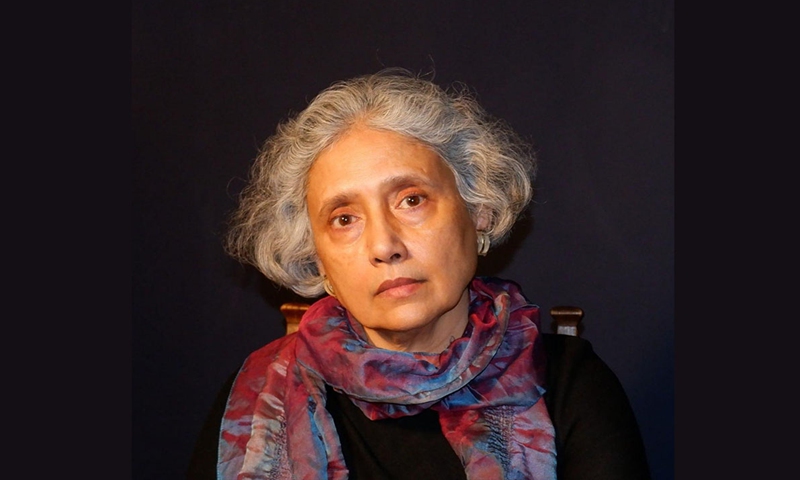
Radhika Desai, a professor at Department of Political Studies of University of Manitoba, Canada and a Visiting Professor at the Department of International Development of the London School of Economics and Political Science Photo: Courtesy of Radhika Desai
Under leadership of the CPC, China has negotiated the complex process of transitioning from a high growth model to a more moderate growth. Under the new model, the growth rate remains high by international standards, while at the same time, the emphasis is on quality of goods and services, on high technology, on higher wages and the expansion of the domestic market and dual circulation and increasing the resilience of China's economy to external shocks. Though trade as a proportion of GDP has declined somewhat, in absolute terms, trade is growing and China's trading partners have diversified.
All this is excellent for China's economy and for the Chinese people, while the country's high-quality development also injects fresh confidence and momentum to the world.
It's worth noting that the recommendations stressed that China will continue to expand opening-up at the institutional level, safeguard the multilateral trading system, and promote broader international economic flows.
I believe China will be inviting foreign investment in certain key service sectors, such as hospitals, and new techniques - of both production and management - in China's own health sector. Additionally, I see that expanding Chinese consumption of imported goods is also envisaged, as is a continued effort to upgrade Chinese industry to ever higher technological levels so as to keep it export competitive. These two things go together.
Related to this, there is also the announcement that China will not seek any new special and differential treatment in the current and future WTO negotiations. This is very important and it signals that China is focusing more on its trade with the developing world over which it has many advantages.
As China moves to the forefront of creating a cooperative and multipolar world, it is bound to both actively promote and set an example for creating a world which both increases its openness and manages it better.
The country has already done a great deal with its investments abroad and by promoting multilateral institutions of global governance, such as the BRICS or the Shanghai Cooperation Organization and by insisting on the historical gains in international governance represented by the United Nations and standing up for its charter as embodying the correct principles for the governance of a more equal and open world.
I have long said that the word "globalization" is understood very differently in some Western economies and China. In those Western economies, it means uncontrolled freedom of corporations and capital to move around the world, uncontrolled trade no matter its costs on particular social groups etc. In China globalization and opening-up means deepening international economic cooperation in a managed way so that all countries benefit and the costs and benefits are equally distributed within countries. Long may China's vision of globalization live and thrive.
The author is a professor at Department of Political Studies of University of Manitoba, Canada and a Visiting Professor at the Department of International Development of the London School of Economics and Political Science. bizopinion@globaltimes.com.cn
RELATED ARTICLES