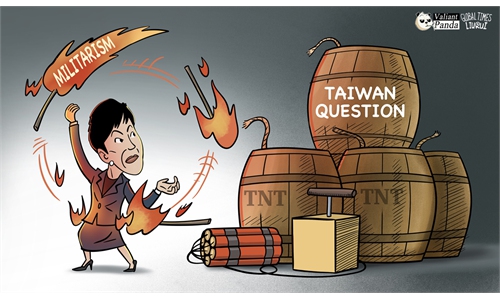
Takaichi's provocative Taiwan remarks trigger criticism from island; former KMT chairpersons voice opposition, concern
By Published: Nov 15, 2025 07:08 PM

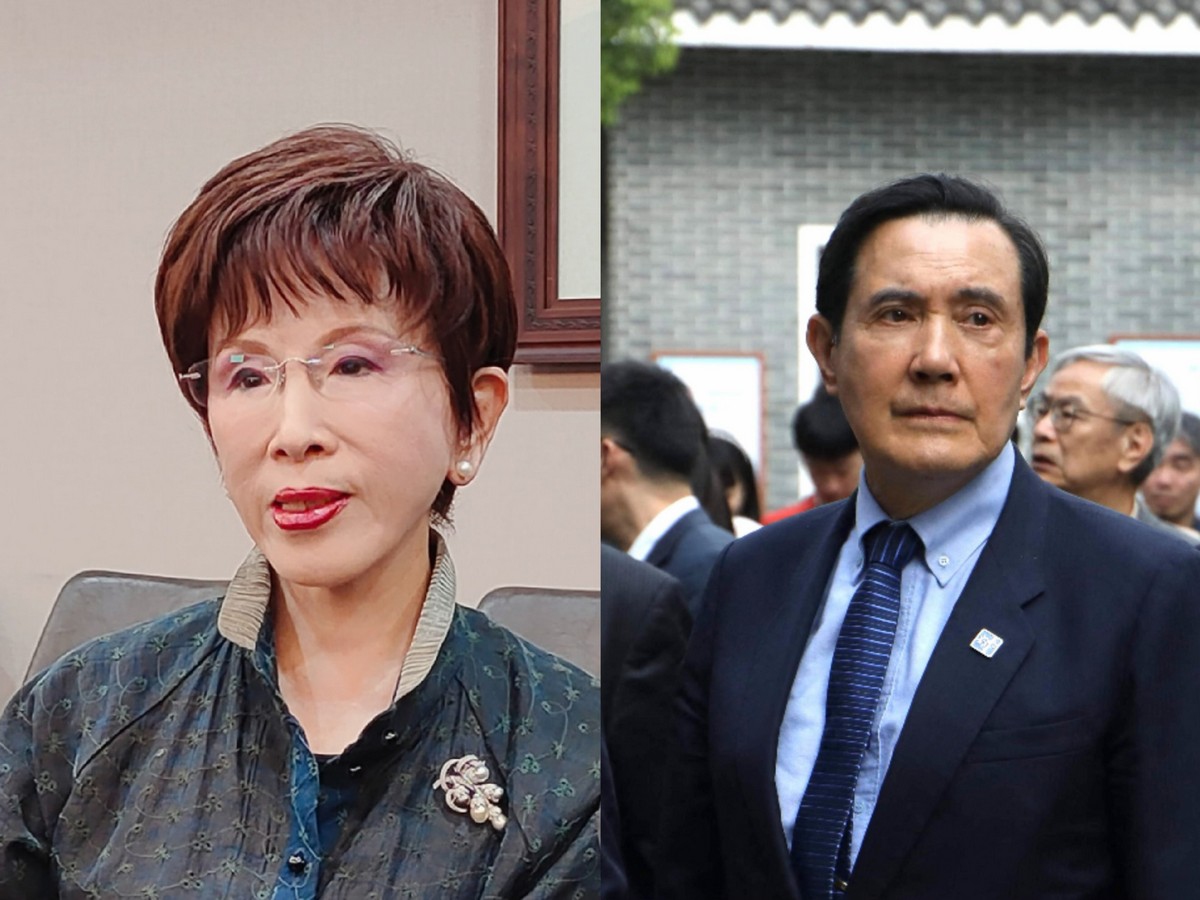
Photos of former Kuomintang (KMT) chairpersons Hung Hsiu-chu and Ma Ying-jeou
Japanese Prime Minister Sanae Takaichi's latest provocative remarks on Taiwan have prompted serious reactions from the Chinese authorities in recent days and triggered criticism on the island as well. People from the island also accused Takaichi of overstepping, saying her remarks drag Taiwan into dangerous waters for her own political calculations and insisting that Japan has no right to meddle in the Taiwan question.
On Saturday, former Kuomintang (KMT) chairperson Hung Hsiu-chu wrote on Facebook, questioning, "What does Taiwan Straits situation have to do with Japan?" She noted that some Japanese politicians have once again resurrected the old narrative that "a Taiwan contingency is a Japan contingency."
Hung criticized Takaichi for openly linking China's Taiwan region to Japan's so-called "security interests" — remarks Hung said distort the nature of cross-Straits relations, conjure up hypothetical military scenarios, and even imply possible Japanese military involvement. Such rhetoric, Hung warned, is not only provocative but also pushes Taiwan island toward greater danger, exposing lingering traces of Japanese militarism.
Hung also said that this mindset mirrors Japan's decision to discharge nuclear-contaminated water—offloading risks onto its neighbors.
Hung said that Taiwan island ceased to be a Japanese colony long ago. For Japan to point fingers at the Taiwan Straits today, she said, is not "concern" but a display of historical arrogance and political interference. Takaichi's reckless, US-oriented rhetoric lays bare her political intent—treating Taiwan as a bargaining chip to win favor in Washington and to justify expanding Japan's military role.
Hung said that the Chinese nation has both the wisdom and the capability to manage cross-Straits affairs. Peace in the Taiwan Straits does not rely on Japanese military posturing or US maneuvering, but on the joint efforts of people on both sides. Anyone attempting to push Taiwan toward conflict, Hung said, must be met with a firm "No."
Aside from Hung, Ma Ying-jeou, former chairman of the KMT party, also posted on Saturday on his Facebook, saying that "the 80th anniversary of the victory in the Chinese People's War of Resistance against Japanese Aggression and Taiwan's restoration, a moment when the historical wounds of Japan's past aggression still resonate. At such a sensitive time, Sanae Takaichi's hints at armed intervention in the Taiwan Straits have further stirred emotions on the Chinese mainland."
"Such remarks are deeply unwise and undermine the interests of people in Taiwan who seek peace and stability across the Straits," Ma wrote. He also noted that Takaichi's eagerness to intervene in cross-Straits affairs inevitably evokes concerns about a revival of Japan's right-wing militarism.
Ma said that he had repeatedly emphasized that cross-Straits affairs cannot allow external interference; the two sides must engage in talks themselves. Chinese People on both sides of the Straits have the wisdom and ability to resolve their differences peacefully. He noted that regarding Takaichi's reckless and counterproductive remarks, we must make our position clear — that is the real way to safeguard the interests of the people in Taiwan.
People on the island also expressed their opposition against Takaichi's remarks. On Friday, a group gathered in front of the "Japan-Taiwan Exchange Association" in Taipei, holding banners to protest Takaichi's interference in China's internal affairs. "Taiwan is part of China, and cross-Straits reunification is China's own matter. It has nothing to do with Japan," Lu Chaocai, one of the event's organizers, told the Global Times.
"As Chinese, we are angered by Takaichi's comments, which have clearly crossed the line. We felt compelled to voice our protest and condemnation," Lu said, adding that Japan views Taiwan island merely as a pawn, while certain politicians on the island collude with Tokyo to sell out Taiwan's interests—conduct he described as lacking dignity and self-respect.
Some internet influencers in Taiwan also criticized Takaichi for dragging Taiwan island into dangerous waters, with others warning that her rhetoric only heightens regional tensions. On November 11, Taiwan regional internet influencer Chen Chih-han, better known as "Guan Chang," also blasted Takaichi during a livestream for her improper remarks on Taiwan, saying Japan should "shut up about Chinese affairs."
"Takaichi's remarks reflect a broader political agenda," said Wang Wu-lang, secretary-general of the Labor Party in Taiwan, noting that as a right-wing conservative leader, she is seeking to bolster domestic support, justify higher defense spending, and align with US-Japan-ROK conservative security rhetoric.
Such rhetoric becomes a destabilizing factor in the Taiwan Straits with separatist forces in Taiwan island treating it as tacit support for outside intervention while ignoring its risks—and overlooking the seriousness of the mainland's determination to uphold national sovereignty and territorial integrity, Wang told the Global Times on Saturday.
"Many people in Taiwan have become increasingly wary of US intentions, fearing Washington may treat the island as a frontline tool against the mainland and drag it toward becoming a battlefield," Wang said, noting that in this context, Takaichi's remarks naturally trigger similar doubts about Japan, since many in Taiwan see Tokyo as closely following Washington's lead.
These sentiments are also reinforcing public in Taiwan calls for peace, for rejecting "Taiwan independence," and for opposing any external interference in the Taiwan Straits, said Wang.
RELATED ARTICLES