ARTS / BOOKS
Chinese writer Liu Liangcheng’s literary journey transforms a rural village
Stories grown from the soil
By Published: Nov 19, 2025 12:14 AM

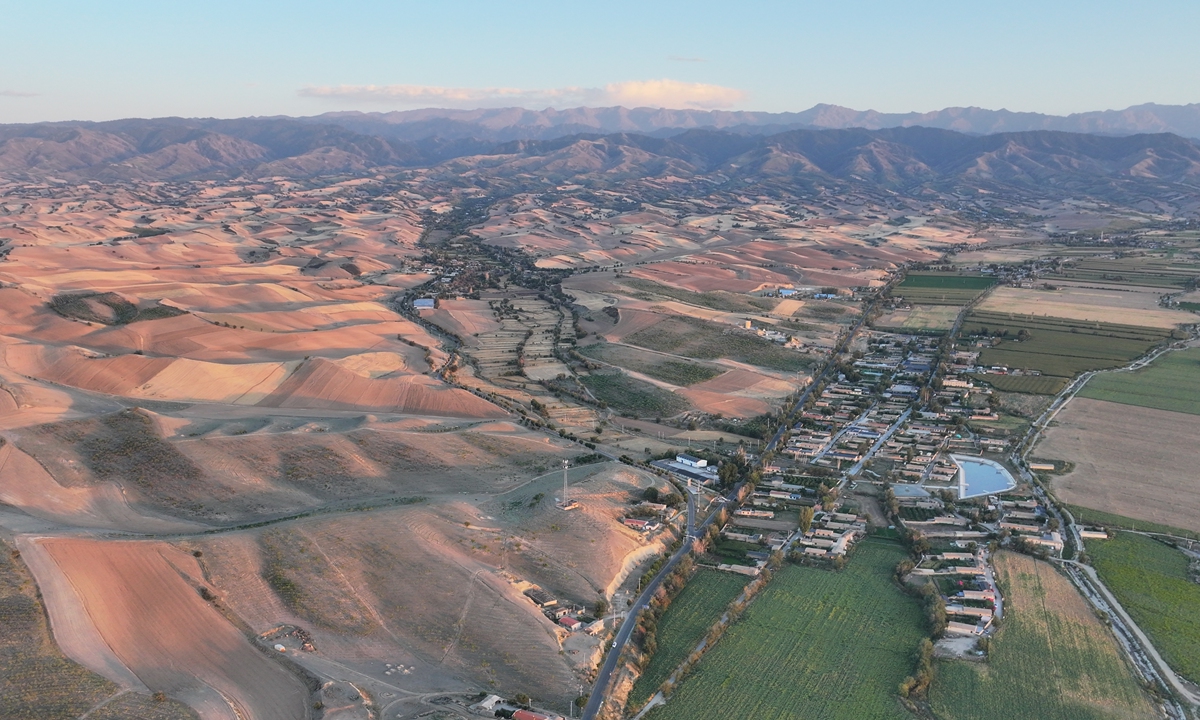
An aerial view of Caizigou village in Northwest China's Xinjiang Uygur Autonomous Region Photo: IC
Late autumn in Beijing unfurls like a painting, red bricks and green tiles set off against golden leaves, a beauty that even the richest words cannot fully capture. Yet, as the city bathes in its autumn splendor, Chinese writer Liu Liangcheng's thoughts drift thousands of miles away, back to his courtyard in Caizigou village in the Kazak Autonomous County of Mori, Northwest China's Xinjiang Uygur Autonomous Region. After attending a seminar for his new book, he returned home to a land ablaze with color: apricot, apple, and Russian olive trees swaying in the wind, their green, crimson, and orange hues a palette no human hand could imitate.President of the Xinjiang Uygur Autonomous Region Writer Association, Liu has spent over a decade living in this village. He said he loves this place. If writing ever stalls him, he simply puts down his pen and returns to daily life, picking up a saw to cut wood or resting in the shade of a tree. He is often reminded of the trees that have flourished in his stories, growing both in reality and in his imagination. It is here that Liu has written three of his most significant novels: Shaohua (lit: Taking a message), the Mao Dun Literature Prize-winning Benba, and his latest work, Changming (lit: Longevity).
"I never need to seek inspiration in the countryside; the land itself is a wellspring of stories," Liu told the Global Times. The essence of rural life, he said, is slowness. Everything moves at its own pace, allowing the writer to tell stories "unhurriedly."
But while the countryside is slow, it is also slowly aging. That's why, Liu decided, he wouldn't confine the countryside solely to his literary works, he would strive to preserve it in real life, too.
In Caizigou village, Liu has spearheaded the creation of an artist village, joining hands with locals to renovate old houses and establish spaces like a lecture hall and a rural art museum. Over time, dozens of writers and artists have settled here, and the village has been transformed. Liu has observed these changes closely: "Literature and art have truly changed the village, they have given it the power to transform."
Home for the soul
Liu returned from the city to the countryside at the age of 50.
He discovered Caizigou, a village that, to him, felt like the very end of time. He settled there with his family, converting an old school into a vast courtyard that is illuminated by a sky full of stars at night. The inspiration for Liu's latest novel, Changming, also came from Caizigou village.
"I don't often chat deeply with villagers," Liu said, "but my wife does. She and other women her age often gather to share stories, speaking so candidly that every detail of their family lives is laid bare."
He recalled how, one day, his wife told him of a local family whose ancestral tomb had been washed away by flood years before, exposing an old genealogy book. Only then did they discover their ancestors' tribe had been wiped out over 130 years ago; only a mother and her young son had escaped, settling in this very place and, after a century, flourishing anew.
Such a story is as gripping as legend, but for Liu, it remained simply a family tale, one he kept in his heart, nurturing it until, one day, an image of a shamaness able to see the world of souls appeared in his mind. He then knew the novel was ready to be written.
"I want my words to connect the lives of individuals with those of their ancestors and descendants. This relationship already exists in life, but literature must help us rediscover it," Liu said. "The novel talks about not only the protagonist's century, but also the millennia of ancestors and the eons of descendants."
Villages are never short of stories, and every old courtyard, inhabited or abandoned, may become a source of hope and spiritual refuge for a young person. Liu's daily routine revolves around two things: tending his vegetable garden and writing.
When tired of writing, he works the land, and so he has developed a special affection for the soil. He noted that whenever a person feels anxious, simply letting their hands be covered in earth can ease their mind, as the soil itself soothes both body and soul.
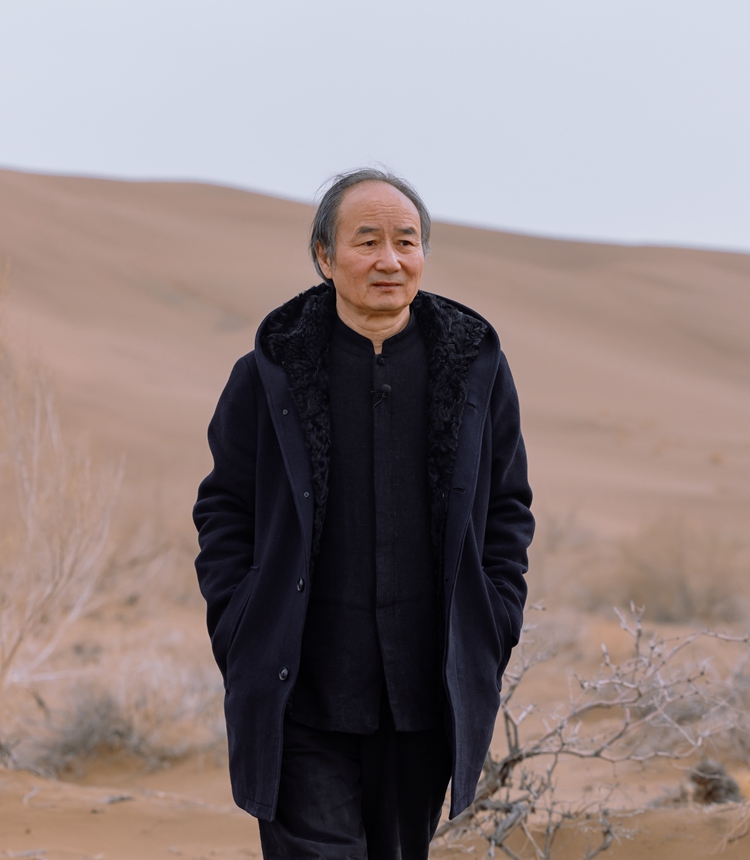
Chinese writer Liu Liangcheng Photo: Courtesy of Liu Liangcheng
Village of new storiesLiu said that, as a writer, there are many things in life more important than storytelling.
"There will never be an end to the world's stories, so there's no need to rush. Watering the vegetables or collecting eggs after the geese lay them, these are the more urgent things. When the apricot and apple trees in the courtyard are all in bloom, how can you neglect their beauty? You must go out for a walk and see them," Liu said. He treasures the feeling of being surrounded by other living beings in the village.
It turns out he is not alone in this. As Caizigou's artist village took shape, it drew in more than 20 writers, painters, and other creative outsiders.
Nourished by the scenery and daily interactions with villagers, these artists have painted the colorful hillsides and golden wheat fields, depicted rural life in their writings, and captured scenes of harvest with their cameras.
These works have brought increasing numbers of tourists to the village as they are shared through various channels. The exhibitions, workshops, and cultural events hosted by the artists offer immersive experiences, allowing visitors to connect with the village on a deeper level.
Standing as a vibrant example of how art and rural life can intertwine to create new opportunities for both creators and rural areas, Caizigou village has been influencing the surrounding rural areas, which have begun to be embraced by artistic creatives for their uniqueness, said Xiang Jun, founder of the Yuandian Gallery and an artist who settled in the village a decade ago.
"How many years later, when everything before me has reached its conclusion, time will have changed me and changed everything in the village… As time passes through this small village, I have helped time along, allowing all that should change to do so."
This passage from Liu's essay collection, Yigeren de Cunzhuang (A Village of One's Own), reads like a footnote to Caizigou's transformation. Here, the village is once again becoming "a village of many," alive with new stories, new people, and new hope.
RELATED ARTICLES