IN-DEPTH / IN-DEPTH
GT investigates: From political opportunist to militarist advocate: An expose of Japanese Prime Minister Sanae Takaichi’s radical path
By , and Shen Sheng Published: Nov 19, 2025 11:07 PM


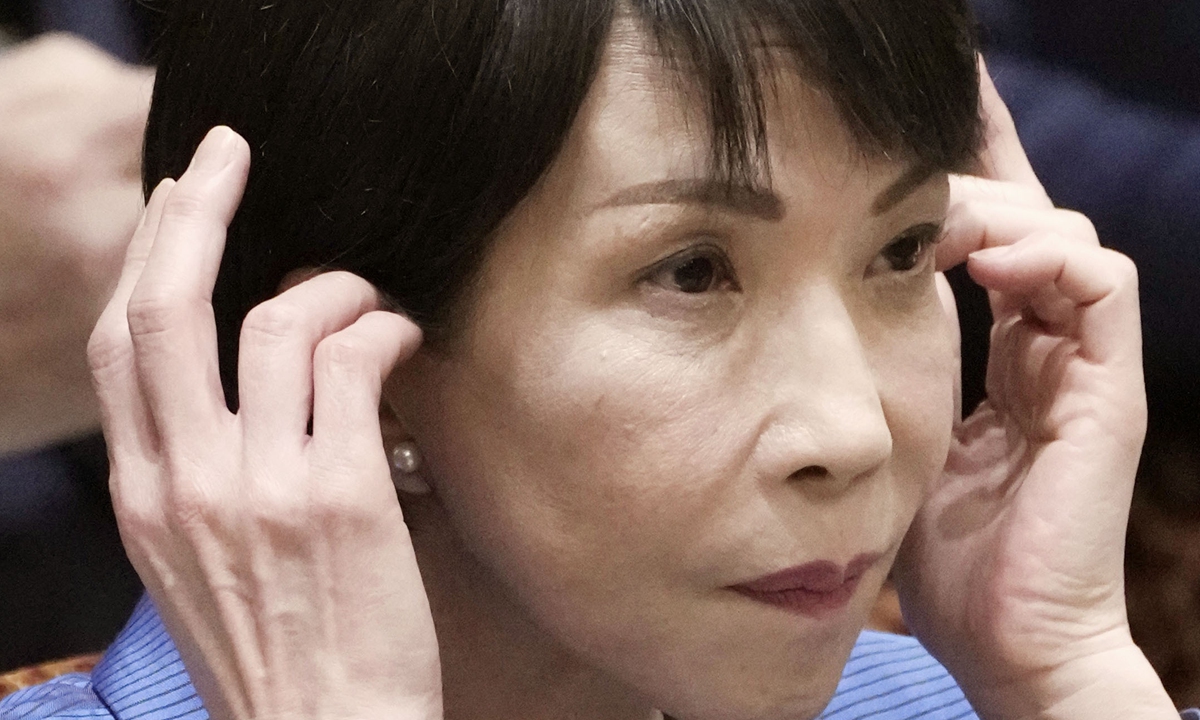
Japanese Prime Minister Sanae Takaichi listens to a question during a House of Councillors Budget Committee session in Tokyo on November 12, 2025.
Recent provocative remarks by Japanese Prime Minister Sanae Takaichi on the Taiwan question have sparked widespread anger among Chinese netizens. On social media platforms, she is labeled an "extreme right-wing politician," a "female Abe," or even an "anti-China hawk." Deeply influenced by former Japanese prime minister Shinzo Abe, her political ideology combines strengthened national security and social conservatism, permeated with historical revisionism and geopolitical confrontation, displaying an especially hardline stance toward China.Scholars noted that her provocative statements this time constitute a complete exposure of her arrogant historical outlook and erroneous claims. Tracing Takaichi's profile reveals a politician who binds personal political ambition to far-right ideals: a "troublemaker" pushing Japan to the brink of diplomatic peril, a "standard-bearer of historical revisionism" who denies aggressive history and advocates constitutional amendment for military expansion and an "immature politician" lacking long-term strategic vision, driving Japan into the dual predicament of domestic division and international isolation.
How did her upbringing and political career plant the seeds of militarism, making her a spokesperson for Japan's militarist trend? How did she develop such radical militant positions and policies? The Global Times presents the second installment of its investigative series to answer these questions.
Upbringing routes: early breeding of ultra-conservative views
Sanae Takaichi, 64, hails from Nara Prefecture in central Japan. Unlike many top-tier Japanese politicians, she does not boast a prominent political lineage. As reported by The New York Times, her mother served in the local police department, while her father worked for an automotive parts manufacturer.
Even so, unbridled ambition and reckless defiance marked her early years. An avid drummer and pianist, she was known for breaking drumsticks when she practiced heavy metal music. She also enjoyed motorcycles, cars and scuba diving - interests that hinted at a restless spirit and a willingness to challenge convention, the Times of India reported.
Yin Yue, a researcher at the Japan Research Center of Shanghai Jiao Tong University, told the Global Times that Takaichi's grassroots struggle is very pronounced. Coming from a relatively ordinary family background, she stands in stark contrast to most Liberal Democratic Party (LDP) politicians who hail from political dynasties. This more rebellious streak has shaped her distinctly aggressive and hardline personality.
In 1984, she graduated from Kobe University with a bachelor's degree in business administration and then entered the Matsushita Institute of Government and Management (MIGM).
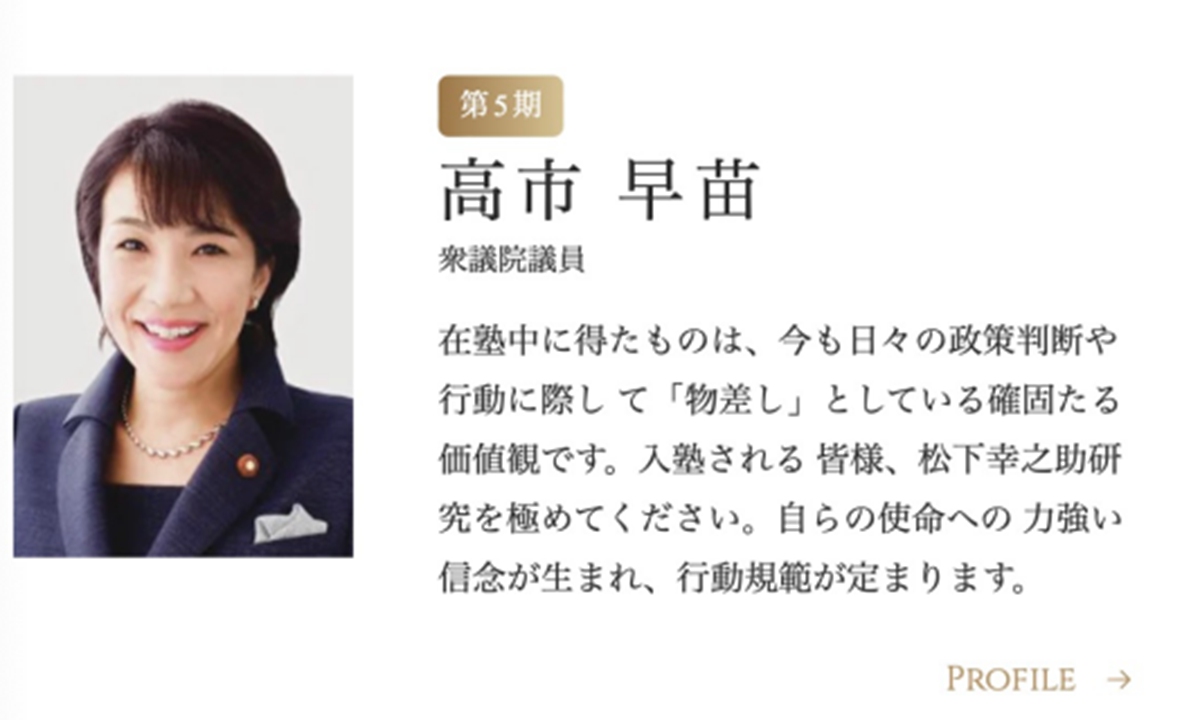
The earlier introduction of Sanae Takaichi featured on the official website of the Matsushita Institute of Government and Management Photo: Screenshot from MIGM website
Founded in 1979 by Panasonic founder Konosuke Matsushita, MIGM is dedicated to cultivating political leaders who place national interests, economic efficiency and national pride at the forefront of their vision. According to media reports, the institute has produced some of Japan's most prominent conservative politicians.
Then party senator Katsuhiko Eguchi, one of the founders of the MIGB, admitted that graduates of the Institute share similar ideals with the LDP, because Matsushita himself was a conservative liberal in the style of the LDP, BBC News reported in 2011.
It is worth noting that Eguchi also led the compilation of the book Taiwan Crisis: What Will Japan Do? Will China Invade Taiwan by 2027? in 2021, and he publicly advocated that "a Taiwan crisis is a US-Japan crisis."
Within the MIGM, a strong emphasis was placed on traditional Japanese culture and the "spirit of self-reliance," while sharply criticizing the "postwar masochistic view of history" that they believe has robbed postwar Japanese of their pride. Some views posted on the official website of the institute assert that Japan must cast off the "defeated nation" burden and rebuild national confidence, according to its official website.
Chinese analysts believe these ideas planted the seeds for her later actions, such as visiting the notorious Yasukuni Shrine and adopting positions that deny or downplay the Nanjing Massacre, which also triggered protests from China and South Korea.
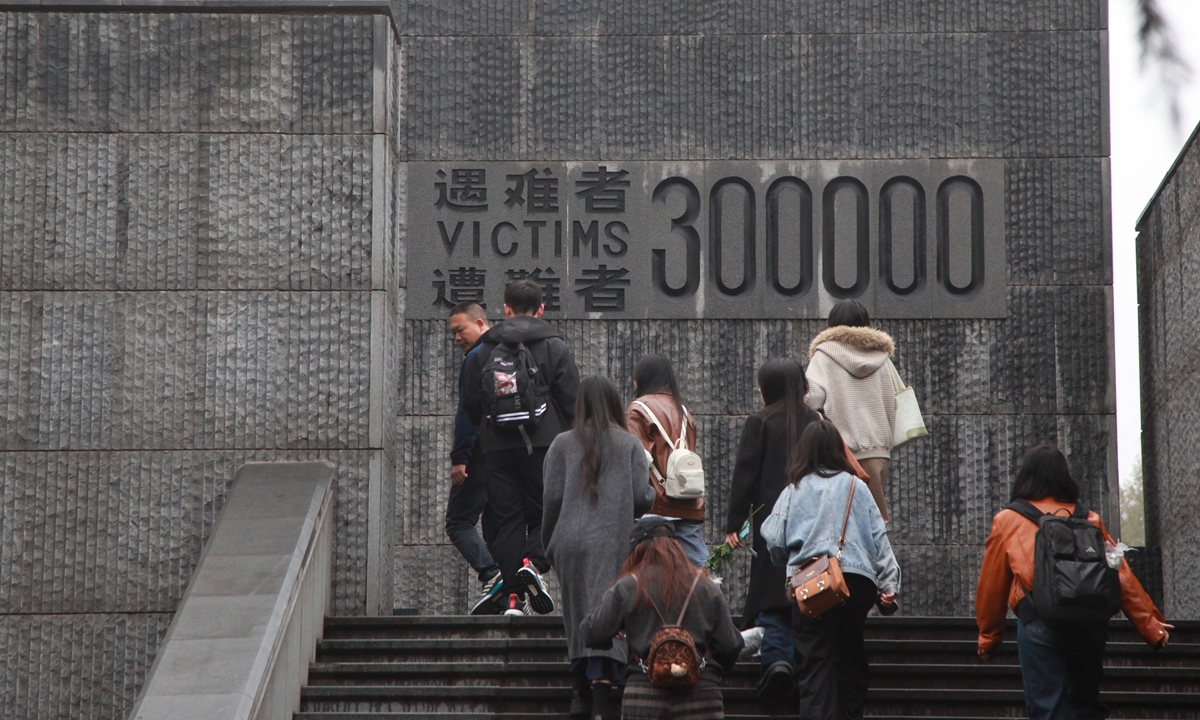
People visit Memorial Hall of the Victims in Nanjing Massacre by Japanese Invaders in Nanjing, East China's Jiangsu Province on November 9, 2025. Photo: IC
While at the institute, she formed connections with individuals who would later become prominent figures in Japanese politics. In preparation for her third bid for the LDP presidency, she formed a cross-factional group composed primarily of mid-career and younger Diet members that transcended old factional boundaries. Among its members were her fellow MIGM alumni Hiroshi Yamada and Hitoshi Kikawada, Nikkei Asia reported.
Public information shows that in March 1989, she became a host at TV Asahi, and in November 1990, Takaichi was hired as a host by Fuji TV. Yin noted that this experience helped pave Takaichi's path in politics: on one hand, her high public profile made it easier to attract votes, and on the other, her eloquence enabled her to better grasp and shape public opinion.
In 1993, she formally entered politics and was elected to the House of Representatives. In Takaichi's autobiographies and the best-selling collections of stories about her early life online, it is not hard to spot covers emblazoned with keywords that underscore her tough and bellicose stance - such as "Make the Japanese archipelago strong and prosperous" and "The lies of the doves."
These ultra-conservative ideas were further reinforced after she entered politics and came to view Shinzo Abe, whom she later idolized.
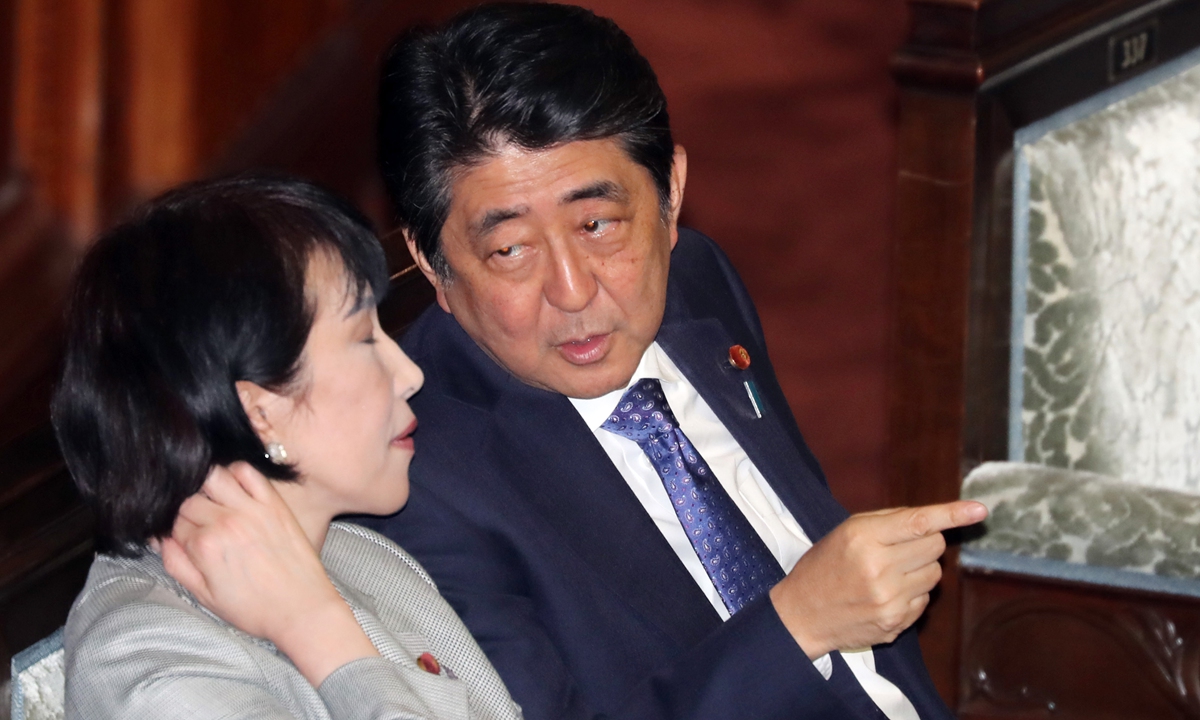
Then Japanese prime minister Shinzo Abe chats with then internal affairs minister Sanae Takaichi at Lower House's plenary session in Tokyo on May 18, 2017. Photo: VCG
Entering politics: a militaristic, anti-China pathSince first winning a seat in 1993 in the Japanese parliament's lower house, the House of Representatives, Takaichi has spent more than three decades in politics. From being initially relatively obscure, to gradually becoming a representative figure of radical right-wing politicians in Japan's political arena, Takaichi's political journey has been a path marked by opportunism, a steady drift to the right and toward militaristic positions, and an increasingly anti-China stance, Yang Bojiang, director of the Japan Research Institute at the Chinese Academy of Social Sciences, told the Global Times.
Signs of Takaichi's opportunism appeared early. According to the Japanese Prime Minister's Office website, she was first elected in the 1993 general election. The following year, Jiji Press reported that she had joined the "Liberals" party, which later merged into the New Frontier Party. In 1996, Takaichi was re-elected as a member of the House of Representatives. After the New Frontier Party suffered nationwide defeats, Takaichi defected to the LDP, a move that reportedly drew criticism from her former New Frontier Party colleagues.
When she first entered politics as a young member of the LDP, Takaichi's militaristic views were evident early on. According to a Times of Japan report on October 17, as a then junior lawmaker, she endorsed a book about Hitler's electoral campaign tactics and was once "photographed meeting with a Holocaust denier." From this evidence, it can be seen that militarist ideas have been deeply ingrained in Takaichi's mind since the start of her political career.
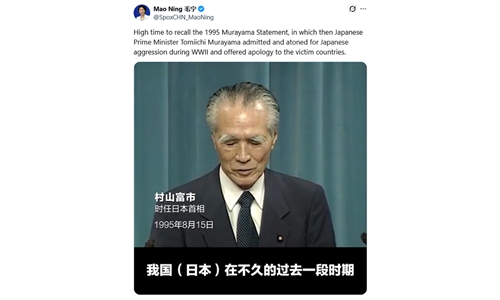
Takaichi also provoked public outrage early in her political career for denying and downplaying Japan's history of aggression. Japanese media recently released a video from the 1990s of Takaichi questioning then prime minister Tomiichi Murayama on why, in his capacity as prime minister, he admitted on behalf of Japan that the war of aggression back then was wrong. "I don't want you apologizing as our representative without authorization," Takaichi, who was then a lawmaker, pressed Murayama sharply.
It is therefore of little surprise that Takaichi has ties to the extreme nationalist group Nippon Kaigi (Japan Conference). Takaichi's official website lists her as vice chair of a caucus of Diet members for Nippon Kaigi, reported Asahi Shimbun on October 8. It is a widely regarded right wing, ultraconservative organization infamous for attempting to reinterpret Japan's wartime history and for seeking to revise Article 9 of the Japanese Constitution, which prohibits the use of force to settle international disputes.
While Takaichi's early political career hinted at an affinity for extreme right wing and militarist ideas, after she moved closer to former prime minister Shinzo Abe and joined his cabinet for the first time in 2006, she seemingly began to make increasingly targeted and inflammatory remarks about China. That further lays bare her radicalism, shortsightedness and tendency to overreach in handling historical issues and regional relations, Yang noted.
According to a Xinhua News Agency article, Takaichi's rise owes much to the patronage of Abe, who some Japanese media have described as her political mentor. Takaichi's stances on historical interpretation, constitutional revision and military expansion, and on policy toward the Taiwan question, closely follow Abe's line and in some respects surpasses it, said the article published on November 16.
In August 2007, Takaichi was the only member of the then Abe cabinet who, alongside former prime minister Junichiro Koizumi, visited the notorious Yasukuni Shrine on the anniversary of the end of WWII, reported the Toronto Star the same month. In the years that followed, she made repeated high-profile Yasukuni Shrine visits as a Japanese cabinet member, The Japan Times reported on October 16, a practice the international community regard as notorious that further cemented her public image as a militarist and a staunch anti-China figure.
Yang told the Global Times that militarism has never been eradicated from Japan's political and social spheres, and in recent years it has been visibly resurgent. Chinese experts underlined that Takaichi's political rise shows that she precisely rode the wave of the conservative resurgence in Japanese politics.
Right-wing conservative politicians have systematically transformed the old militarism into a new form: during long periods of conservative rule, they have pursued "normal country" status and great-power military-political standing. This created the fertile soil that allowed Takaichi to rise to power and steer the country sharply rightward, Yang said.
After the LDP won the 2012 House of Representatives election, Takaichi, one of the core members of the then Abe's cabinet, once again became a frequent presence in the media and public eye along with her militaristic and inflammatory remarks.
In January 2013, Takaichi pressed Abe to live up to his nationalist campaign rhetoric, and said that "Japan should reconsider past apologies made for its wartime actions and expand its regional presence," and suggested that "Japan's leaders should pay annual visits to the Yasukuni Shrine," The Wall Street Journal (WSJ) reported in January that year. Takaichi also claimed that China's growing military might was a "threat," according to the WSJ report.

A photo of Takaichi alongside neo-Nazi politician Kazunari Yamada in 2014 Photo: Screenshot of CCTV program
In 2014, as Japan's newly appointed internal affairs minister, Takaichi became embroiled in controversy along with a center-right lawmaker after pictures of them posing with a neo-Nazi leader emerged online. A self-styled neo-Nazi, Kazunari Yamada was then the leader of the fringe National Socialist Japanese Workers Party (NSJAP), whose insignia is a mixture of a swastika and a Celtic cross, according to the International Business Times.In 2021, Takaichi ran for the presidency of the LDP, and publicly declared the desire to "strengthen economic security to counter an increasingly aggressive China," Nikkei Asia reported in September 2021. Though unsuccessful in her bid, the public has since observed her increasingly leveraging China-related issues to craft an image as a hardline "China hawk," a probable strategy aimed at courting favor with Japan's right-wing factions, according to the Sankei Shimbun.
This year, prior to announcing her candidacy for the presidency of the LDP again in September, Takaichi once more made provocations on China-related issues to generate publicity and accumulate so-called political capital. In April, she made a high-profile visit to the island of Taiwan and met with Lai Ching-te. She said at a press conference on-site that even Japan and the island have a non-governmental practical relationship, the two "should unabashedly strengthen their practical cooperation," reported the Sankei Shimbun in Japanese on October 4.
To consolidate her own power, she frantically panders to far-right forces and projects conflicts onto external factors such as China. Under the banner of "defending national interests," she is willing to expose the entire Japanese population to the enormous risks of military intervention in the island of Taiwan. She consistently places her personal political interests above the national interest, narrowly defining the national interest as military expansion and camp confrontation while ignoring the far more urgent tasks of structural economic reform and improving people's livelihood, Yang stressed.
Yang argued that amid soaring prices, widening wealth gaps and public anger over "money politics" in Japan, Takaichi has ignored people's livelihoods. Instead, she devotes administrative resources to constitutional revision, military expansion and interfering in other countries' internal affairs, undermining regional peace.
This short-sighted, self-serving governance runs counter to public demands for peace and better lives, casting doubts on her long-term stable rule and whether Abenomics can address Japan's core domestic issues, said Yin.
RELATED ARTICLES