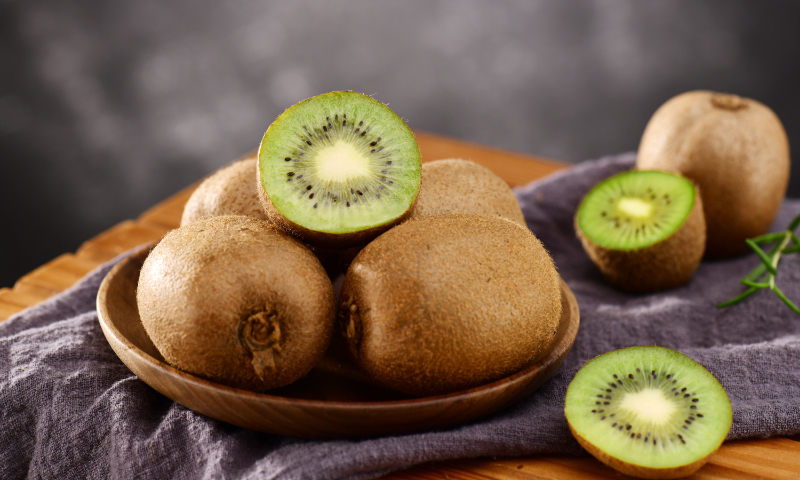
Kiwifruit Photo: VCG
China on Wednesday released a document approving the import of fresh kiwifruit from Iran that meet relevant requirements, marking the country's latest step in expanding its sources of agricultural imports.
The approval took effect on Tuesday under the phytosanitary requirements agreed by both countries for Iranian fresh kiwifruit, the General Administration of Customs said on Wednesday via its official WeChat account.
In recent years, "fruit freedom" has become a popular phrase among Chinese consumers.
This pace of import opening will further reduce trade costs and risks between China and its trade partners, creating new opportunities for agricultural and fruit exporters worldwide, particularly in emerging markets, said Bian Yongzu, executive deputy editor-in-chief of Modernization of Management magazine.
In the first nine months of this year, China's fruit exports reached $5.80 billion, up 1.6 percent year-on-year, while imports rose 4.6 percent to $16.45 billion, data from the Ministry of Agriculture and Rural Affairs showed.
One of the typical example is ASEAN, as more and more tropical fruits from the region - including durians, bananas and mangoes - have filled supermarket shelves across China, while products grown thousands of kilometers away, such as Chilean cherries and New Zealand kiwifruit, are also appearing more frequently on Chinese dining tables.
A Chinese expert noted that the rise of "fruit freedom" reflects China's steady expansion of high-level opening-up during the 14th Five-Year Plan (2021-25) period and its efforts to build a global network of high-standard free trade zones.
The import of agricultural products should be further diversified, and trade and production should be better coordinated, which was included in the Recommendations of the Central Committee of the Communist Party of China for Formulating the 15th Five-Year Plan (2026-30) for National Economic and Social Development, according to the Xinhua News Agency.
In the first 10 months of this year, China's agri-food trade with ASEAN members reached $51.3 billion, up 8.9 percent year-on-year, while China's imports of dried and fresh fruits from ASEAN exceeded $10 billion, accounting for more than two-thirds of China's global fruit imports, according to customs data.
By aligning with high-standard international rules, China's high-level opening-up has continued to lower the overall costs of imported goods - from tariffs to customs clearance and financing - helping expand import volumes and improve supply-chain efficiency, Bian Yongzu, a senior researcher at the China Institutes of Contemporary International Relations, told the Global Times on Wednesday.
Bian said that for countries such as Iran, whose climates differ significantly from that of China, their distinctive fruit varieties hold scarcity value and clear advantages in the Chinese market, creating substantial new opportunities.
Through the trade negotiations and deeper cooperation with its partners - including accelerated tariff reductions within the APEC framework - China has significantly lowered the entry costs of imported goods, said Bian. "It has also granted unilateral tariff cuts to some less-developed countries, further reducing import prices and broadening market access."
RELATED ARTICLES