Japan 'cannot hurt feelings while seeking benefits,' MOFCOM says in response to import-halt reports
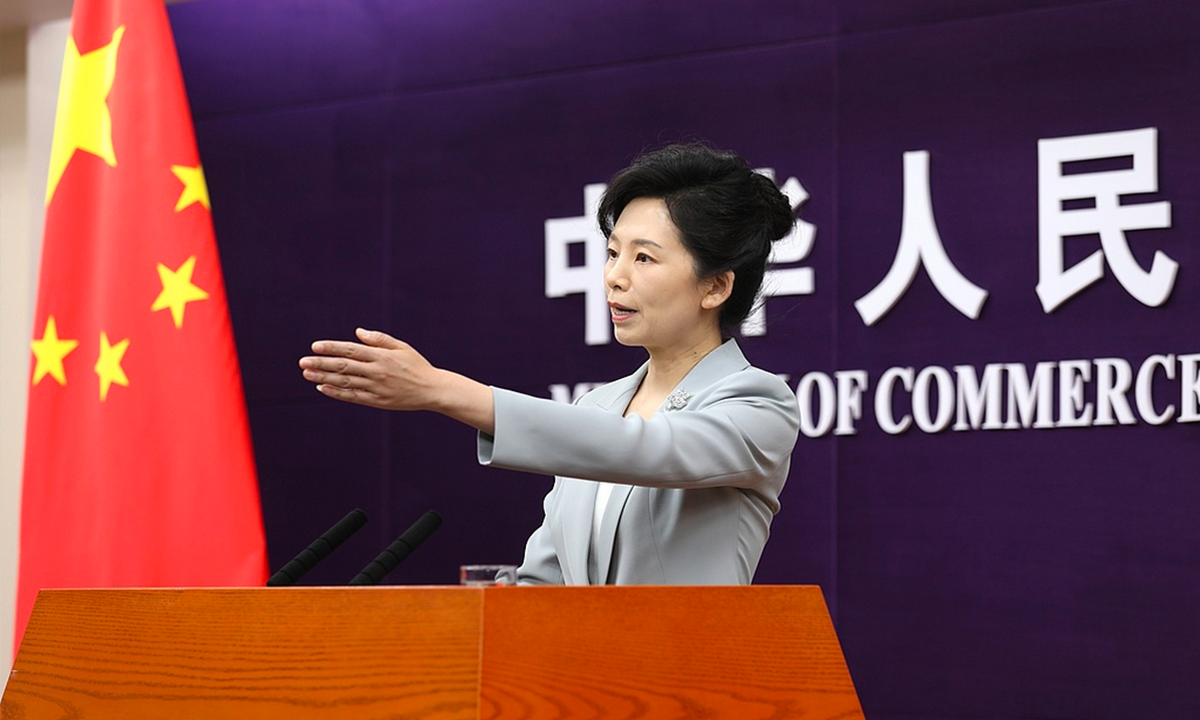
MOFCOM spokesperson He Yongqian. Photo: VCG
Japan cannot expect to hurt China's feelings on the one hand while seeking benefits on the other, and this is not the right way to engage with China, a spokesperson for China's Ministry of Commerce (MOFCOM) said on Thursday, in response to a question on whether the ministry can confirm media reports claiming China has notified Japan that it would suspend imports of aquatic products from Japan.
"There is no information to provide regarding this issue at the moment. But I want to stress that the erroneous remarks regarding China made by Japanese Prime Minister Sanae Takaichi have sparked strong indignation among the Chinese public. We urge the Japanese side to immediately correct its wrong practices," He Yongqian, a spokesperson for the ministry, said on Thursday at a regular press conference.
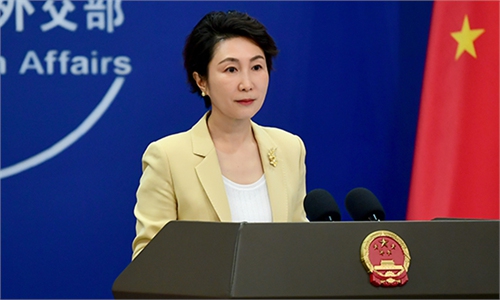
Also on Thursday, Chinese Foreign Ministry spokesperson Mao Ning said that regarding the import of Japanese aquatic products, relevant Chinese departments will conduct scientific assessments and rigorous reviews in accordance with laws and regulations to ensure that the relevant aquatic products meet Chinese standards.
Mao's remarks came in response to a question about Japanese media reports that the Japanese Chief Cabinet Secretary claimed on Thursday morning that the two sides are going through the technical matters, and whether China consider immediately resuming the import of Japanese aquatic products, if Japan has the technical materials ready and provides them to China.
"As we said yesterday, because of the Japanese leader's erroneous remarks concerning Taiwan and other major issues of principle, there has been strong indignation from the Chinese people. Under current circumstances, there will be no market for Japanese aquatic products even if they enter China," Mao said.
"If, in the future, political relations between China and Japan could become consistently stable for a long period, there might be room for Japanese aquatic imports to gradually recover. But under the current circumstances, I honestly don't see much chance of that happening anytime soon," Fan Xubing, council member of the China Aquatic Products Processing and Marketing Alliance, told the Global Times.
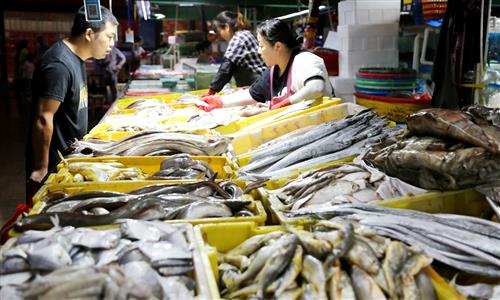
For Japan, losing access to the Chinese market is a very big deal. After all, China is the world's second-largest seafood importer, and over the past couple of years, our import volumes have been growing fast - just not from Japan. The growth has mostly come from countries like Ecuador, Russia, Vietnam, Norway, Canada, India, the US and others, said Fan.
Chinese analysts and industry insiders said that Japanese aquatic products have almost lost China's seafood market since 2023, when China announced a complete suspension of the import of Japanese aquatic products after Japan began to discharge contaminated nuclear wastewater into the ocean.
A chef at a Beijing-based Japanese-style restaurant, who asked to remain anonymous, told the Global Times that "right now, our supply hasn't been affected at all, because we are not heavily reliant on direct imports from Japan. Only few specialty fish varieties that you can't really get elsewhere and some Japanese oysters were coming in from there. Everything else was already sourced from other countries or domestically."
"Most Japanese restaurants in China today are sourcing their core ingredients domestically or from other overseas suppliers. Japanese seafood has become quite rare on the menu," Fan echoed.
In June this year, the General Administration of Customs of China announced that it would allow the import of seafood products from 37 regions, including Hokkaido and Aomori Prefecture, in Japan, under the condition that imported products need to comply with the relevant laws and regulations, as well as food safety standards of China.
Chinese industry insiders said that Japan's seafood did start trickling back into China this year, but the volumes are still very small.
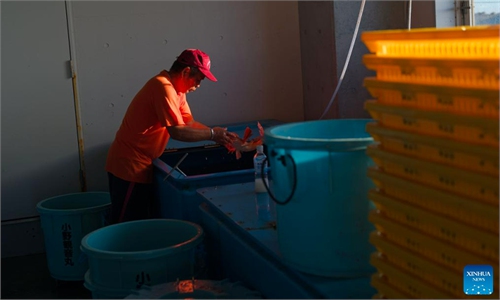
Fishery workers in areas such as Hokkaido and Aomori in Japan have expressed concern, according to Japanese media reports.
When China's halt on imports of Japanese seafood became clear, the sudden reversal - coming just about two weeks after Hokkaido scallop exports to China had finally resumed in early November - left fishery industry players in Aomori Prefecture scrambling to gather information, according to Aomori-based media outlet Toonippo on Thursday.
Some said that "we had been hopeful that exports of our prefecture's seafood were finally getting back on track - this is truly regrettable," Toonippo reported.
A member of Aomori Prefecture's fisheries federation, who has been exporting sea cucumbers to China, said that "we had just taken that first step forward, thinking 'now things are finally going to move ahead,' so it's really disappointing that we've had to suspend operations again so soon after they resumed," Japanese media outlet Mainichi reported on Wednesday.
Following media reports about the Chinese government's announcement that it would suspend imports of Japanese seafood, the Hokkaido government held an emergency meeting to discuss future responses, according to a report by local media Sapporo Television on Thursday.
Masahiko Nakamura, director of the Hokkaido General Policy Department, said at the meeting that anxiety is spreading among businesses, producers, and Hokkaido residents, so the prefecture needs to respond in a way that is sensitive to these voices, per Sapporo Television.
RELATED ARTICLES