China-Spain win-win cooperation sets example for European nations: Spain’s former deputy prime minister
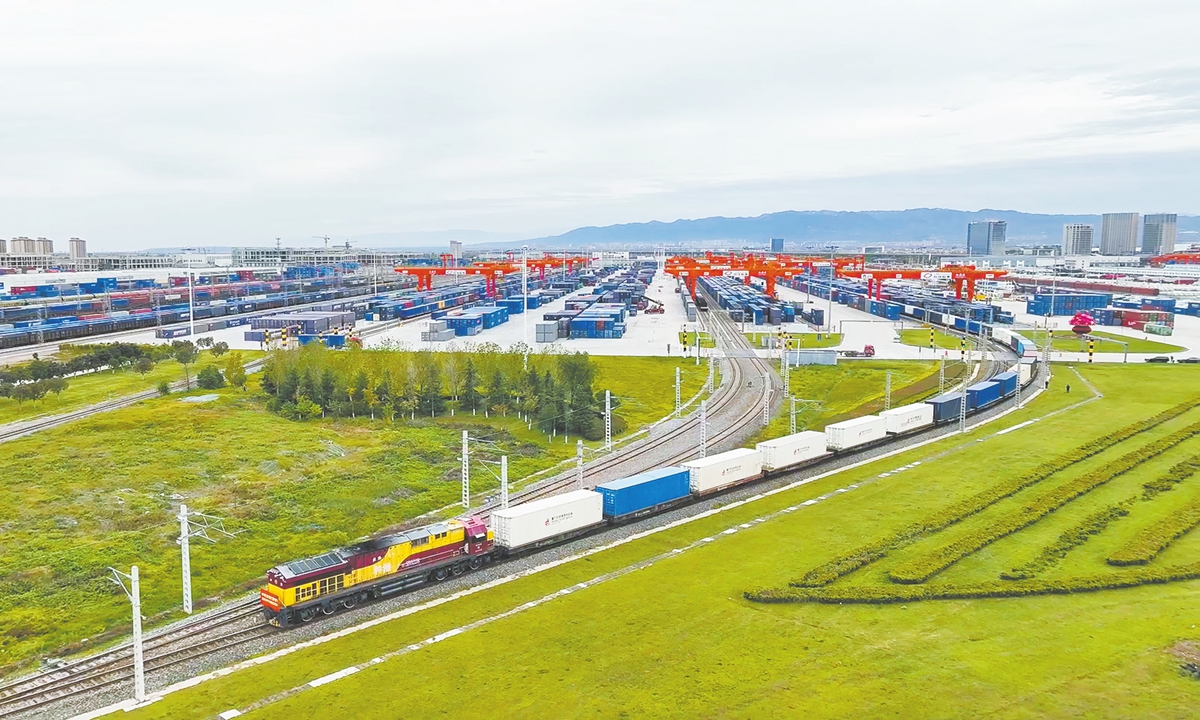
The X9043 China-Europe freight train departs from Xi'an city, Northwest China's Shaanxi Province on November 17, 2025. Photo: VCG

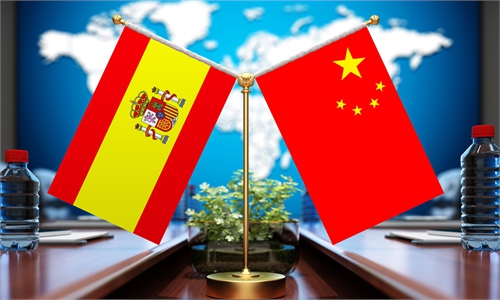
China and Spain have deepened cooperation in sectors including clean energy and electric vehicles in recent years, and win-win cooperation between the two countries serves as an example for other European countries, Pablo Iglesias Turrion, Spain's former deputy prime minister, told the Global Times in an interview.
China's sci-tech achievements in recent years are remarkable, especially the breakthroughs in artificial intelligence (AI) and electric vehicles (EVs), Turrion said. "China's sci-tech innovations have not only contributed to its own economic growth but also drives the engine of global sci-tech innovations and economic development to Asia," he said.

Pablo Iglesias Turrion Photo: Courtesy of Pablo Iglesias Turrion
With this year marking the 20th anniversary of the establishment of the China-Spain comprehensive strategic partnership, the two countries have continued to expand cooperation and tap additional potential, Turrion said, highlighting bilateral win-win cooperation in areas like new energy and EVs.
According to the Spanish Association of Automobile and Truck Manufacturers (Anfac), China has become Spain's second-largest source of car imports, surpassing Japan and trailing only Germany, Xinhua reported in September.
"There is great potential for win-win China-Spain economic and trade cooperation in the future. For example, Spain can export more grain to China. What's mostly important is that China's new-energy technology can help Spain achieve energy transition and accelerate our country's green development against the backdrop of global climate change," Turrion said.
Underscoring the strong momentum in bilateral cooperation, China and Spain signed 10 agreements covering trade, science and technology, education and other areas, Xinhua reported.
Turrion said Spain has benefited significantly from its cooperation with China, and that this win-win partnership serves as an example for other European countries.
Strengthening cooperation with China is the "most sensible option" for the EU, Turrion said, adding that the recent state visit by Spain's King Felipe VI to China further showed to Europeans that the world is no longer unipolar and that China has become an indispensable strategic, economic and peace-building force in the world.
As a research fellow familiar with the history and politics of Latin America, Turrion emphasized the unique cultural links between Spain and Latin America. He said that Spain serves as a gateway to the region, while Europe can also act as a bridge for China to engage Latin America.
Looking ahead, Turrion expressed confidence in China's economic prospects and praised China's national plan to secure sustained economic development. "China has never imposed its political or economic system on others, but its development has had a profound global impact," he said.
At a key Party plenum in October, the Communist Party of China (CPC) Central Committee adopted the recommendations for formulating the 15th Five-Year Plan (2026-30), outlining China's economic and social development priorities for the coming five years.
China is poised to complete several strategic and tasks during this period, including achieving breakthroughs in core technologies in key fields, improving mechanisms for high-standard opening up, and reaching peak carbon emissions, according to Xinhua.
"One of China's greatest economic advantages lies in its implementation of five-year plans. For a large country like China, these plans effectively address developmental challenges. Currently, nations worldwide face distinct obstacles in their economic development, yet China's five-year plan model has successfully navigated challenges, achieving sustained growth. This model holds valuable lessons for other countries," Turrion said.
Today, beyond the BRICS countries, more developing countries are eager to deepen economic and trade cooperation with China, reflecting the appeal of China's development approach. Despite a complex international environment, China has continued to drive technological innovation and industrial upgrading — key pillars of its sustained economic growth, he said.
Turrion was invited by the Centre for Spain Studies at the Chinese Academy of Social Sciences to attend the China-Europe Youth Dialogue in Beijing on Monday.
Commenting on how to deepen mutual understanding between China and the EU, Turrion placed his hopes on young people.
Emerging technologies serve as powerful tools for young people to enhance cross-cultural communication and bridge ideological divides, he said. The growing popularity of artificial intelligence-powered translation tools have enabled Chinese and European youth to engage in in-depth dialogues on any topic, creating unprecedented opportunities for authentic and profound mutual understanding.
He also emphasized the importance ofvalues-driven collaboration among youth. He singled out global challenges such as climate change as critical areas where Chinese and European youth can work together and shoulder shared responsibilities to advance sustainable solutions.
The article was compiled based on interview with Pablo Iglesias Turrion, Spain's former deputy prime minister.
bizopinion@globaltimes.com.cn
RELATED ARTICLES