The X9043 China-Europe freight train departs from Xi'an city, Northwest China's Shaanxi Province on November 17, 2025. Photo: VCG The mutual dependency between China and Europe is "not a recipe for disaster" but rather the basis for success, Eberhard Sandschneider, a well-known international relations expert and former director of the Institute of the German Council on Foreign Relations, told the Global Times in an interview during the China-Europe Youth Dialogue held in Beijing on Monday. Eberhard Sandschneider Photo: Ma Jingjing/GT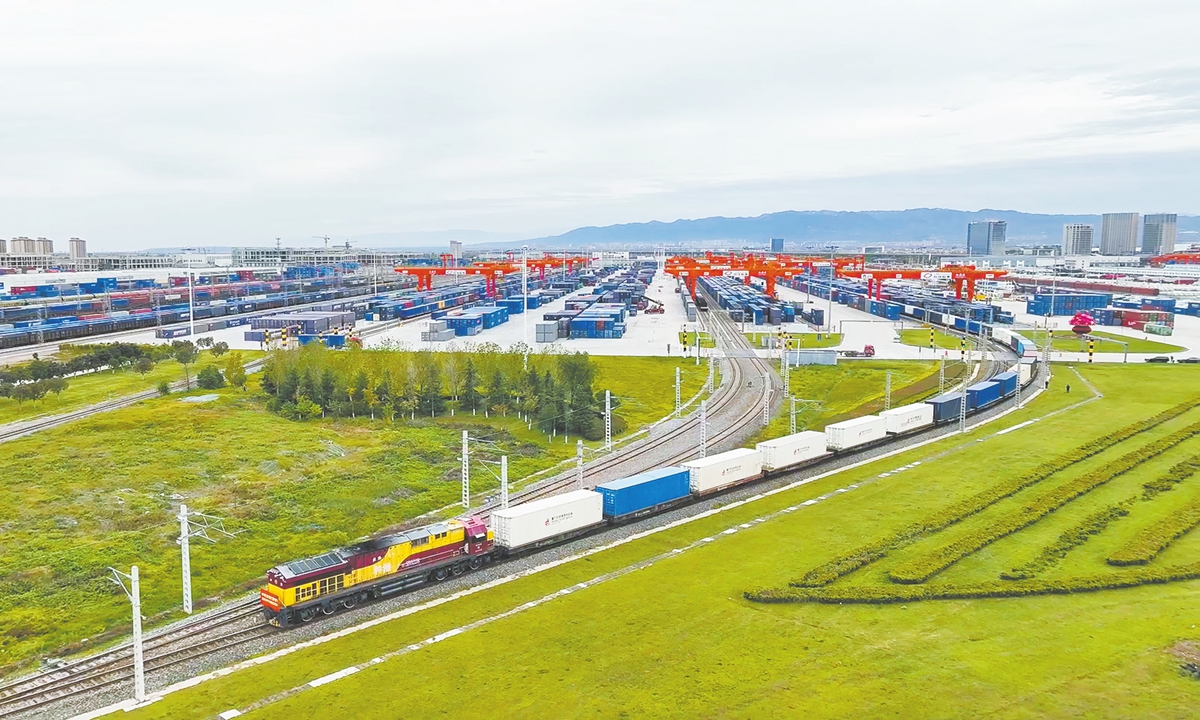

"The mutual dependency has been the basis of our economic welfare and our economic growth over the last decades. Without this dependency, China wouldn't have developed as it is today, nor would Europe have developed the same way," Sandschneider said, stressing that the bilateral relations between the EU and China have been "a big success," first and foremost economically, over the past five decades.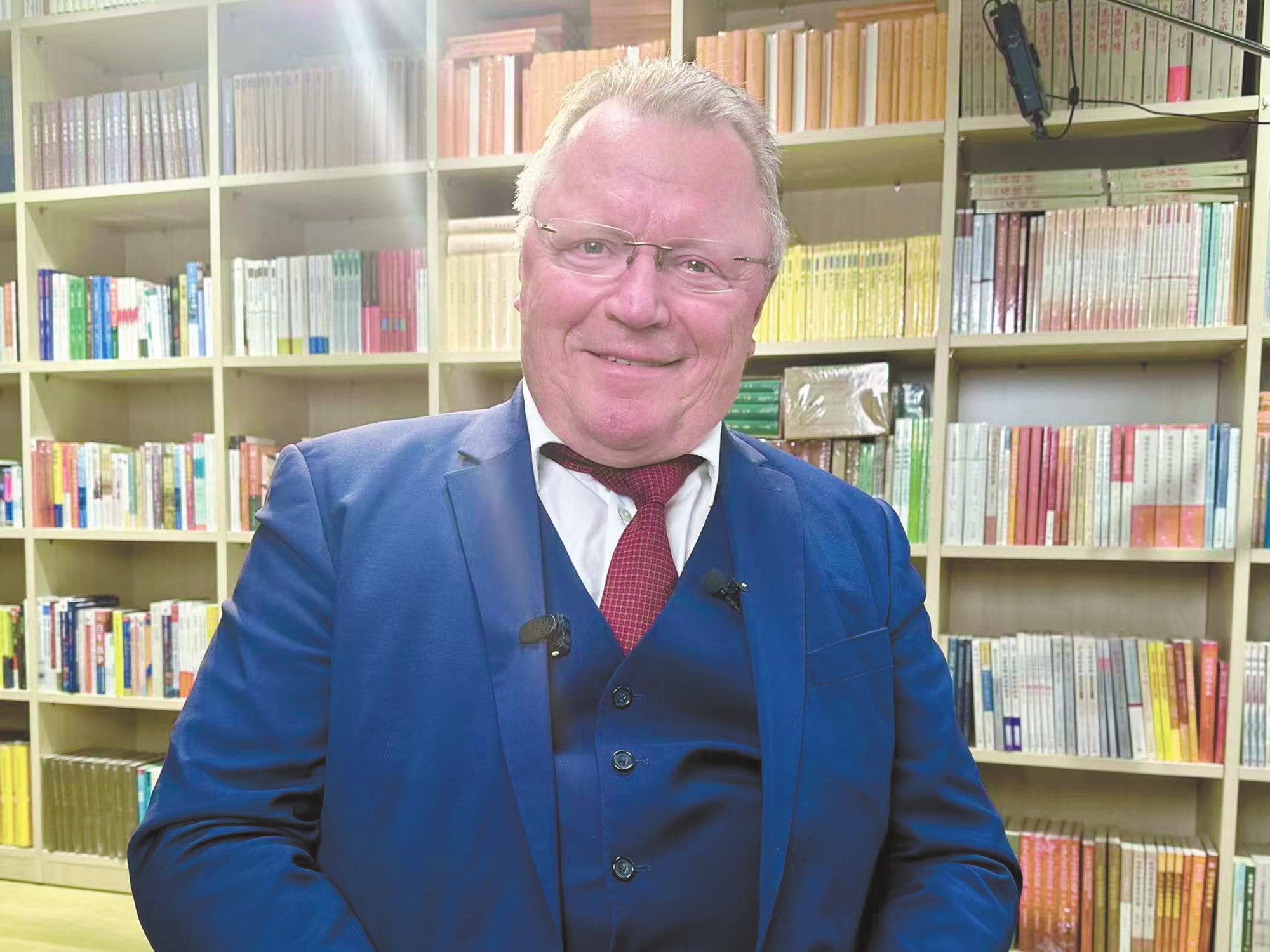
This year marks the 50th anniversary of China-EU diplomatic ties. From just $2.4 billion in trade in 1975 to nearly $785 billion in 2024, China-EU economic ties have become one of the most vibrant engines of global growth. Tens of thousands of freight trains have linked Chinese cities with over two dozen European countries. Investment flows have steadily expanded. Tourism, education, and people-to-people exchanges are also flourishing, Xinhua reported.
"Now, realizing the growing power of China has driven some European politicians to believe that if we decouple or de-risk, Europe will be better off. I have my doubts whether this is true," the expert said, noting that de-risking - which means diversifies Europe's supply chains - is easily said but difficult to implement.
"I would argue that the contrary might happen. In the end, we might end up as indispensable partners for each other, both economically and politically, given the development of American policies," Sandschneider said.
Regarding China-EU economic and trade cooperation, he said the two sides have potential to cooperate in virtually every field, highlighting resources, trade, and technological cooperation. "Many of our German companies tell me we are not developing our technology in competition with China, but in cooperation with our Chinese partners, that's the future. And that requires trust, and less ideology, more pragmatism," he said.
From domestically developed large aircraft and the expansion of China's large vessel fleet to breakthroughs made by firms like DeepSeek and Unitree Robotics, China's innovation achievements have made headlines in 2025. Recently, the World Intellectual Property Organization released the Global Innovation Index 2025, showing that China has risen to the 10th position for the first time.
Today, China has become a global technology leader, Sandschneider said. "When I first came to Beijing in the early 1980s, there are numerous bicycles in Beijing out on the street and there were almost no cars. And now you go out and see the difference. You see modern buildings, modern technology and millions of cars. That's just a symbol for China's economic growth," he said.
China has been developing rapidly over the last 40 years, and this process certainly will continue. As domestic and international conditions evolve, the government would find new ways to address emerging challenges. "My personal experience is that the Chinese government has been very pragmatic all over the last decades in solving problems, in finding ways, and in correcting its own policies if things went not in the right direction," he said.
The next five-year plan will primarily focus on China's domestic economic issues, and they are formidable, Sandschneider said. "I'm pretty sure that in one way or another, the government will find ways to overcome these problems," he noted.
Despite global headwinds, China's economy demonstrated stable growth, with GDP rising 5.2 percent year-on-year in the first three quarters of 2025. During the 14th Five-Year Plan period (2021-25), China contributed about 30 percent of global economic growth, official data showed.
Sandschneider said that Europe could learn a lot from China, , noting that learning from China's pragmatism would be useful for Europe.
This year saw frequent exchanges between Chinese and European political and business communities. The fourth China-Germany High-Level Financial Dialogue was held in Beijing on Monday.
He said China and the EU have huge cooperation potential. He criticized some German politicians for making it difficult for German companies to tap their full potential.
Responding to German Foreign Minister Johann Wadephul's decision to postpone his visit to China, Sandschneider said, "I really regretted the fact that our foreign minister did not come to China. Protectionism, sanctions, and tariffs will not help German and Chinese economies. So you're bound to talk to each other and try to find solutions. And in many cases, you will see in the end that there will be solutions."
The article was compiled based on interview with Eberhard Sandschneider, a well-known international relations expert and former director of the Institute of the German Council on Foreign Relations.
bizopinion@globaltimes.com.cn