ARTS / CULTURE & LEISURE
Why China’s One-Yuan Theaters are a model the world should watch
By Published: Nov 25, 2025 09:27 PM
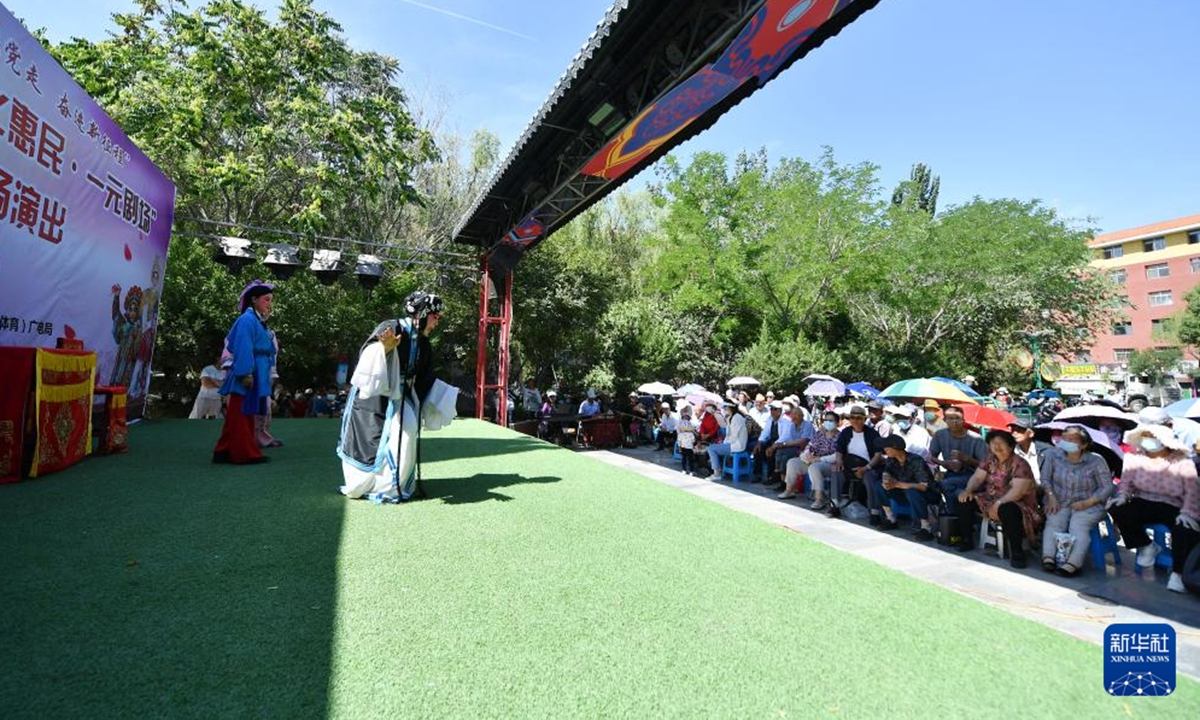
The One-Yuan Theater phenomenon is not just a clever subsidy trick; it is one of the most radical and successful experiments in culture the world has seen in decades. Photo: Xinhua
What can you buy for one yuan - roughly 15 cents - these days? A bottle of water, maybe an egg, or - if you're lucky - a single pencil.Yet in some cities and counties across China, from the loess plains of Shaanxi to the lakeside stages of Hunan, that same amount of notes or coins now buys something priceless: a seat at the theater.
The One-Yuan Theater phenomenon is not just a clever subsidy trick; it is one of the most radical and successful experiments in culture the world has seen in decades.
For the price of one yuan, ordinary citizens - factory workers, retirees, rural migrants - can walk into actual theaters to watch professional operas, dramas, concerts, and dance performances. The government covers the difference through direct purchases of services, corporate sponsorships, or public-private partnerships. The result? Hundreds of thousands of people who had never set foot in a playhouse now treat the performing arts as part of their everyday life.
The One-Yuan Theaters' performances are full-scale productions of either classic editions or new works, often featuring national-level intangible cultural heritage like Sizhou Opera or Bangzi Opera. Young actors, once facing the grim choice of abandoning their craft for more lucrative jobs, now perform dozens of times a year instead of a handful. Audiences who used to see opera only on television now pack venues week after week.
Inheritance is no longer an abstract slogan - It is happening in real time, one yuan at a time.
The genius of the model lies in what it refuses to do. It is not free. That single yuan is deliberate. Free entry risks turning culture into another government handout, something people accept passively.
Paying - even a token sum - restores dignity to both the art and the audience. It says clearly: This has value, you are not a charity case, and culture is worth your time and respect. In an age when commercial performances in big cities routinely cost several hundred yuan, even several thousand yuan, the One-Yuan Theater quietly insists that art is not a luxury good.
Look at the numbers and the stories. Caoxian county in East China's Shandong Province has kept the one-yuan price for six straight years, staging more than 400 performances for over 200,000 people. In Zhoukou, Central China's Henan Province, companies sponsor shows and get branding in return - a textbook win. In Nantong, East China's Jiangsu Province, the model has morphed into "public welfare performances + volunteer services," channeling donations to vulnerable groups while keeping the seats filled. Everywhere the pattern repeats: lower the economic barrier, raise the quality threshold, and people show up - in droves.
This is not charity. This is infrastructure. Just as clean water and electricity are basic public goods, so too is access to beauty, stories, and collective memories. When a retiree in Yueyang, Central China's Hunan Province watches a freshly written modern opera about contemporary life, or when a child in Heze, East China's Shandong Province, sees her first full-length opera and decides she wants to learn the rhythm, something structural is happening. Culture is being planted, not merely delivered.
One yuan is an unbelievable low price for a theater ticket. And that, paradoxically, is exactly why it works. Because sometimes the most revolutionary ideas come wrapped in the humblest packaging. China's One-Yuan Theaters are not perfect, but they are proof that when you treat culture as a public good rather than an elite privilege, ordinary people will astonish you with their hunger, their loyalty, and their creativity.
The rest of the world should take note. One yuan at a time, China has shown how a society keeps its soul alive.
The author is a reporter with the Global Times. life@globaltimes.com.cn
RELATED ARTICLES