Illustration: Xia Qing/GT
The MWC25 Doha, held on Tuesday and Wednesday in Doha, capital of Qatar, represented a landmark gathering as the first MWC series event to be held in the Middle East and North Africa.Focusing on themes such as artificial intelligence (AI) hubs and the smart economy, the event brought together global leaders from government, technology and industry to explore how to accelerate the region's digital transition.
Among the participants, Chinese enterprises including Huawei, ZTE and Fibocom Wireless played an active role, underscoring China's pivotal position in the global telecommunications and technology landscape and its deepening engagement with the Middle Eastern market. Beyond a mere industry conference, this event reflects the robust potential of digital cooperation between China and Gulf Cooperation Council (GCC) countries, serving as a catalyst for strengthening bilateral digital bonds.
Countries across the Middle East are at a critical juncture in transitioning from an oil-based economy to one driven by digital intelligence. The themes emphasized at the MWC25 Doha reflected this urgent strategic shift. By hosting the event, Qatar aims to speed up the adoption of digital solutions and reinforce its leadership in the information and communications technology sector, an objective that aligns with its Digital Agenda 2030.
This transformation is not limited to Qatar; it is a shared priority among all GCC countries. Saudi Arabia's Vision 2030, for instance, aims to transform the country into a 5G technology hub, while the United Arab Emirates (UAE) has paid much attention to AI and other frontier technologies.
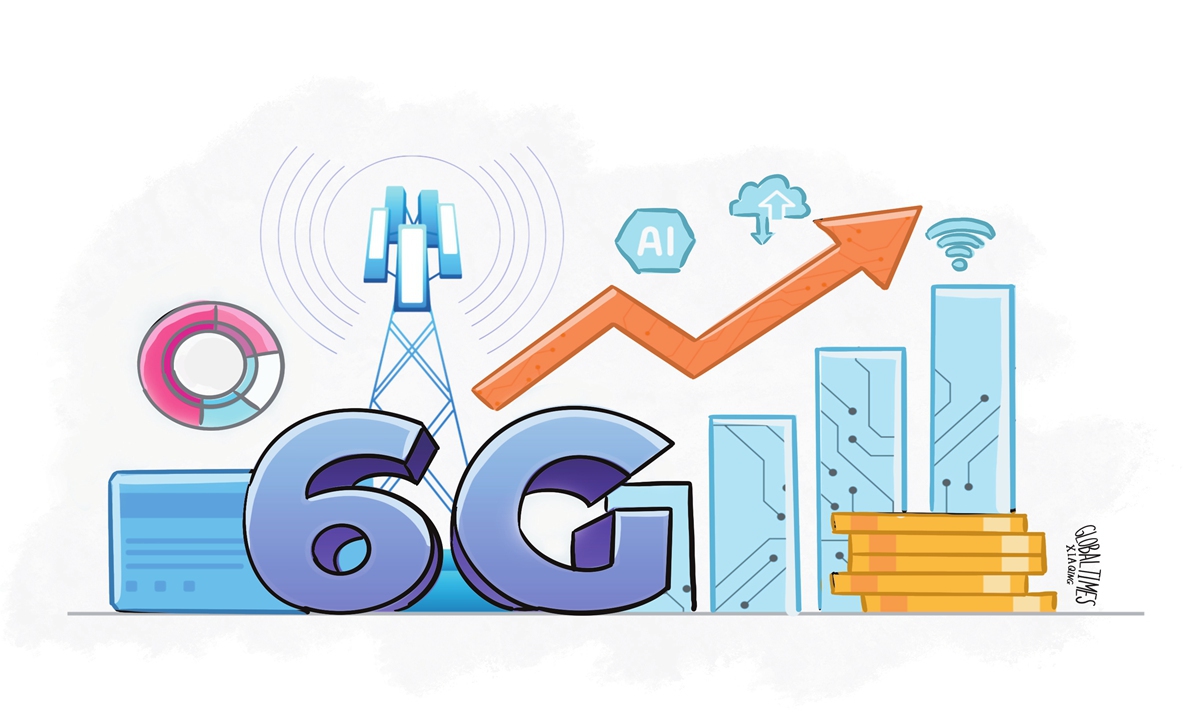
China, with its extensive expertise in 5G deployment, forward-looking 6G research and development, AI applications, and cloud computing, forms a natural synergy with these regional ambitions. This perfect alignment between the GCC's urgent demand and China's technological supply has turned potential cooperation into an inevitable and flourishing partnership. From Saudi Arabia and the UAE to Qatar and beyond, Chinese technologies are deeply integrated into the Middle East's digital transformation journey.
In recent years, China-GCC technological cooperation has yielded substantial results, evolving from simple equipment supply to comprehensive, multi-dimensional collaboration. Since 2015, the China-Arab States Technology Transfer and Innovation Cooperation Conference has been successfully held seven times, emerging as a key pillar for facilitating technological exchanges between China and Arab nations.
On the project front, China and Saudi Arabia have joined forces in 5G network construction, smart city development and aerospace technologies. China-UAE partnerships in clean energy, AI and deep space exploration have yielded remarkable results. Chinese companies have also carried out cooperation with Kuwait, Bahrain, Qatar and Oman in 5G infrastructure, smart cities and agricultural technology. These projects not only showcase the adaptability and sophistication of Chinese technology but also reflect the deepening trust and synergy in cross-border cooperation.
This deepening partnership is anchored in a solid economic foundation and highly complementary strengths. China and GCC countries have maintained a strategic partnership, with China remaining GCC's largest trading partner. In 2024, bilateral trade reached an impressive $288.09 billion. Meanwhile, GCC nations boast leading internet penetration rates among Arab countries, thanks to world-class infrastructure and substantial financial investment.
Bahrain and Qatar have both achieved 93 percent internet penetration, the UAE stands at 91 percent, and Saudi Arabia's rate reaches 98 percent. This robust digital infrastructure provides fertile ground for the rapid deployment and scaling of 5G, AI and other advanced technologies.
As 6G technology advances, digital trade expands, and cooperation mechanisms are refined, digital bonds between China and the Middle East will undoubtedly deepen further.
RELATED ARTICLES