ARTS / CULTURE & LEISURE
Museums across China turn to cuisine to enhance visitor experience
Dining with history
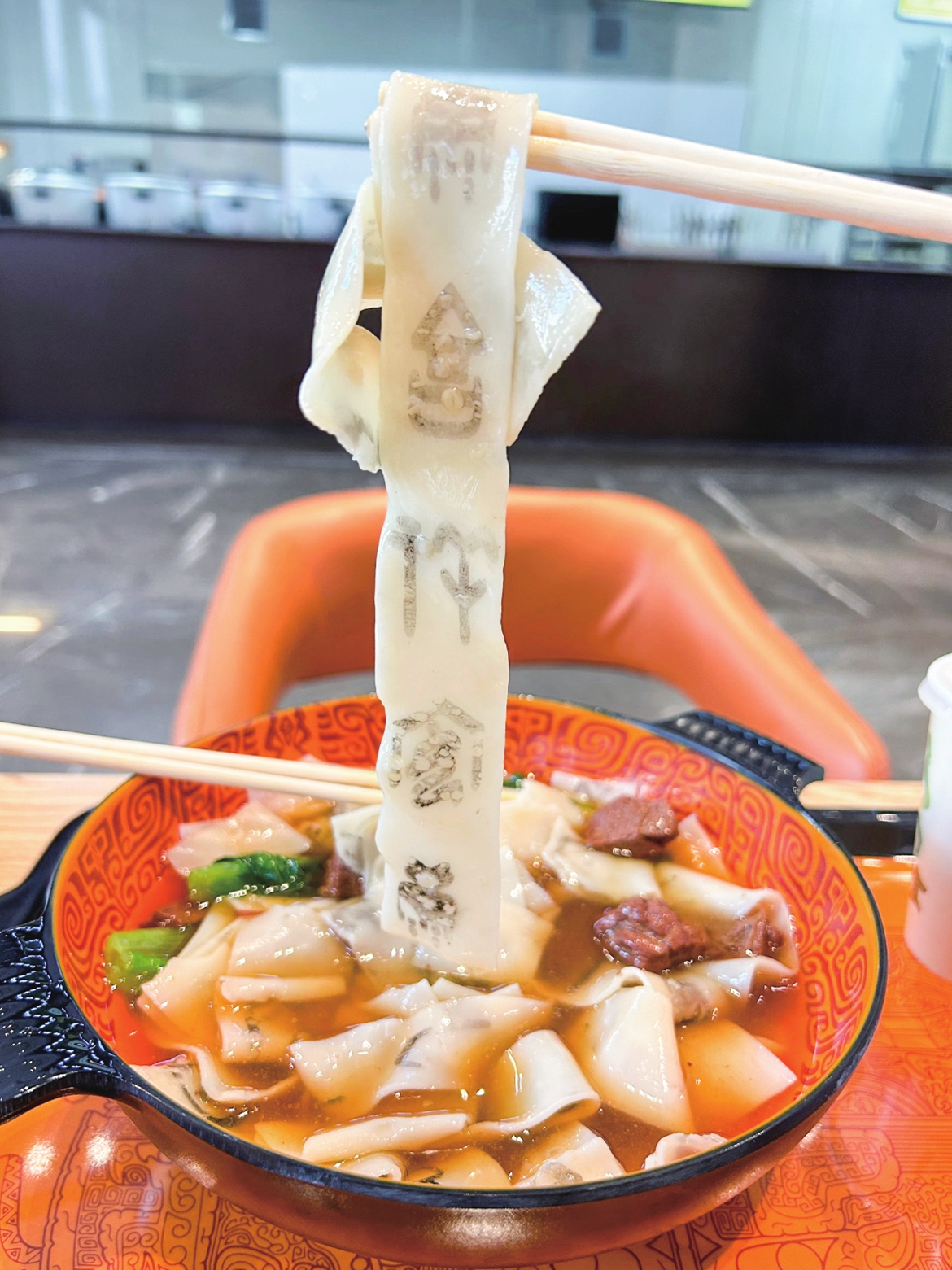
Bowl of "oracle bone script noodles" from Yinxu Museum in Anyang, Central China's Henan Province Photo: Courtesy of Fang Xinjie
At the restaurant inside the Yinxu Museum in Anyang, Central China's Henan Province, bowls of "oracle bone script noodles" have become an unlikely cultural sensation. Each noodle carries edible cuttlefish-ink characters, phrases such as "great fortune" or "peace and wellbeing" that remain intact after cooking, offering visitors a playful encounter with China's earliest writing system.After a boom in museum cultural and creative products in 2024, museums in China are now exploring new ways to deepen engagement. In February, the Xi'an Museum in Xi'an, Northwest China's Shaanxi Province opened a culture-themed restaurant that weaves together elements from its signature artifacts, including the tri-colored flying horse and gilt-bronze dragon. The National Maritime Museum of China has also designed a child-friendly space blending marine-themed cuisine with science education. Among young visitors, "going to the museum to grab a meal" is becoming a surprisingly popular trend.
From Yinxu's oracle-bone noodles and Sichuan's "Eastern Han Dynasty" small dishes to Tang-inspired restaurants in Xi'an, activities once thought unrelated, viewing relics and enjoying a meal, are increasingly merging into what museums now describe as a "soft demand."
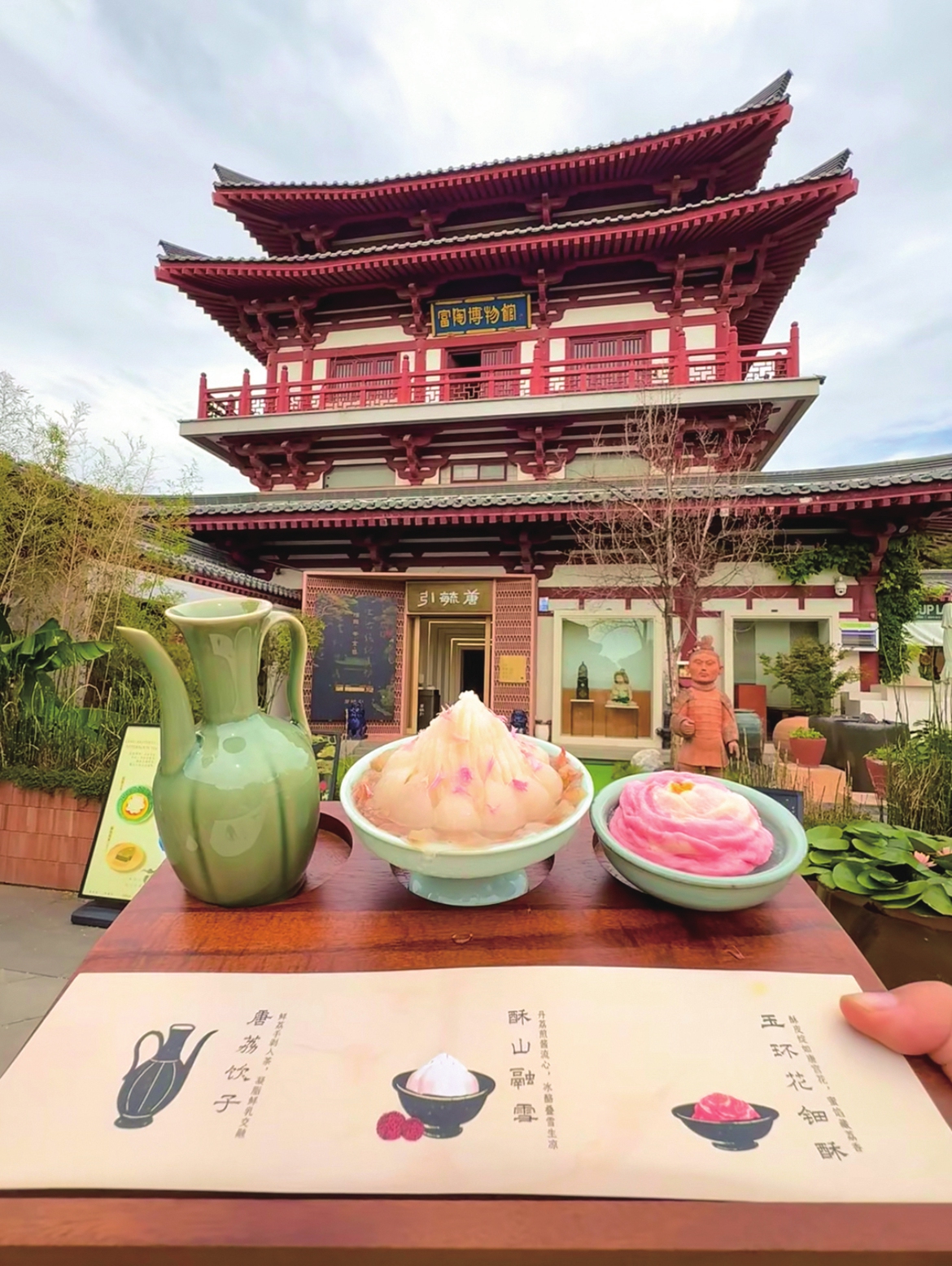
The specialty desserts and the Tang-style restaurant located inside a ceramics museum in Xi'an, Northwest China's Shaanxi Province Photo: Courtesy of the museum
A taste of cultureOn Chinese social media platforms, a lunch photo taken inside a museum can draw as much attention as an artifact in a glass case. Fang Xinjie, a Henan resident, told the Global Times that a casual post she uploaded in 2024 on RedNote showing a bowl of oracle-bone noodles unexpectedly gained over 50,000 views and 1,700 likes, an overwhelming response for someone who rarely posts online.
"I only ordered it because my child was hungry, and I thought the name sounded interesting," she said. "But people kept messaging me for months asking how to find the restaurant."
Chen Mengjing, who oversees cultural-creative dining at the Yinxu Museum, told the Global Times that the characters printed on the noodles vary across bowls, though most convey auspicious meanings. Some early diners found them difficult to recognize, prompting the restaurant to add explanatory cards, an adjustment that unexpectedly sparked visitors' curiosity about oracle-bone inscriptions and their modern counterparts. "We want guests to experience a bit of the museum's cultural uniqueness, and leave with a blessing," Chen said.
Museums in Southwest China's Sichuan are observing similar patterns. Since launching its public dining service at the end of 2024, the Sichuan Museum's life-experience center has become one of the busiest corners of the institution. Each midday, rows of more than 60 small dishes, priced from 3 to 12 yuan ($0.41-$1.6) draw long queues of students, families, and retirees.
For many museum visitors, dining once posed a major obstacle. A 2024 survey at the Jinsha Site Museum in Chengdu in Sichuan showed that about 12 percent of visitors stayed for more than three hours, making the question of "where to eat" unavoidable. The Sichuan Museum itself houses 350,000 artifacts across 14 exhibition halls and 10 permanent shows - more than enough to occupy a full day, according to gmw.cn, the official website of Guangming Daily.
By addressing this basic need, museums are turning dining areas into new social spaces where nourishment and cultural curiosity feed each other. Some, such as the Sichuan Museum, have seen increasing number of nearby residents who initially visit for affordable meals but gradually become regular exhibition-goers.
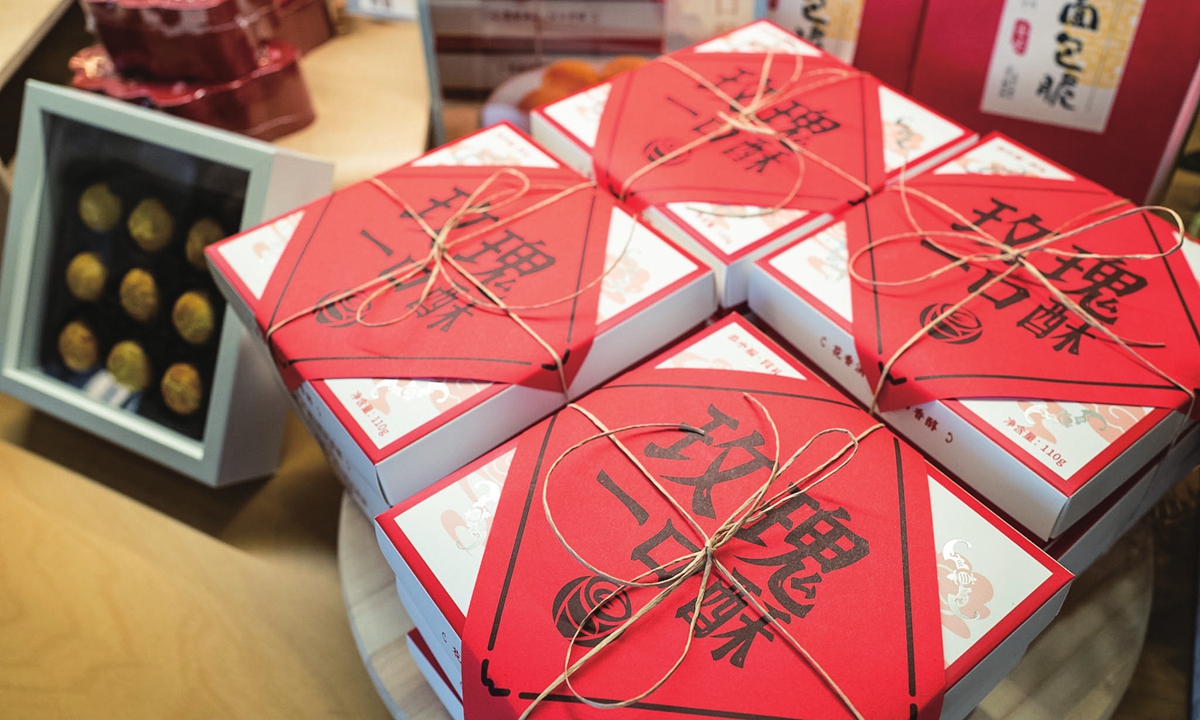
Rose shortbread, the Prince Kung's Palace Museum specialty, in Beijing Photo: VCG
More than restaurantsAt the Inner Mongolia Museum, the introduction of accessible dining including distinctive local cuisine like shaomai, a kind of traditional Chinese dumpling, which originated from the Inner Mongolia Autonomous Region, has extended average visitor stays by 1.5 to 2.5 hours, Zhao Xiaofeng, head of the museum's cultural-creative department, told the Global Times. "People spend more time exploring other halls and joining activities. This way, their understanding of the museum deepens," Zhao said.
A glance at museum menus across the country reveals a similar pattern: dishes reflect regional identity and replicate elements from museum collections: At the Liaoning Provincial Museum, diners can enjoy a 22-yuan mixed rice bowl. At the Hubei Provincial Museum, visitors can order "bells-and-beef noodles," named after its famed chime-bells relics. These "hidden side quests" enrich the museum experience in a way that merges daily life with cultural exploration.
Yang Hong, a professor of social communication at the Communication University of China, told the Global Times that the rise of museum dining is a natural extension of 2024's cultural-creative products boom. Museums are evolving from "exhibition spaces" into "living spaces," she said. When thoughtfully designed, dining becomes part of the visitor's ritual, an experience that can extend both the visit and the cultural resonance.
"Dining in museums is not only about filling one's stomach," Yang said. "It integrates elements of artifacts and local culture. It fits the preferences of younger visitors who seek novelty and enjoy sharing their experiences."
While many museums also pair dining spaces with tea rooms, cafés, and reading lounges, Yang noted, the whole space is hosting intangible-heritage workshops and free lectures thus providing a variety of exhibition, dining, leisure, and socializing opportunities."
Yet the rapid rise in popularity presents challenges. Many visitors reflected that long lines at restaurants can cause bottlenecks inside exhibition halls, and commercialization may overshadow cultural values, in turn eroding the quiet, solemn atmosphere expected of museums.
Yang acknowledged these concerns but emphasized that the key lies in balance. Dining should not become a spectacle for profit or a distraction from museum identity. Instead, it must reinforce cultural understanding.
The Inner Mongolia Museum has in response introduced online ordering and time-slot reservations to reduce on-site queues, while adjusting kitchen workflows to ensure efficiency during peaks.
"Food will not dilute the museum's cultural value. The point is to maintain balance. The priority is always exhibition and cultural education. Dining is simply an extension of services," Zhao said. The dining area itself becomes a carrier of meaning, she added.
RELATED ARTICLES