TAZARA Railway revitalization project addresses Africa’s ‘urgent, practical demands’ amid the continent’s modernization efforts
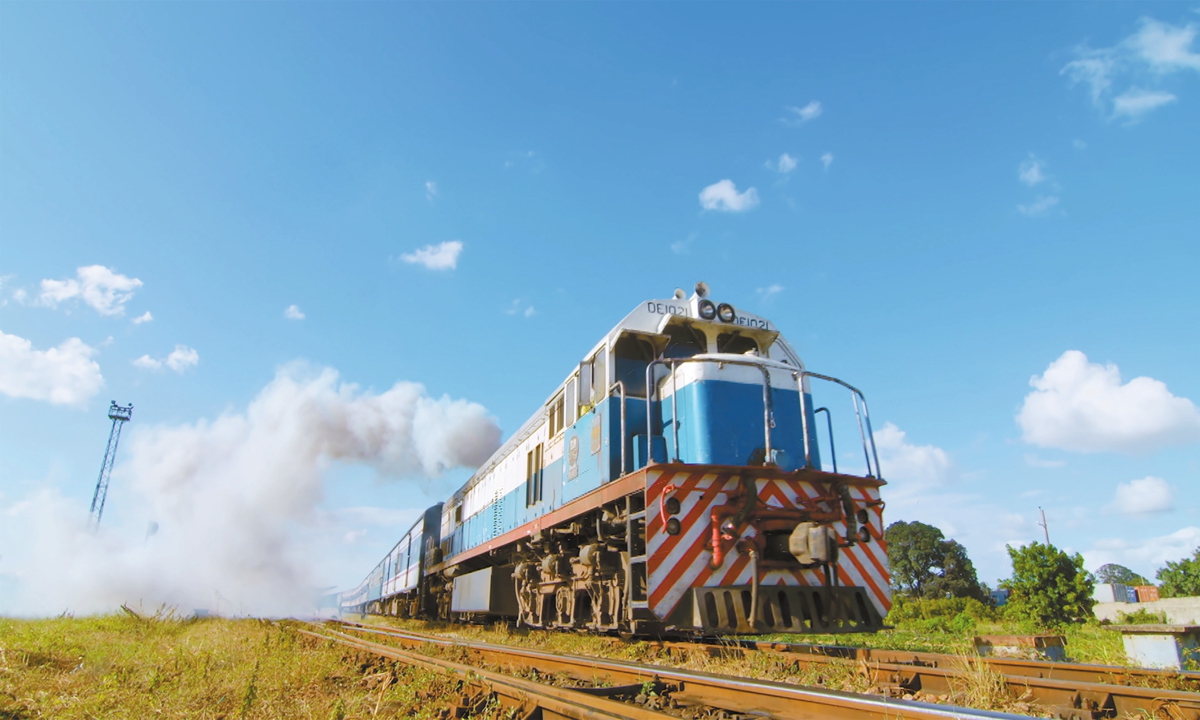
A train travels along the TAZARA Railway on November 19, 2025. Photo: Courtesy of CCECC
The preparatory work for the Tanzania-Zambia (TAZARA) Railway revitalization project is moving forward as planned, the Chinese developer of the project told the Global Times on Thursday.
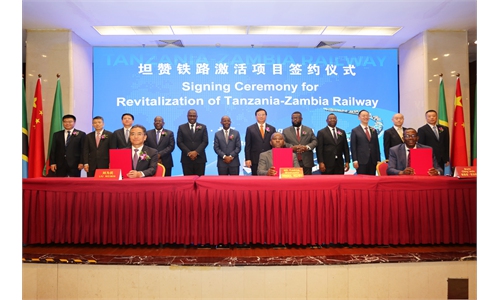
The project, which was inaugurated on November 20, marks a milestone in China-Africa cooperation under the China-proposed Belt and Road Initiative (BRI). It is expected that the railway - a testament to China-Africa friendship - will be further built into "a joint road to prosperity and development," the project developer said.
"We will first steadily advance the systematic repair and upgrading of existing facilities, including the subgrade, tracks, bridges and culverts, power supply, and communication systems, to ensure the safe and reliable railway operations," a spokesperson for China Civil Engineering Construction Corporation (CCECC), told the Global Times. "This is a critical preparatory task for the revitalization project."
He stressed that the project will follow the principle of "revitalizing first, developing later."
CCECC, a subsidiary of state-owned China Railway Construction Corp, is the Chinese investor, constructor and operator of the project. The company started the research work involving the revitalization project as early as 2022.
On September 4, 2024, the leaders of the three countries-China, Tanzania and Zambia-witnessed the signing of a memorandum of understanding on the revitalization project of the TAZARA railway.
A groundbreaking ceremony for the project was held on November 20. The observers and locals hailed that it "unfolds a new chapter in the development of TAZARA Railway," and from a broader perspective, it "writes a new chapter in jointly building an all-weather China-Africa community with a shared future for the new era."
The "iron road" carries deep ties among China, Tanzania and Zambia. The railway was built with interest-free loans from China and officially handed over to the governments of Tanzania and Zambia on July 14, 1976.
The new revitalization project is scheduled to expand TAZARA Railway's freight capacity to 2.4 million tons from the current level of 200,000 tons, while also cutting the shipping time by nearly two-thirds, Liao Jianfeng, general manager of CCECC's Southern Africa Regional Operations Center, was quoted as saying in a statement the company sent to the Global Times.
Responding to 'urgent, practical demands'
With regard to the follow-up works, the Chinese side will work closely with the TAZARA authority to "enhance informatization levels and improve operational and maintenance capabilities along the entire line," while maintaining existing passenger transport services. There will also be plans in terms of the potential development of logistic services, supporting industries and capacity building along the rail line.
For example, the company will consider setting up local training centers to strengthen railway governance capabilities through standardized and refined approaches. The effort is expected to create over 20,000 jobs, CCECC said.
Amid a complex and evolving international landscape and Africa's accelerating development, observers note that the TAZARA Railway revitalization project comes at a pivotal moment, responding to "both urgent and practical demands" for the railway's renewal and upgrade.
"Africa is currently at a critical juncture in its industrialization and modernization transformation, requiring more cross-border infrastructure projects to enhance connectivity," Song Wei, a professor at the School of International Relations and Diplomacy at Beijing Foreign Studies University, told the Global Times on Thursday.
Bruno Ching'andu, managing director of the Tanzania-Zambia Railway Authority, said that following the upgrading of China-Tanzania and China-Zambia relations to comprehensive strategic cooperative partnerships, the railway will take on an even greater role - not just in transport but as a key link in regional connectivity and Belt and Road cooperation, according to a Xinhua News Agency report.
The 1,860-kilometer-long TAZARA Railway connects Zambia's Copperbelt region to the Tanzanian port of Dar es Salaam, providing a crucial fast track for copper and cobalt shipments to the Indian Ocean.
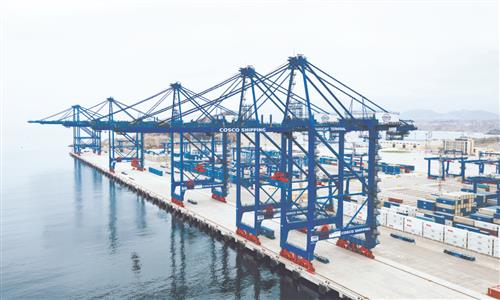
The Dar es Salaam port handles about 95 percent of Tanzania's international trade, according to a post on the website of Tanzania Ports Authority.
However, due to the railway's limited capacity, the transportation of copper products - a cornerstone of Zambian economy - still relies heavily on road, which severely constrains production capacity expansion and undermines both the efficiency and safety of public travel, analysts said.
As soon as the revitalization project is completed, the TAZARA Railway will link mineral resources, agricultural products, and manufactured goods from Africa's landlocked regions more closely with the global markets, "providing a more stable and predictable logistics corridor that enables southern and eastern African countries to integrate more deeply into global supply chains and value chains," the CCECC spokesperson noted.
He also stressed that the ramifications of the revitalization project transcend that of a mere transportation initiative.
"It serves as a critical foundation for African countries to advance industrialization, urbanization, agricultural modernization, and digital infrastructure development, carrying profound and lasting strategic importance for the continent's modernization journey," he stated.
Building closer China-Africa community with a shared future
Song said that the construction of the TAZARA Railway, dating back to decades, embodied "the historical spirit of China and Africa standing together and helping each other through thick and thin" as well as "the principle of equality and mutual support between China and Africa."
"Now the revitalization project opens a new brilliant chapter in China-Africa win-win and high quality Belt and Road cooperation. It also marks a solid and resolute step forward in building a jointly building an all-weather China-Africa community with a shared future for the new era," Song said.
She also stressed that it could also set a new benchmark for Global South cooperation and injects fresh momentum into collaboration among developing countries.
This year also marks the 25th anniversary of the Forum on China-Africa Cooperation (FOCAC). Since the establishment of FOCAC, China and Africa have cooperated on building or upgrading nearly 100,000 kilometers of roads and more than 10,000 kilometers of railways across Africa, according to another Xinhua report.
Under the FOCAC framework, it is expected that more BRI infrastructure projects in transportation, energy, and telecommunications will be advanced in synergy with other cooperation policies such as industrial parks and trade facilitation, thereby "helping African countries address shortcomings, strengthening industrial chains, enhancing their capacity for independent development and resilience against risks," CCECC spokesperson said.
These BRI projects will provide a solid material foundation and enduring momentum for the joint pursuit of modernization by China and Africa, analysts said.
RELATED ARTICLES