What is the deeper significance of the Tongan King planting Juncao in China: Global Times editorial
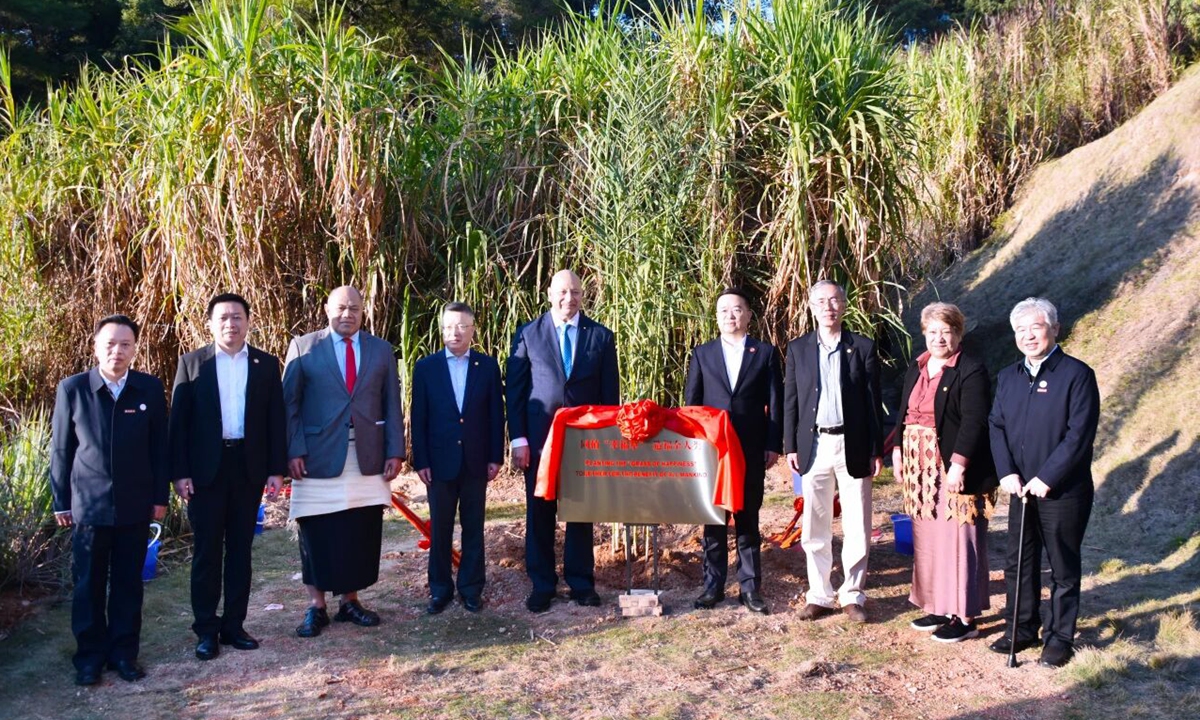
During his visit to China, King Tupou VI of the Kingdom of Tonga (in the middle) plants a Juncao seedling at Fujian Agriculture and Forestry University on November 21, 2025. Photo: WeChat account of Fujian Agriculture and Forestry University
From November 21 to 27, King Tupou VI of the Kingdom of Tonga paid a state visit to China. During the visit, he personally planted a Juncao seedling at Fujian Agriculture and Forestry University. This was far more than a symbolic gesture of friendship - it was a strong affirmation of China's cooperation model. The Juncao seedling reflects the genuine warmth of cooperation between China and Pacific Island Countries and illustrates what it means to build "a model of friendly cooperation between countries of different social systems and sizes."
Juncao technology is a major development cooperation project advocated and promoted by President Xi Jinping, benefiting numerous developing countries. The international community's use of "Juncao" as the universal term for the technology reflects a deliberate respect for its Chinese origin in global promotion. The technology resolves the long-standing contradiction between mushroom cultivation and forest conservation. It significantly lowers production costs and, thanks to the deep root system of giant Juncao grass, also helps mitigate soil erosion. Pacific Island Countries such as Tonga have long faced challenges such as scarce land, saltwater intrusion, weak agricultural foundations and frequent climate disasters. Juncao technology offers targeted, multi-dimensional solutions to these structural problems - no surprise it has been warmly received.
Because it meets the needs of many developing countries, this technology quickly expanded from the Pacific Island Countries to the rest of the world, taking root in Africa, Southeast Asia, and Latin America. It has become a model project for "South-South cooperation" under the United Nations framework. UN Secretary-General António Guterres once remarked that the promotion of Juncao technology can help enhance knowledge and strengthen national capacities of developing countries, thereby better supporting sustainable agriculture and environment. At a seminar held in November this year, Filimoni Vosarogo, acting Fiji's Minister for Agriculture and Waterways, said that China's Juncao technology has provided a model for Pacific Island Countries.
Today, Juncao technology has been promoted in more than 100 countries and regions, contributing to 13 of the UN's 17 Sustainable Development Goals. It has not only provided many countries with Chinese wisdom and solutions for poverty alleviation and ecological protection, but also vividly illustrates the principle that "lucid waters and lush mountains are invaluable assets," demonstrating that economic development and ecological conservation can advance in parallel. From emerging out of nothing to spreading from China across the globe, Juncao technology stands as a telling epitome of Chinese modernization.
In recent years, Chinese technologies and Chinese wisdom have reached the world through platforms such as the Belt and Road cooperation, rapidly replicated across many developing countries before taking root locally. Some Western commentators have reacted with disbelief, and have even resorted to distorted and demonizing narratives. At the root of this is their tendency to view themselves as the "developed" world and their lack of understanding, and lack of interest in understanding, the real needs of developing countries. While Western discourse repeatedly tries to portray the Pacific region as a battlefield of "great-power rivalry," China's "small and beautiful" projects have, in a gentle yet steady manner, shown the international community a new approach by a major power: upholding the principle of equality regardless of the size of countries, adhering to the principles of extensive consultation, joint contribution, and shared benefits, and cherishing harmony in differences while appreciating diverse forms of beauty with openness.
During King Tupou VI's visit to China, a joint statement was issued by China and Tonga, which states: "China carries out cooperation with Tonga in a way that responds to Tonga's needs, focuses on development, honors openness and inclusiveness, and does not target any third party." This is the "code" for the continued success of China's cooperation with Pacific Island Countries, including Tonga. This cooperation model respects each other's concerns, focuses on practical outcomes, and consistently emphasizes the fundamental demand for development. From Juncao technology to agricultural irrigation, and from infrastructure construction to disaster prevention and reduction, China responds to the most urgent development needs of Pacific Island Countries with pragmatic actions, without attaching political conditions or interfering in the internal affairs of other countries, truly embodying the concept of "teaching people how to fish." It is this approach of equality, mutual trust, and win-win cooperation that has brought China and Pacific Island Countries closer together in a community with a shared future.
As King Tupou VI departed from Fujian, the newly planted seedling in the Juncao garden had already taken root firmly. In the future, this hopeful seedling will surely thrive, and more "Juncao-style" cooperation will continue to emerge within the Belt and Road cooperation framework and on the broad stage of South-South cooperation. China will use more pragmatic and innovative wisdom, along with warm and determined actions, to work together with other developing countries, including Tonga, to jointly tackle development challenges and share development achievements, injecting a continuous stream of green power into the construction of a community with a shared future for humanity.
RELATED ARTICLES