Illustration: Liu Rui/GT
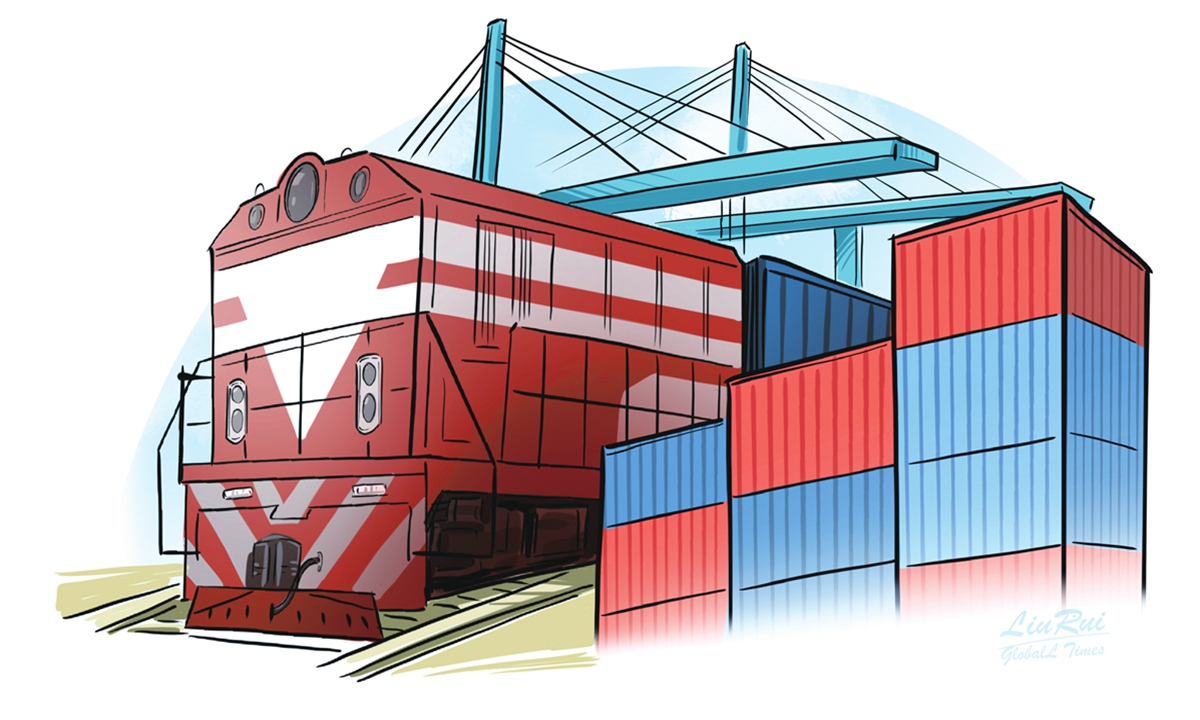
The New International Land-Sea Trade Corridor, a key logistics network connecting China's western regions to global markets, has transported 5.003 million standard containers of cargo since its inception in 2017, according to CCTV News. This year alone, the corridor has handled 1.308 million containers, up 55.3 percent year-on-year.
The figures reflect the rising trade activities in inland China and suggest the potential opportunities for international businesses to engage with the markets that are becoming increasingly integrated into global supply chains.
The corridor offers insight into the trade developments in western China. According to the Xinhua News Agency, with an operational hub based in Southwest China's Chongqing Municipality, this trade corridor connects global ports via railways, sea routes and highways through southern Chinese provincial regions such as Guangxi and Yunnan.
In the first three quarters of this year, imports and exports in western China totaled 611.5 billion yuan ($86.4 billion), contributing 3.4 percentage points to the growth of foreign trade in western China.
The figures demonstrate how improved infrastructure and connectivity are supporting trade in China's inland regions and suggest that these developments could provide new entry points for international partners seeking to engage with China western markets.
Chongqing offers a concrete perspective on economic activities in western China. According to Chongqing Daily, in the first 10 months of this year, the city's foreign trade rose 12.2 percent year-on-year, outpacing the national average by 8.6 percentage points. Exports increased 10.7 percent, while imports grew 15.8 percent.
Trade passing through the New International Land-Sea Trade Corridor expanded 1.9 times year-on-year, a record for the period. The data highlight the growing role of cities such as Chongqing in international trade and underscore the emerging opportunities for foreign businesses in western China's markets.
Zooming in on a smaller lens provides additional insight into developments in western China. One example is the Chongqing International Logistics Hub Park, which, despite being located far from the coast and border regions, has become an increasingly important node for regional trade.
In the first half of this year, the ASEAN cassava flour distribution center was inaugurated at the hub, highlighting Chongqing's expanding role in facilitating trade across the region.
The chairman of a Laotian agricultural group was quoted by a Xinhua Daily Telegraph report as saying that trains from Vientiane now reach Chongqing directly via the New International Land-Sea Trade Corridor. This route reduces transport time for cassava flour to about five days and lowers costs compared with road transport. Leveraging cost advantages, the group had expanded its market in surrounding areas, achieving a trade volume of 33,000 tons of cassava flour between January and September this year.
A broader perspective helps to contextualize the development of the New International Land-Sea Trade Corridor and the growth of western China. The 55.3 percent year-on-year increase in container traffic this year reflects more than just numbers - It represents tangible stories and concrete opportunities for international businesses. These developments illustrate how improved infrastructure and expanded trade routes are gradually linking China's inland regions to global markets, underscoring the increasing connectivity and economic potential of western China.
The New International Land-Sea Trade Corridor has steadily expanded its global reach. According to Xinhua, as of January, it connected to 555 ports in 127 countries and regions. These economies can use the corridor to facilitate the entry of their products into the Chinese market, taking advantage of more direct and efficient logistics channels.
China's ongoing economic growth continues to generate increasing import demand. Goods entering the country via the corridor can then move through domestic logistics networks to reach markets across the country, offering broader distribution options for foreign businesses. This connectivity illustrates how China's inland regions are gradually becoming integrated into wider trade flows, serving both domestic and international market needs.
The 5.003 million containers transported since the corridor's launch represent a small but informative example of western China's expanding trade links. The figure serves as a reminder for international businesses to consider the region's economic development and the opportunities arising from its growing integration into global trade and logistics networks.
The author is a reporter with the Global Times. bizopinion@globaltimes.com.cn
RELATED ARTICLES