China-Japan air booking continues to drop in December, ripples reaching retail sector
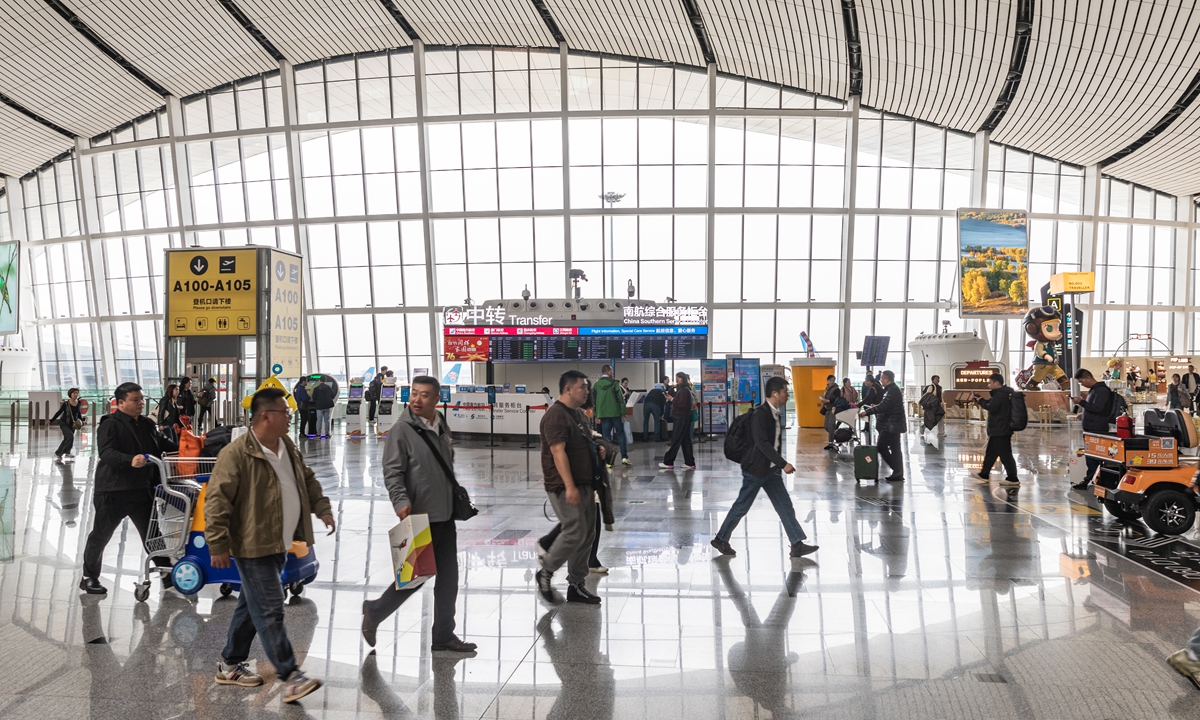
A view of Beijing Daxing International Airport Photo: Courtesy of Beijing Daxing International Airport
Air travel and tourism flows from China to Japan have dropped notably, data from travel agencies and airlines showed, since China issued a travel advisory warning Chinese citizens of risks of visiting Japan following Japanese Prime Minister Sanae Takaichi made erroneous remarks on China's Taiwan and didn't retract her words.
Chinese industry insiders said that the tourism market for New Year's Day holiday trips to Japan currently shows no signs of improvement. They noted that as trips are mostly pre-planned, even if there were repairment in the bilateral relationship early next year, many Chinese tourists who could choose Japan may have rescheduled trips to other destinations.
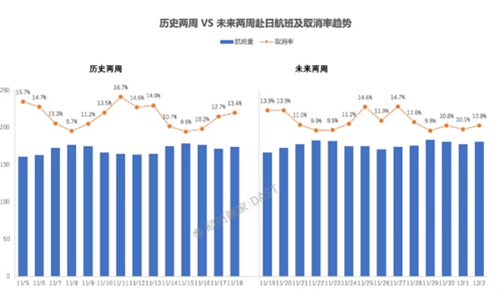
Out of 5,548 scheduled flights from China to Japan in December, more than 900 have been canceled, meaning a cancellation rate of 16 percent, according to a Nikkei report on Saturday.
As of Thursday morning, Chinese carriers had slashed service on 72 routes, eliminating 904 flights and roughly 156,000 seats. The number of flight cancellations tripled the figure two days earlier, with Kansai International Airport near Osaka hit especially hard, according to Nikkei.
The operator of New Chitose Airport in northern Japan's Hokkaido revealed that flights from China have been canceled or reduced, which means approximately 30,000 to 40,000 Chinese visitors are expected to be unable to travel to Japan through March next year, according to NHK.
From November 24 to December 31, the number of canceled flights from China to Japan increased by about 56 percent compared with the same period a month earlier. Moreover, bookings by Chinese tourists for December and beyond were significantly lower than expected, according to statistics from industry information provider Umetrip sent to the Global Times.
Any additional flight reductions could seriously dampen tourism demand, and Japan has voiced growing concern over the potential blow to its travel sector, CCTV News reported.
Japanese media and tourism-related enterprises are increasingly worried that the damage could deepen further, if bilateral relations continue to deteriorate.
The Imperial Hotel Tokyo told the Global Times that "regarding Chinese company-hosted banquets and accommodations, we have begun to see some postponements and cancellations."
The impact also began to weigh on sectors including retailers.
Japanese fashion label Human Made Inc, which counts China as central to its plans, is broadening its growth strategy against the backdrop of rising tensions between the two countries, Bloomberg reported on Sunday.
According to the Japan National Tourism Organization, about 8.2 million Chinese tourists visited Japan from January to October 2025, an increase of 40 percent year-on-year, making them a vital source of revenue for Japan's tourism and related industries.
Japanese Prime Minister Sanae Takaichi's erroneous remarks have strained China-Japan relations, affecting flights, seafood trade, cultural exchanges, and film cooperation. The sharp reduction in routes and flights has also made travel much harder, Zhang Lingyun, a professor and the executive editor-in-chief of the Tourism Tribune, told the Global Times on Sunday.
"As long as these political issues persist, most Chinese tourists will simply choose other destinations. The recovery of China-Japan relations ultimately depends on choices made by Japanese government," said Zhang.
Zhang also revealed that the travel market to Japan during the New Year's Day holiday currently shows no signs of improvement.
Chinese tourists are shifting their travel destinations to other neighboring countries and regions other than Japan, data from travel agencies showed.
According to data from travel platform Qunar, January is a key "off-peak" window for family outbound travel before Chinese New Year, with Thailand reclaiming the top spot. During the period from mid-January to before the Spring Festival (which falls on February 17 in 2026), flight bookings to Thailand are up 21 percent year-on-year.
Over the weekend of November 15 to 16, South Korea surged to become the No.1 outbound destination in terms of bookings, followed by Thailand, Malaysia, Singapore, Vietnam, and Indonesia, according to Qunar.
Seoul also topped flight search volume as of November 17. Notably, searches for Singapore, Sydney, and Bali each rose by more than 10 percent week-on-week.
RELATED ARTICLES