ARTS / CULTURE & LEISURE
Beijing’s classic copper hot pots, innovative treats tempt taste buds
Winter foods help resist cold
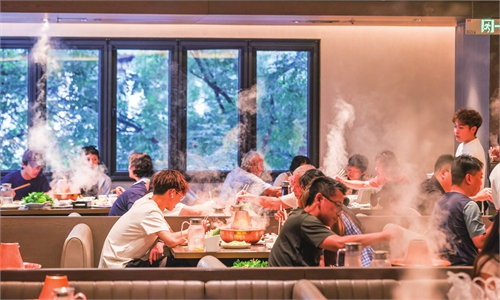
Steam rises from boiling copper pots of mutton in Beijing's chilly winter streets, a sight that has delighted locals for generations. This winter, the city has another reason to draw visitors: it was named the only Chinese city on National Geographic's 2026 "Best Places in the world to travel" list.
The capital draws travelers with its historic temples, winding hutong, and imperial landmarks, and in winter, those same streets are filled with the aroma of steaming hotpots and sizzling lamb spine.
Winter in Beijing has long been defined by classic dishes such as traditional copper hotpot and braised lamb spine, known locally as yangxiezi. Lately, new creations like the viral naipizi tanghulu, a sweet treat made of hawthorn mixes with dairy products popularized on social media, have added a modern twist to the city's culinary scene.
For travelers visiting Beijing in winter, whether savoring a bubbling hotpot, tearing into tender lamb spine, or cracking open a sugary skewer on a frosty afternoon, they can discover flavors and moments that guidebooks rarely capture.
Hearty classic meals
Both copper hotpot and yangxiezi have a long history and a rich culinary tradition. Copper hotpot is often considered one of the city's most emblematic cold-weather comfort foods. It is characterized by a clear and light soup base, paper-thin mutton slices cooked in traditional pots made of copper, and a variety of dipping sauces made from sesame paste, chive flowers, and fermented bean curd.
The experience is communal, warm and unmistakably tied to the capital's old neighborhoods. Diners gather around the pot, hands warmed by the charcoal glow, watching steam rise against frosted windows.
"Lamb is rich in high-quality protein, and during digestion it triggers the food's thermic effect, meaning one's body burns more energy to break down the protein, producing heat in the process," Zhu Yi, an associate professor at the China Agricultural University, told the Global Times.
"It's like starting a natural heating system for the body, which helps keep you warm. Copper pots also conduct heat better than iron, so they transfer it quickly and evenly. Eating from a copper pot, you feel that warmth immediately, its heat retention and conductivity make it ideal for winter dishes," she added.
Yangxiezi is another winter staple. Served in deep metal basins, the dish features bone-in lamb simmered for hours, usually with ginger, dates and a handful of warming Chinese spices. The meat pulls off in tender strands, and customers often don disposable gloves to tear into it. For local Beijing residents, yangxiezi is a symbol of winter resilience, hearty, nourishing and best shared with friends on a cold night.
Asa true example of China's culinary ingenuity, yangxiezi shows how even scraps and leftover parts can be transformed into something delicious, reflecting Beijing's inclusive food culture, noted Zhu. The lamb spine contains plenty of fat, which digests slowly and releases heat over time, keeping you warm throughout a winter meal.
Wang Xiao, a 32-year-old Beijing native, told the Global Times that her family has long enjoyed braised lamb spine and copper hotpot in winter. "Eating hot lamb in winter is not just delicious, it also warms you up," she said.
Trendy street snacks
But as popular as these traditional flavors remain, Beijing's food scene is evolving rapidly, driven in part by younger consumers seeking novelty. The latest viral sensation is the naipizi tanghulu, a reimagined take on the traditional sugar-coated hawthorn skewer.
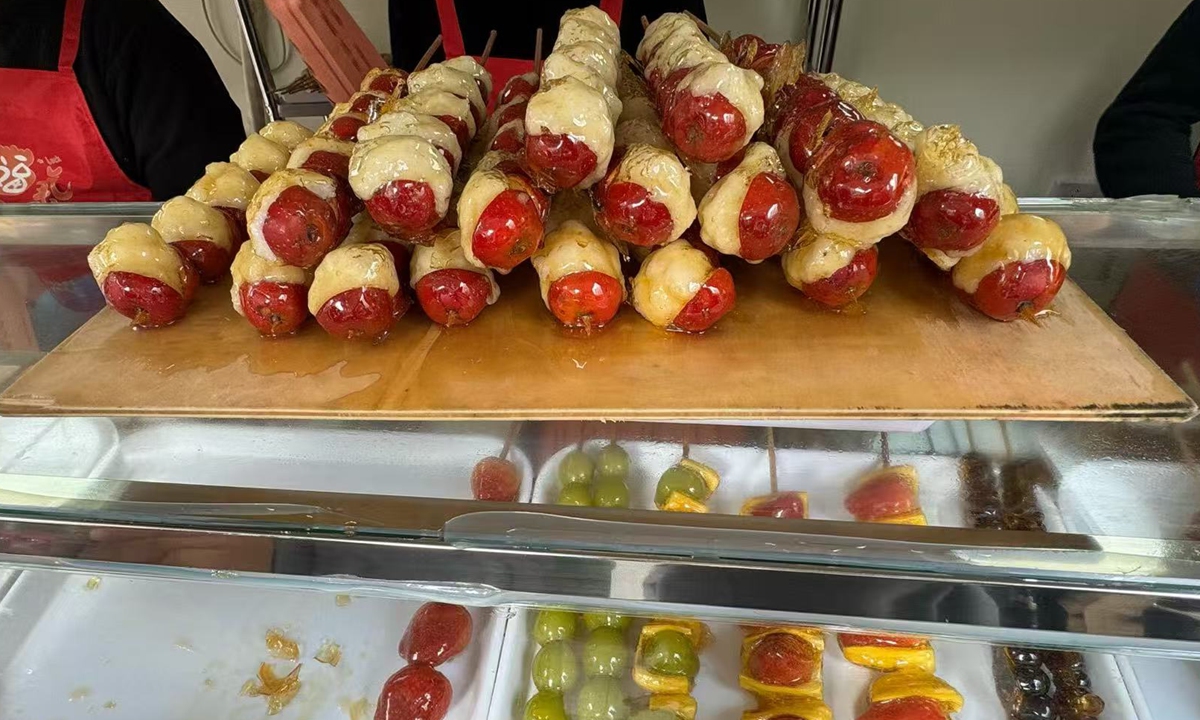
Zhuang Hehuan, who works in the education sector, queued for half an hour at a stall in Beijing's Chaoyang District in November after a friend urged her to try it. She opted for a skewer of grapes wrapped in naipizi and another featuring hawthorn paired with sticky rice.
"The sugar coating was really crisp," she told the Global Times. "The hawthorn wasn't too sour, and the sticky rice was incredibly soft and filling. The naipizi with grapes was sweet, almost overwhelmingly so."
For many, the appeal goes beyond the taste. The trend has become a social media darling, with viral clips showcasing an almost theatrical crack as the sugar shell shatters. Shops have cropped up near tourist sites and office clusters alike, drawing residents who might otherwise walk past traditional tanghulu stands.
Wanwan, who is in the sales support sector in Beijing, stopped by a stall on November 24 around lunchtime. "It was right at the meal rush, so most people were headed to restaurants. I only waited about 10 minutes," she told the Global Times. She bought two strawberry skewers, two hawthorn-and-rice-cake versions, one jackfruit-and-strawberry combination and several featuring yams.
A native of northeast China, Wanwan says tanghulu is tied to her memories of home. "Where I grew up, vendors would sell frozen tanghulu on the street. Some were so cold they had ice crystals inside. The sugar never melted, it stayed hard and clean and didn't drip everywhere." Buying the Beijing version, she admits, carries a hint of homesickness. "I was craving something sweet, but also something familiar," Wanwan said.
The capital draws travelers with its historic temples, winding hutong, and imperial landmarks, and in winter, those same streets are filled with the aroma of steaming hotpots and sizzling lamb spine.
Winter in Beijing has long been defined by classic dishes such as traditional copper hotpot and braised lamb spine, known locally as yangxiezi. Lately, new creations like the viral naipizi tanghulu, a sweet treat made of hawthorn mixes with dairy products popularized on social media, have added a modern twist to the city's culinary scene.
For travelers visiting Beijing in winter, whether savoring a bubbling hotpot, tearing into tender lamb spine, or cracking open a sugary skewer on a frosty afternoon, they can discover flavors and moments that guidebooks rarely capture.
Hearty classic meals
Both copper hotpot and yangxiezi have a long history and a rich culinary tradition. Copper hotpot is often considered one of the city's most emblematic cold-weather comfort foods. It is characterized by a clear and light soup base, paper-thin mutton slices cooked in traditional pots made of copper, and a variety of dipping sauces made from sesame paste, chive flowers, and fermented bean curd.
The experience is communal, warm and unmistakably tied to the capital's old neighborhoods. Diners gather around the pot, hands warmed by the charcoal glow, watching steam rise against frosted windows.
"Lamb is rich in high-quality protein, and during digestion it triggers the food's thermic effect, meaning one's body burns more energy to break down the protein, producing heat in the process," Zhu Yi, an associate professor at the China Agricultural University, told the Global Times.
"It's like starting a natural heating system for the body, which helps keep you warm. Copper pots also conduct heat better than iron, so they transfer it quickly and evenly. Eating from a copper pot, you feel that warmth immediately, its heat retention and conductivity make it ideal for winter dishes," she added.
Yangxiezi is another winter staple. Served in deep metal basins, the dish features bone-in lamb simmered for hours, usually with ginger, dates and a handful of warming Chinese spices. The meat pulls off in tender strands, and customers often don disposable gloves to tear into it. For local Beijing residents, yangxiezi is a symbol of winter resilience, hearty, nourishing and best shared with friends on a cold night.
Asa true example of China's culinary ingenuity, yangxiezi shows how even scraps and leftover parts can be transformed into something delicious, reflecting Beijing's inclusive food culture, noted Zhu. The lamb spine contains plenty of fat, which digests slowly and releases heat over time, keeping you warm throughout a winter meal.
Wang Xiao, a 32-year-old Beijing native, told the Global Times that her family has long enjoyed braised lamb spine and copper hotpot in winter. "Eating hot lamb in winter is not just delicious, it also warms you up," she said.
Trendy street snacks
But as popular as these traditional flavors remain, Beijing's food scene is evolving rapidly, driven in part by younger consumers seeking novelty. The latest viral sensation is the naipizi tanghulu, a reimagined take on the traditional sugar-coated hawthorn skewer.
Naipizi tanghulu skewers in a Beijing store Photo: Courtesy of Zhuang Hehuan
Long a childhood favorite in northern China, tanghulu is typically made by dipping fresh fruit into molten sugar, which then hardens into a glassy shell. The new version adds a twist. A layer of naipizi, a chewy, milky dairy product from North China's Inner Mongolia Autonomous Region, is wrapped around the fruit before the sugar coating is applied. The combination of creamy, crunchy and tart flavors has fueled long lines across the city.Zhuang Hehuan, who works in the education sector, queued for half an hour at a stall in Beijing's Chaoyang District in November after a friend urged her to try it. She opted for a skewer of grapes wrapped in naipizi and another featuring hawthorn paired with sticky rice.
"The sugar coating was really crisp," she told the Global Times. "The hawthorn wasn't too sour, and the sticky rice was incredibly soft and filling. The naipizi with grapes was sweet, almost overwhelmingly so."
For many, the appeal goes beyond the taste. The trend has become a social media darling, with viral clips showcasing an almost theatrical crack as the sugar shell shatters. Shops have cropped up near tourist sites and office clusters alike, drawing residents who might otherwise walk past traditional tanghulu stands.
Wanwan, who is in the sales support sector in Beijing, stopped by a stall on November 24 around lunchtime. "It was right at the meal rush, so most people were headed to restaurants. I only waited about 10 minutes," she told the Global Times. She bought two strawberry skewers, two hawthorn-and-rice-cake versions, one jackfruit-and-strawberry combination and several featuring yams.
A native of northeast China, Wanwan says tanghulu is tied to her memories of home. "Where I grew up, vendors would sell frozen tanghulu on the street. Some were so cold they had ice crystals inside. The sugar never melted, it stayed hard and clean and didn't drip everywhere." Buying the Beijing version, she admits, carries a hint of homesickness. "I was craving something sweet, but also something familiar," Wanwan said.
RELATED ARTICLES