GT Voice: Rising investment by European firms confirms value of Chinese innovation
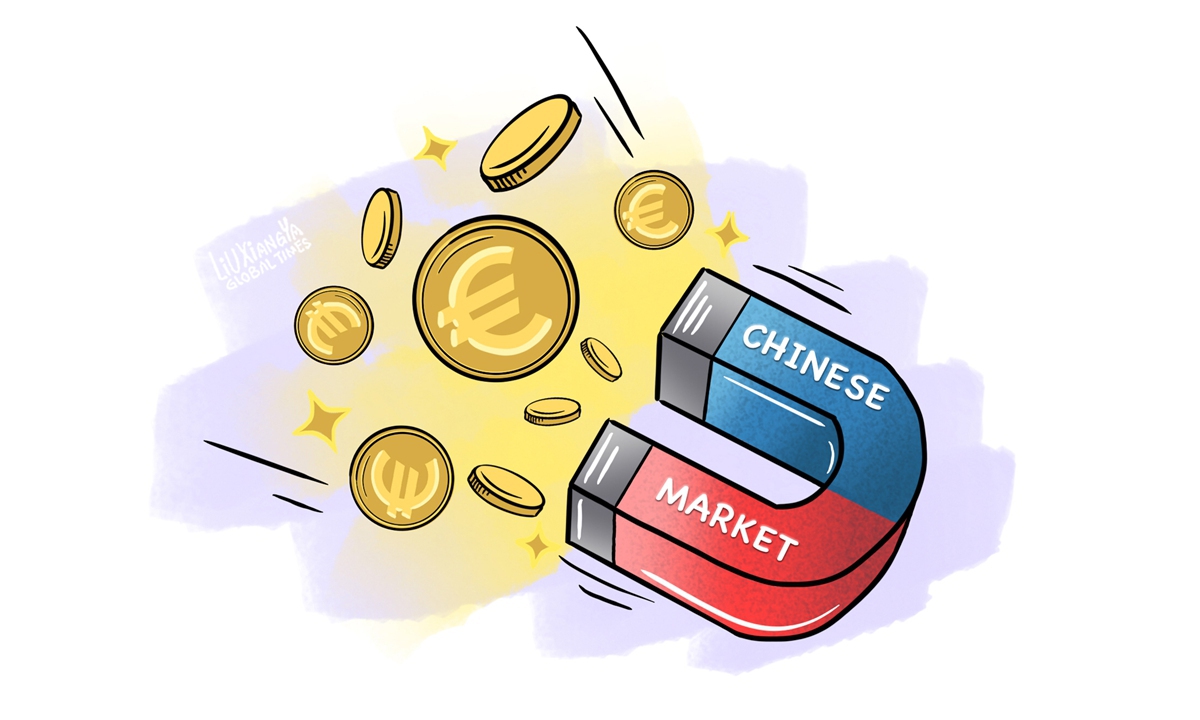
Illustration: Liu Xiangya/Global Times
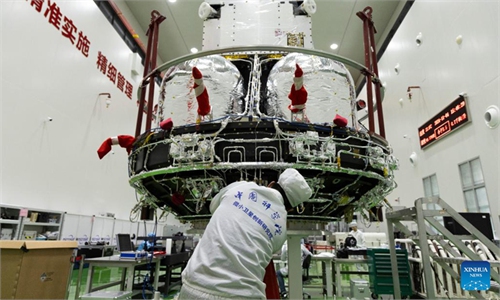
As European companies' profitability and global competitiveness become increasingly tied to their Chinese operations, they are making long-term commitments with billions in new investments, despite some European politicians calling for reduced dependence.Concrete examples abound. In October, Airbus launched its latest Final Assembly Line for A320 family aircraft in North China's Tianjin, demonstrating its confidence in the country's thriving civil aviation market, resilient supply chain and favorable business climate. With planned investment of 10 billion yuan ($1.41 billion) over the next five years, Bosch launched an intelligent driving control innovation project in the Suzhou Industrial Park in August.
These developments point to a clear pattern: European investments in China are not short-term moves but strategic layouts based on long-term industrial logic. Macroeconomic data confirms foreign investors' confidence. In the first 10 months of this year, the number of newly established foreign-invested enterprises in China increased by 14.7 percent year-on-year, with high-tech industries becoming a new magnet for foreign investment, according to CCTV.
Notably, this structural shift in investment flows points to a fundamental evolution in China's manufacturing structure. Once reliant on low-cost production and a massive consumer base to attract foreign investment, China has evolved into a global innovation test bed for new-energy vehicles, green technologies, and high-end manufacturing. It boasts the world's most complete supply chain system and has built a complete ecosystem for innovation integrating research and development and large-scale market application.
For European companies that depend on technological innovation to maintain competitiveness, disengagement from this dynamic ecosystem risks missing key directions in technological evolution, ultimately putting them at a disadvantage in global competition. In this sense, investing in China has shifted from an option to a strategic imperative for staying ahead in the industry.
The driving forces are clear. China represents the largest growth market for the next decade in sectors that are central to Europe's industrial future, from electric mobility to digital transformation. Furthermore, China's mature industrial infrastructure, skilled workforce, efficient logistics, and still-competitive cost structure are essential elements for European manufacturers' competitiveness.
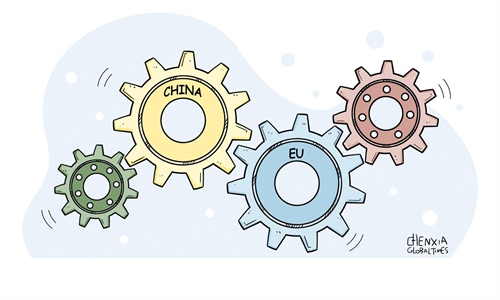
This pragmatic choice reflects both European businesses' recognition of China's industrial innovation capabilities and the deeply intertwined global industrial chain in the high-end manufacturing sector. It also serves as a clear reminder that Europe needs to move beyond anxiety about "dependence" and instead recognize China's value in market scale and innovation application, as well as its increasingly crucial role in the global division of labor.
Certain political rhetoric may shape short-term public opinion, but it cannot override the long-term logic of markets and industrial advancement. As the profitability and global competitiveness of European companies become ever more linked to their Chinese operations, the business imperative for sustained engagement will inevitably assert itself over shortsighted political rhetoric.
This is precisely why there is firm confidence that over the next three to five years, China-Europe industrial cooperation will not weaken; on the contrary, it will deepen, particularly in technology, green energy, and smart manufacturing. This is not the result of any compromise by one side, but an inevitable outcome of market dynamics and technological evolution.
China, meanwhile, will continue to improve its policy environment to provide stable expectations for foreign investors. As China outlines its priorities for the 15th Five-Year Plan (2026-30), the country is moving to advance high-standard opening-up and open wider to the outside world.
Ultimately, European capital has cast its vote. The remaining question is whether political leaders will show pragmatism and align their strategies with economic reality.
RELATED ARTICLES