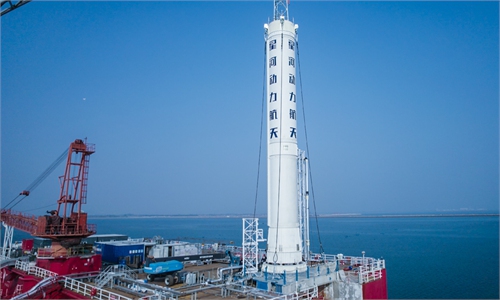
China's first offshore reusable rocket recovery base set for construction in Hangzhou; facility to enable rapid post-recovery inspection, maintenance: firm
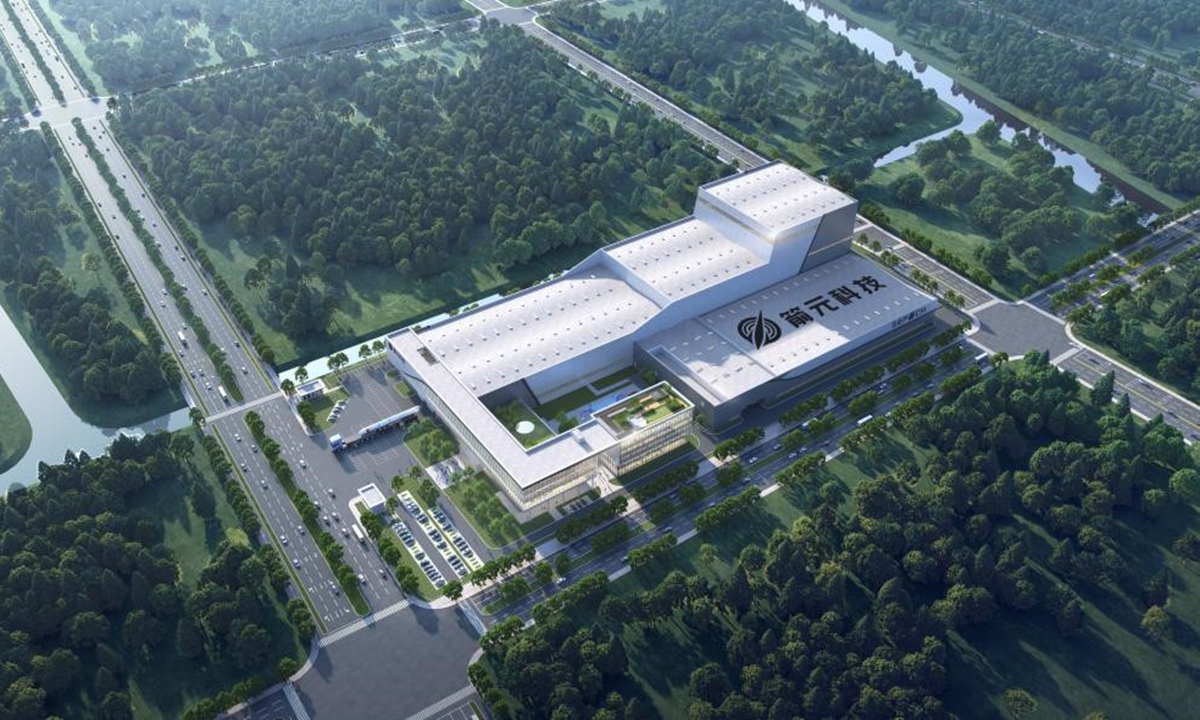
The concept photo of the offshore reusable rocket recovery base of SEPOCH in Qiantang district of Hangzhou, East China's Zhejiang Province Photo: Courtesy of SEPOCH
The Qiantang district in Hangzhou, East China's Zhejiang Province has reached a cooperation agreement with Chinese commercial aerospace firm SEPOCH to build the country's first offshore reusable rocket recovery base, according to the district's official WeChat account.
The facility will enable rapid post-recovery inspection, maintenance, and reuse of rockets, meeting the future space-transport demands of China's low-Earth-orbit satellite internet constellation, the company told the Global Times on Thursday.
The planned reusable rocket base will include a reuse and recovery center, a testing and inspection center, and a manufacturing center. The project involves a total investment of 5.2 billion yuan ($735.57 million), with Phase I covering 108 mu (7.2 hectares). Once completed, it will have the capacity to manufacture 25 XZY-1 rockets annually at scale, the company said.
SEPOCH's core product, the XZY-1 rocket, uses a stainless-steel body and a liquid oxygen-methane propulsion system and is designed for 20 reuses. In May, a verification version of the rocket completed its first flight-recovery test at the Haiyang Oriental Aerospace Port in East China's Shandong Province. The test vehicle had a diameter of 4.2 meters, a total height of about 26.8 meters, a liftoff mass of roughly 57 tons, and conducted a 125-second test flight reaching an altitude of about 2.5 kilometers.
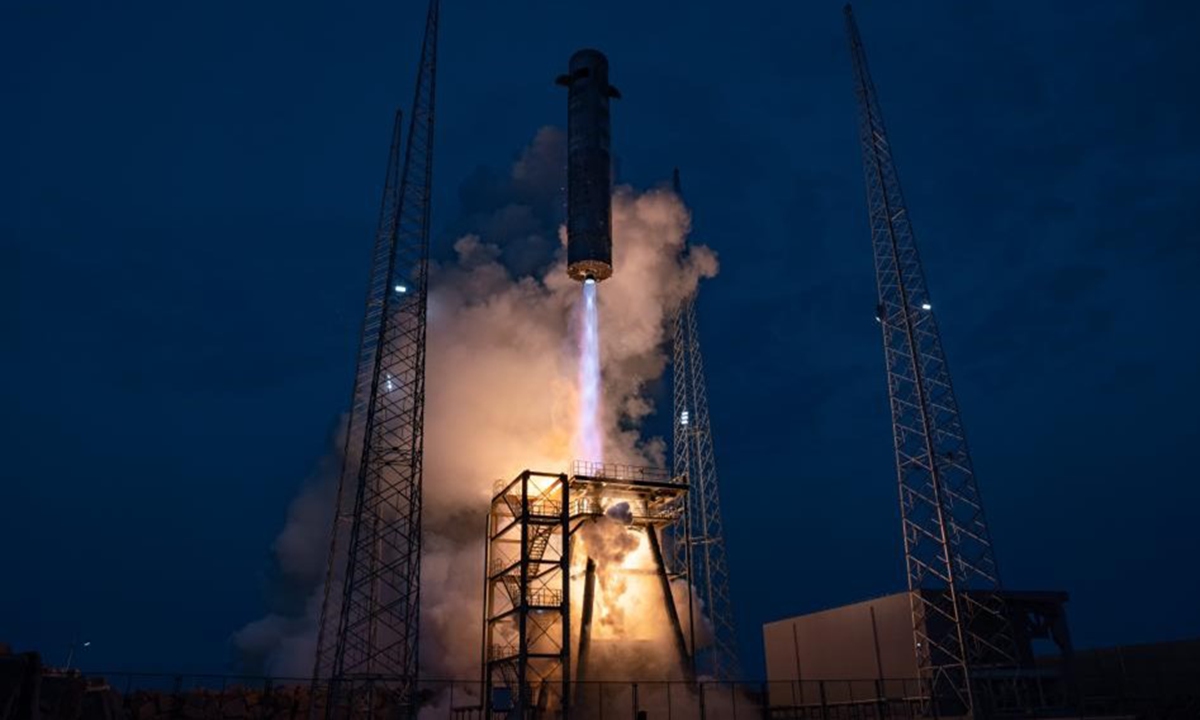
The verification version of SEPOCH's XZY-1 rocket completes its first flight-recovery test at the Haiyang Oriental Aerospace Port in East China's Shandong Province on May 29, 2025. Photo: Courtesy of SEPOCH
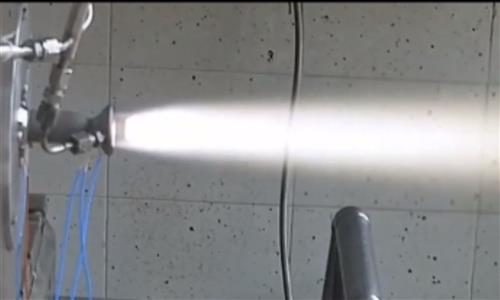
The engine used for the test rocket underwent another 100-second hot-fire test in July, which also succeeded. The company said these milestones have laid a solid foundation for the commercialization of reusable liquid-propellant launch vehicles.
China's commercial space sector continues to make steady progress in reusable rocket technologies. Chinese commercial aerospace firm LandSpace launched its self-developed reusable carrier rocket Zhuque-3 on Wednesday. The second stage of this rocket managed to enter the designated orbit, but recovery of its first stage failed, according to the Xinhua News Agency.
The Zhuque-3 is a liquid oxygen-methane-powered rocket engineered for low cost, high capacity and frequent launches, according to LandSpace. Its first-stage booster suffered anomalous combustion during recovery, failing to achieve a soft touchdown on the landing pad. The recovery test was unsuccessful, and the specific cause is under investigation.
The impressive mission proves the reliability of the launch services and could gather valuable data for future landing experiments, space industry observers said.
RELATED ARTICLES