A wild boar who broke into a home in South China’s Guangzhou finally gets adopted and grown into a 200 kg domesticated pig
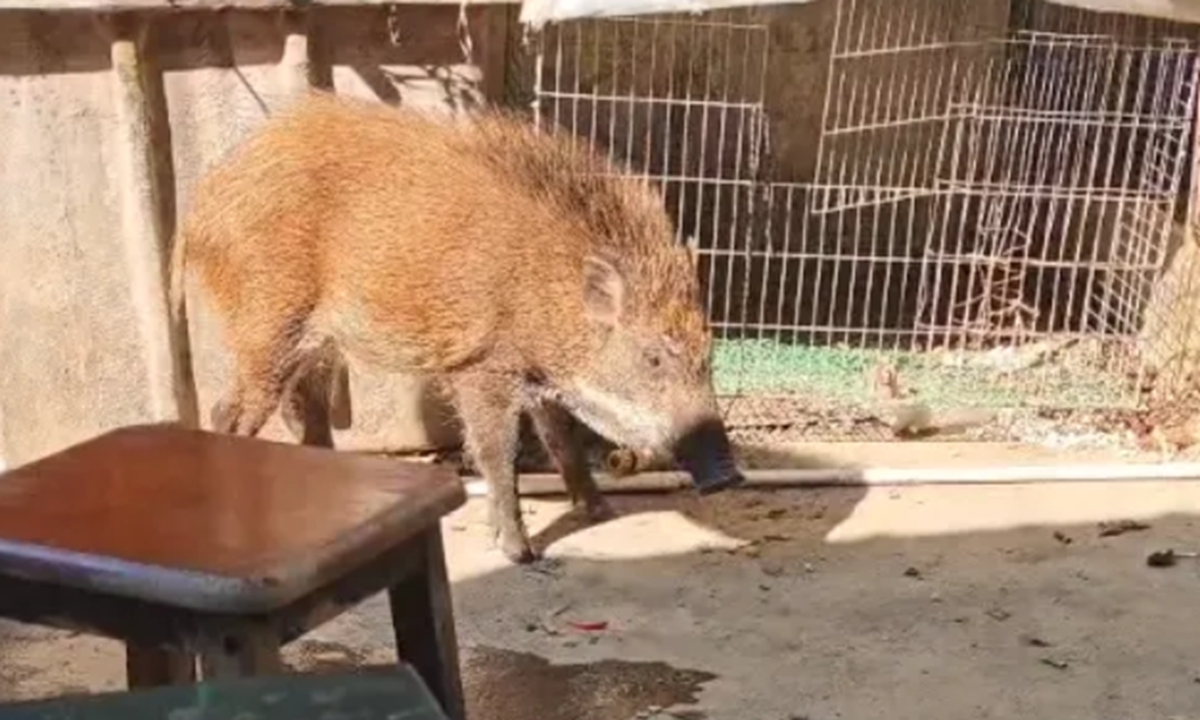
The wild boar that broke into Luo's home. Photo: web
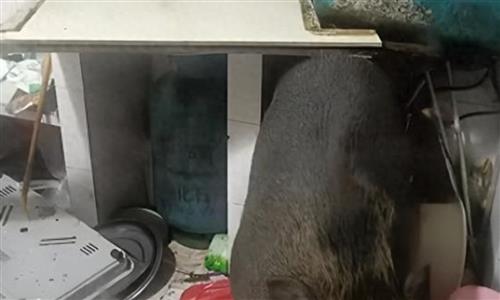
One year ago, Mr. Luo from Guangzhou, South China's Guangdong Province, adopted a wild boar that had wandered into his home on its own.
A year later, the wild boar has settled into life as a pet and grown into a 200-kilogram domesticated pig.
On November 27, 2024, the wild boar made its way into Luo's home. "I fed it that morning and then went out. But it came back over the next two days. On the third day, I worried it might be hunted if left outside, so I decided to take it in," Luo said. "At first, I was concerned it might become aggressive as it grew, but it has actually grown gentler over time and even understands simple commands." According to Luo, the boar has gained significant weight over the year, growing from around 10 kilograms to nearly 200 kilograms, and its tusks have also started to grow.
Luo named the wild boar "Noodles" because he initially fed it noodles. On his personal social media accounts, he often shares snippets of their daily life together. Beyond feeding it, he even takes the boar on road trips.
"I drove it all the way to [East China's] Zhejiang - over 1,000 kilometers - and it was calm throughout the journey. It didn't act up or relieve itself in the car," Luo said. To avoid disturbing others, he moved to a standalone house in Panyu district in June, where the boar now stays in the backyard.
Regarding residents adopting wild boars at home, a staff member from the Bureau of Forestry and Landscaping of Panyu district explained that wild boars are no longer classified as a "three-haves" protected animal (those listed in the National Forestry and Grassland Administration's Directory of Terrestrial Wild Animals with Important Ecological, Scientific, and Social Value), meaning the forestry department will not take additional measures.
However, they emphasized that adopting wild boars involves not only wildlife protection regulations but also requirements from agricultural departments regarding prohibited breeding zones and disease prevention, requiring coordinated management across multiple departments.
Subsequently, a staff member from the Agriculture and Rural Affairs Bureau of Panyu district noted that prohibited breeding zones typically apply to livestock farms, mainly concerning domesticated animals. "There are no specific laws or regulations on whether adopting wild boars is permitted," he said. He noted that if a resident's adoption of a wild boar disturbs neighbors or affects the environment, local authorities may need to intervene, such as relocating the animal, and the adopter may bear corresponding responsibilities. At the same time, the staff member reminded the public that from an animal disease prevention perspective, close contact between humans and wild boars is not recommended.
RELATED ARTICLES