China rolls out new national standard for food delivery platforms to strengthen worker protections, foster fair competition

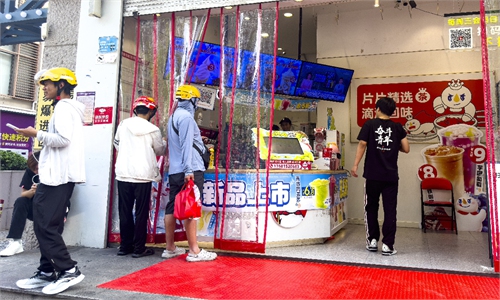
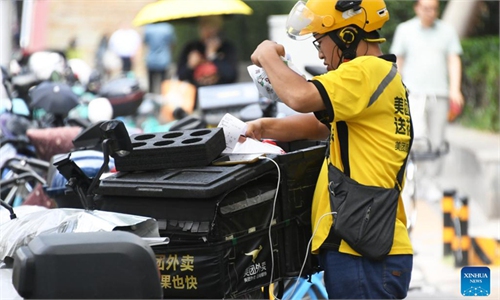
Food delivery riders brave the rain to fulfill deliveries for customers in Beijing on August 27, 2025. The Chinese capital city reported heavy rain on the day, with some places seeing torrential rain. Photo: VCG
China has issued a new recommended national standard for food delivery platforms, according to the State Administration for Market Regulation (SAMR) on Thursday. Analysts say the move is aimed to help drive innovative development in the sector through fair and healthy competition.
The new standard is designed to address long-standing issues in the industry, including "ghost kitchens" - food outlets that exist only virtually on delivery apps without a proper physical storefront - irrational competition practices, and insufficient protection of delivery workers' rights, according to a meeting readout on SAMR's official WeChat account.
It sets out overarching requirements for platform service management, including merchant management, pricing practices, protection of delivery workers and consumers, as well as rules for handling complaints and appeals. The requirements apply to service management across food delivery platforms, Xinhua reported.
To tackle problems such as excessive or arbitrary platform charges, the standard defines three categories of fees: technology service fees, delivery service fees and marketing service fees.
"Platforms must provide merchants with truthful and complete settlement statements that specify the components of each fee, the fee rates, and the actual amount received," Wang dandan, a deputy director-general of the cyberspace supervision department of SAMR, said at the conference.
Regarding promotional campaigns, the standard states that costs must be borne by the platforms themselves and cannot be shifted to merchants. Platforms are also prohibited from imposing unreasonable preconditions for merchants to join promotional activities. To safeguard merchants' autonomy, platforms must not force — or indirectly force — merchants to take part in promotions, nor may they interfere with the scale or intensity of merchants' own promotions.
On strengthening protections for delivery workers, the standard requires platforms to set reasonable limits on order-taking times and establish fatigue alerts and mandatory rest mechanisms for riders who receive continuous orders. "Platforms may not compel or indirectly compel riders to work overtime through algorithmic incentives or bonus structures. Dispatch algorithms should take into account factors such as traffic and weather conditions," Wang said.
This year, SAMR has summoned major food delivery platforms over competition issues in the sector. On July 18, the administration urged the country's three major food delivery platforms to regulate their promotional activities and engage in rational competition. This followed a regulatory talk on competition in the food delivery sector that the SAMR held with Ele.me, Meituan and JD.com.
The administration called on the three firms to adhere strictly to the country's e-commerce, anti-unfair competition and food safety laws, and to jointly promote the healthy, sustained development of the catering service industry.
Looking ahead, regulators will step up efforts to publicize and implement the new standard, guiding the food delivery industry to further improve platform service management, safeguard the legitimate rights and interests of all parties involved, and support innovation and healthy development in the sector.
Global Times
RELATED ARTICLES