SPORT / WINTER SPORT
Domestic resorts gain traction as an alternative to Japan amid tension
Shift in ski travel
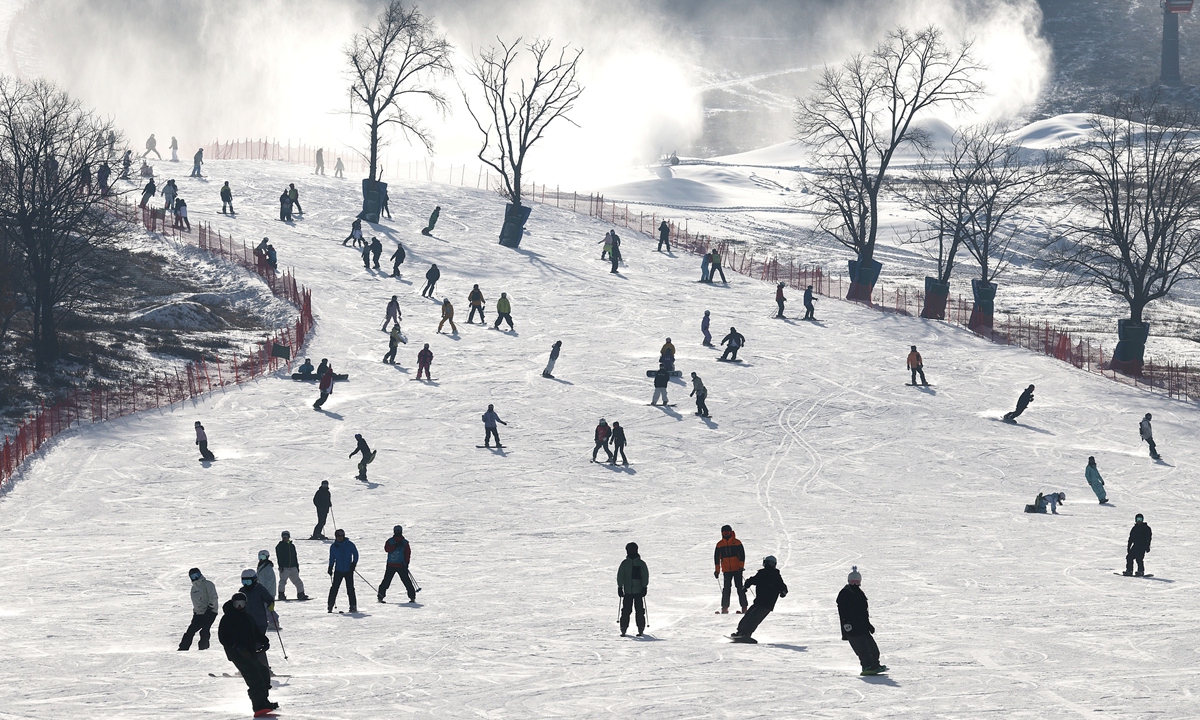
Skiers take to the slope at the Lake Songhua ski resort in Northeast China's Jilin Province on December 1, 2025. Photo: VCG
As a Beijing-based skier with a decade of experience, Zhang Zhizhi used to make an annual winter ski trip with his family to Niseko, Hokkaido in Japan. This year, however, flight disruptions made him hesitate when booking accommodations."On one hand, we were really worried about flights being canceled. On the other hand, we felt that traveling to Japan during this period might not be the safest choice," Zhang told the Global Times.
"My own needs are mainly about having professional, good-quality snow and slopes, but my family and kids aren't that interested in advanced skiing. In that regard, I found that places like Harbin and Jilin actually can meet both demands," said Zhang, who discovered that many ski resorts in China have undergone remarkable changes over the past years.
He ultimately decided to book a hotel and lift tickets at the Beidahu Ski Resort in Northeast China's Jilin Province.
A representative from the sales department of Tongcheng Travel told the Global Times that, according to an analysis by the Tongcheng Research Institute, the "alternative to Japan" effect has accelerated since late November.
In December, more than 40 percent of the scheduled flights from China to Japan were canceled, with over 1,900 flights called off, according to CCTV News on Monday.
This year, more tourists are turning to high-quality ski resorts across China.
With the same budget, ski resorts located in the "world's golden latitude zone for ice and snow," such as those in Chongli of North China's Hebei Province, and in Northeast China's Jilin and Heilongjiang provinces, are increasingly standing out for their relatively low cost, convenient transportation, and overall service experience.
As several ski resorts, including Beijing's Yanqing Olympic Park and Harbin's Yabuli Sun Mountain Resort, open for the season, ice-and-snow tourism is set to climb to new peaks over the coming weekends.
Tongcheng Travel data shows that on November 29 and 30, bookings for domestic "ice and snow" scenic-spot tickets more than doubled compared with the same period in October.
Upgrading facilities
Zeng Yan, general manager of the Beidahu Ski Resort, told the Global Times that the resort's presales for the 2025 snow season have hit a record high of 150 million yuan ($21.2 million), a year-on-year increase of 25 percent.
Jilin's strength, Zeng noted, lies in the fact that most of its mountainous terrain meets the natural conditions required for developing ski resorts. The province also enjoys transportation advantages, making it easy for large numbers of visitors to travel there.
"The number of cable cars and the total length of ski runs are also key factors in attracting customers," Zeng said. "As the industry matures, clients have increasingly higher expectations, which require operators to continuously upgrade supporting facilities."
Xia Yulin, general manager of the Changbaishan Wanda International Resort, told the Global Times that the resort has so far recorded more than 400 million yuan in presales.
"The reason why Hokkaido became a world-class ski destination has a lot to do with its natural environment, the high quality of its powder snow, good facilities, and strong service standards. But we also have a powder-snow season in Changbai Mountain," Xia said.
Qi Wenjun, a licensed guide at Changbai Mountain, told the Global Times that with the mountain's excellent powder snow and the full range of resort facilities, inquiries from visitors have been pouring in since November.
"Compared with some ski resorts in Japan that still operate old ski lifts and have slow hotel renovations, China's ski-resort development is moving forward rapidly, with heated chairlifts and integrated resort systems increasingly becoming standard features," Xia said.
Thanks to the advantages of its latitude, the powder snow in Jilin and other regions is soft, fine, dry, and highly resilient, ideal not only for beginners to practice safely, but also for advanced skiers to revel in the thrill of high-speed runs.
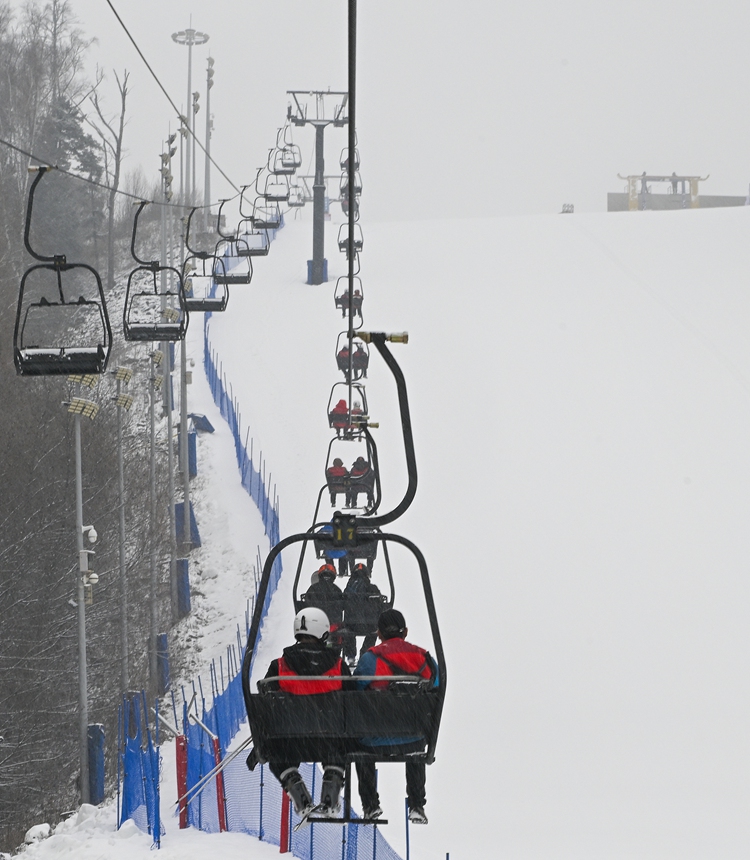
Enthusiasts take the ski lifts at a ski resort in Northeast China's Jilin Province on November 27, 2025. Photo: VCG
Promising outlookAccording to a report on China's ice and snow industry development for 2025, the size of the country's ice and snow industry is expected to surpass 1 trillion yuan ($141.56 billion) in 2025.
China's ski industry enjoys strong support from government policies and opportunities brought by economic and cultural growth, in addition to the stimulus effect of the Winter Olympics, making the outlook highly promising, Zeng said.
This year, ski resorts across the country have upgraded their services. The Jundushan Ski Resort in Beijing plans to launch pet-friendly services, including a snow-play area designated for pets.
The Keketuohai International Ski Resort in Northwest China's Xinjiang Uygur Autonomous Region is introducing an ice-and-snow drone show for the first time and plans to hold sunset music parties and snowfield bonfire events.
At Shennongjia Ski Resort in Central China's Hubei Province, tourists can admire rime ice and a sea of clouds, or visit the golden monkey reserve to observe the animals up close.
The indoor ski venue Sunac Snow Park in Guangzhou, South China's Guangdong Province, features a 17,000-square-meter ice and snow recreation zone where visitors can enjoy activities such as snow tubing, bumper cars on ice, adventure trails, and ice bicycles.
The International University Sports Federation (FISU) announced in November that Changchun, capital of Jilin, will host the 33rd FISU Winter World University Games from January 15 to 25 in 2027.
Following the Harbin Asian Winter Games held this February, hosting major international ice and snow events is sure to provide new momentum for the continued development of China's winter sports and for expanding the number of people taking part in winter sports.
RELATED ARTICLES