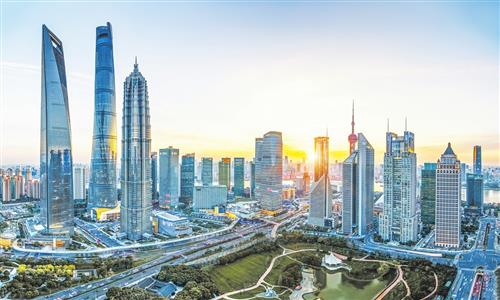
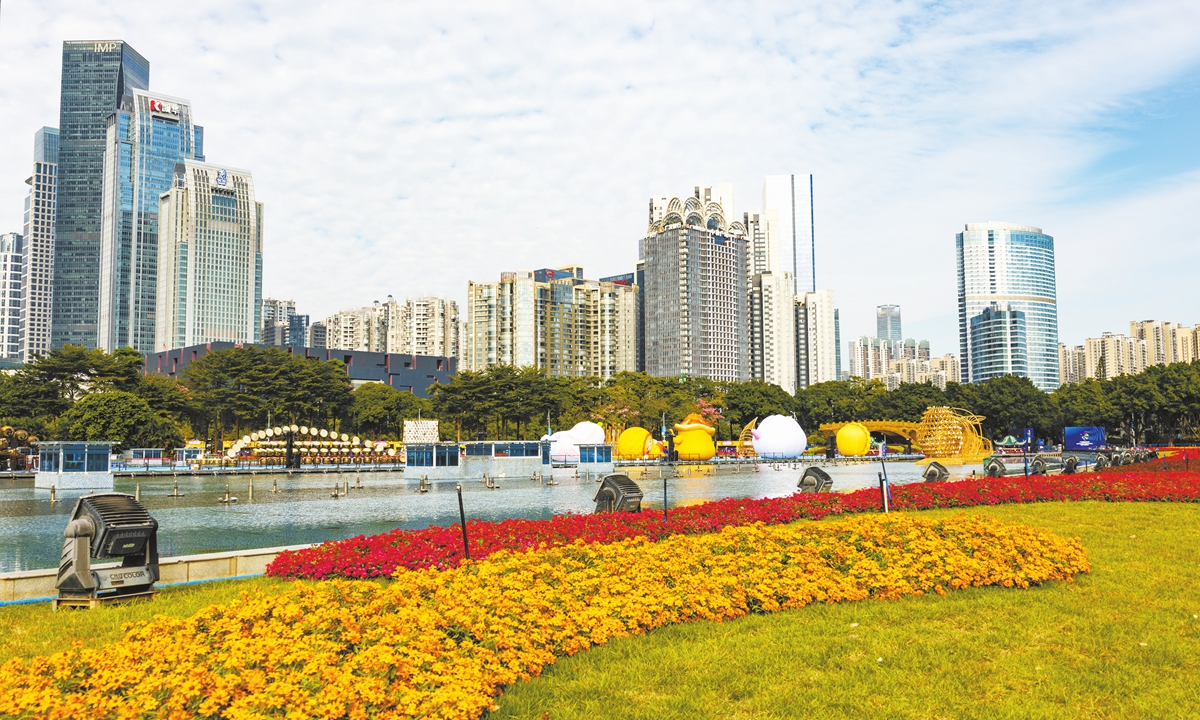
A view of Guangzhou, South China's Guangdong Province on November 23, 2025 Photo: VCG
The Central Economic Work Conference held in December 2024 outlined nine key priorities for China's economic work in 2025, placing "the effort to vigorously boost consumption, improve investment efficiency, and expand domestic demand on all fronts" at the top agenda. This year, consumption has kept growing, helped by the rapid expansion of new consumption patterns.
In recent years, China's consumption has been undergoing a rapid structural transformation, showing a clear trend of upgrading. During the period, consumer demand has shifted toward higher-quality, more personalized, and experience-driven spending.
While month-to-month growth rates may fluctuate, it is unfounded for some foreign media outlets to draw pessimistic conclusions about China's economy based solely on short-term variations. In 2025, government policies such as trade-in incentives helped stimulate consumption, pushing growth to a year-on-year peak of 6.4 percent in May. Although the growth rates fluctuated to some extent in the following months, it continued to expand steadily.
Through on-the-ground research, I have observed that China's consumption upgrade is evident not only in those emerging sectors, such as health and emotional consumption, but also in the increasingly sophisticated development of traditional industries, which are becoming more cost-efficient, productive, and profitable.
Clearly, certain Western media outlets that seek to talk down China's consumption often fail to grasp these deeper trends, nor have they experienced firsthand the structural changes within the Chinese economy.
For example, during field research in southern Chinese cities, I came across newly emerged bicycle companies offering fully customized products for clients. Some models weigh as little as 5.5 kilograms, and can be folded and stored in the trunk of a car, yet are priced at about 180,000 yuan ($25,450) - comparable to the cost of a car itself. Consumers keep these customized bikes in their car trunks so they can ride and exercise whenever they have spare time. This is a textbook case of consumption upgrading and rising demand for high-quality, health-oriented lifestyles.
Another example is Pop Mart, the Chinese toy and lifestyle brand whose profit margins have surpassed expectations. Its trendy collectibles and intellectual property-driven products have become hits among young consumers amid the surge of emotional consumption, even though the raw materials and manufacturing costs are low. This vividly illustrates the growth potential and profitability emerging from China's consumption upgrade and broader economic structure transformation.
International experience shows that per capita GDP of $10,000 is a key threshold at which the share of services consumption rises drastically. Chinese households are likewise accelerating their shift from basic material consumption toward mid-to-high-end, upgrade-driven, and personalized consumption.
The roughly 260 million-strong Generation Z cohort (born 1995-2009) is at the heart of this transformation. Characterized by a strong pursuit of emotional satisfaction and growing purchasing power, their consumption capacity is steadily rising, fueling the rapid expansion of new consumption patterns across many sectors.
Moreover, rural consumption continued strong growth momentum. In the first 10 months of this year, rural retail sales rose by 4.6 percent. This trend highlights the growing contribution of rural markets to China's overall consumption, signaling more balanced and resilient domestic demand.
These trends share common features: lower costs, higher efficiency, and stronger profit margins. Together, they reflect the resilience and bright prospects of China's high-quality transformation in both consumption and the broader economy.
In 2026, boosting consumption is expected to remain one of the major priorities of China's economic work, and the country's consumption potential will continue to be released. With this year's Central Economic Work Conference approaching, expectations for further consumption upgrading are strong.
Through my field research across the country this year, it is evident that certain lifestyle categories are experiencing explosive growth. If similar trends continue to emerge - and all signs indicate they will - there is reason enough to keep confident and optimistic about China's consumption and its economic growth.
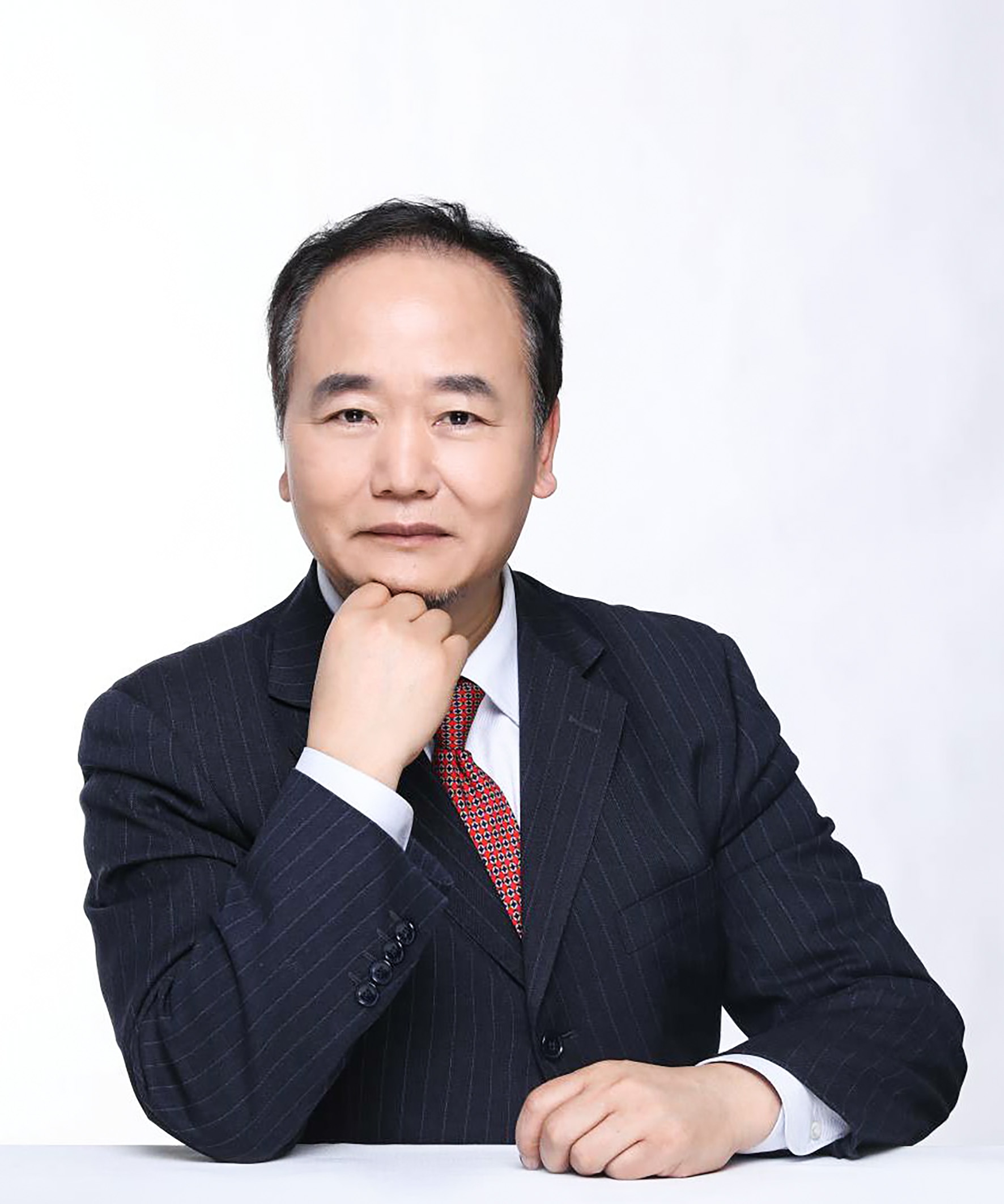
Cao Heping Courtesy of Cao Heping
The author is a professor at the School of Economics of Peking University. bizopinion@globaltimes.com.cn
RELATED ARTICLES