Japan pushes tax hike, new intelligence bureau to accelerate military buildup; experts warn of right-wing bid to overturn postwar order, burden its people
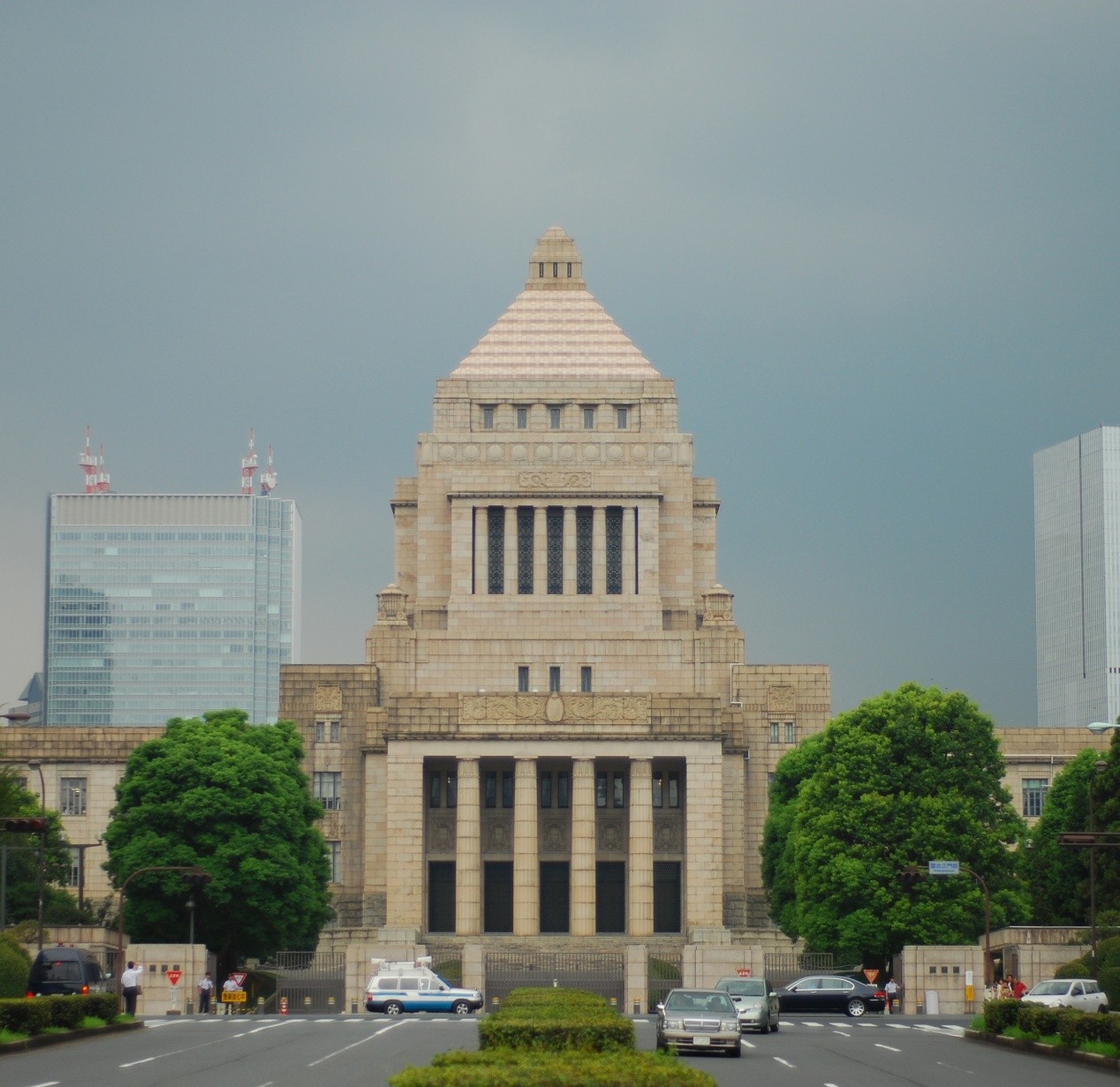
Japan's Diet building in Tokyo Photo: VCG
Japan is moving ahead with a series of policy measures to bolster its defense capabilities, including plans to raise the country's income tax in January 2027 to help cover a substantial increase in defense spending and to establish a national intelligence bureau as early as July 2026, according to Japanese media reports.Chinese experts view these steps as part of a long-running push by Japan's right-wing conservative forces to free the country from the constraints of its postwar pacifist Constitution and pursue an expanded military posture, posing threat to the region's peace and burdens its people.
According to the Japan Times, Japan's ruling Liberal Democratic Party (LDP) on Friday launched discussions on increasing the income tax rate by 1 percentage point in 2027 as part of efforts to secure financial resources for higher defense spending. "We believe that clearly showing Japan's stance on national security, including the funding source, will lead to improved deterrence," LDP tax chief Itsunori Onodera told reporters on Friday.
Although the rate of a special income tax levied to support reconstruction after the 2011 Great East Japan Earthquake will be cut by an equivalent 1 percentage point to offset the increase, the Japan Times noted that the special revitalization tax will remain in place longer than initially planned, effectively resulting in a higher tax burden.
Kyodo News also reported that because the plan will increase the public burden over the long term, backlash is expected. Nippon Ishin opposed tax hikes when it was in opposition, and other opposition parties also remain reluctant, making the proposal's passage uncertain.
At the same time, Japan is moving to establish a national intelligence bureau. The government will submit the necessary legislation to the ordinary session of parliament convening in January, marking the first step in Prime Minister Sanae Takaichi's intelligence reform initiative, the Japan Times reported, citing government and ruling party sources.
The planned bureau will be formed by upgrading the existing Cabinet Intelligence and Research Office. It will consolidate information gathered by divisions within government bodies such as the Foreign Ministry, the Defense Ministry, the National Police Agency and the Public Security Intelligence Agency, according to the Japan Times.
The new bureau will be treated as equivalent to the National Security Agency, which oversees foreign and security policies, and will have the authority to instruct ministries and agencies to provide information, the Japan Times reported.
However, Kyodo News pointed out that if the government's intelligence activities expand, they could lead to increased surveillance of citizens. Concerns have also been raised about possible impacts on freedom of speech and expression, which are likely to become key points of debate in the deliberations on the bills.
Chinese analysts argue that both the tax-funded defense buildup and the creation of an intelligence bureau reflect Japan's broader strategic trajectory, aimed at overturning the postwar international order.
Japan's moves to establish a national intelligence bureau and increase defense spending reflect the right-wing orientation of the current Sanae Takaichi administration, Xiang Haoyu, a distinguished research fellow at the Department for Asia-Pacific Studies of the China Institute of International Studies, told the Global Times on Saturday.
These moves, driven by Japan's right-wing conservative forces, are meant to inflate external threats and justify efforts to escape the postwar settlement and pursue the status of a political and military power. Japan's left-leaning groups, the general public, and neighboring countries must remain vigilant, Xiang said.
Japan's effort to strengthen domestic intelligence structures ostensibly aimed at safeguarding its national security and enhancing alignment with Five Eyes intelligence networks, but the higher taxes to expand the defense budget serve the ruling bloc's long-standing agenda of military buildup, Xiang said,
Xiang emphasized that these policy shifts reveal Japan's attempt to dismantle the postwar system, pursue "so-called normalization," and revive ambitions of becoming a political and military power. The underlying goal, he argued, is to weaken the constraints of the pacifist Constitution, requiring heightened vigilance regarding Japan's increasingly conservative foreign-policy orientation.
The debate over Japan's trajectory also surfaced at an academic seminar on the postwar international order held at China Foreign Affairs University in Beijing on November 29. Liu Jiangyong, a professor at the Institute of International Studies at Tsinghua University, said Japan's narrative of seeking "national normalization" is fundamentally flawed. Rather than a benign reinterpretation, he argued, it represents "an attempt to overturn the postwar international order," undermining the Potsdam Proclamation, the Cairo Declaration, and the Japanese Instrument of Surrender.
"This year marks the 80th anniversary of the World Anti-Fascist War. If Japan overturns the postwar order within a century, how could China or the other victorious nations accept that? We must not allow it," Liu said.
Earlier, responding to media questions on Japan's easing of arms-export controls, exports of deadly weapons, and discussions on revising its three security documents, including the three non-nuclear principles and increasing defense spending, Chinese Foreign Ministry spokesperson Mao Ning stressed that after WWII victory, international treaties and instruments such as the Cairo Declaration, the Potsdam Proclamation, and the Japanese Instrument of Surrender clearly outlined Japan's obligations as a defeated country, requiring it to be "completely disarmed" and not to maintain industries that "would enable her to re-arm for war."
However, in recent years, Japan has continued easing the restrictions and seeking military buildup. It has increased its defense budget for 13 consecutive years and adopted new security laws lifting the ban on exercising the right to collective self-defense. It has also replaced the Three Principles on Arms Exports with the Three Principles on Transfer of Defense Equipment and Technology, easing restrictions on arms exports and even beginning to export deadly weapons, Mao said.
If Japan attempts to return to the path of militarism, violates its commitment to peaceful development or disrupts the postwar international order, the Chinese people will not allow it, nor will the international community. Such attempts will only end in failure, Mao noted.
RELATED ARTICLES