Chinese, Russian militaries hold 3rd joint anti-missile exercise, working together to jointly reinforce post-World War II order: expert
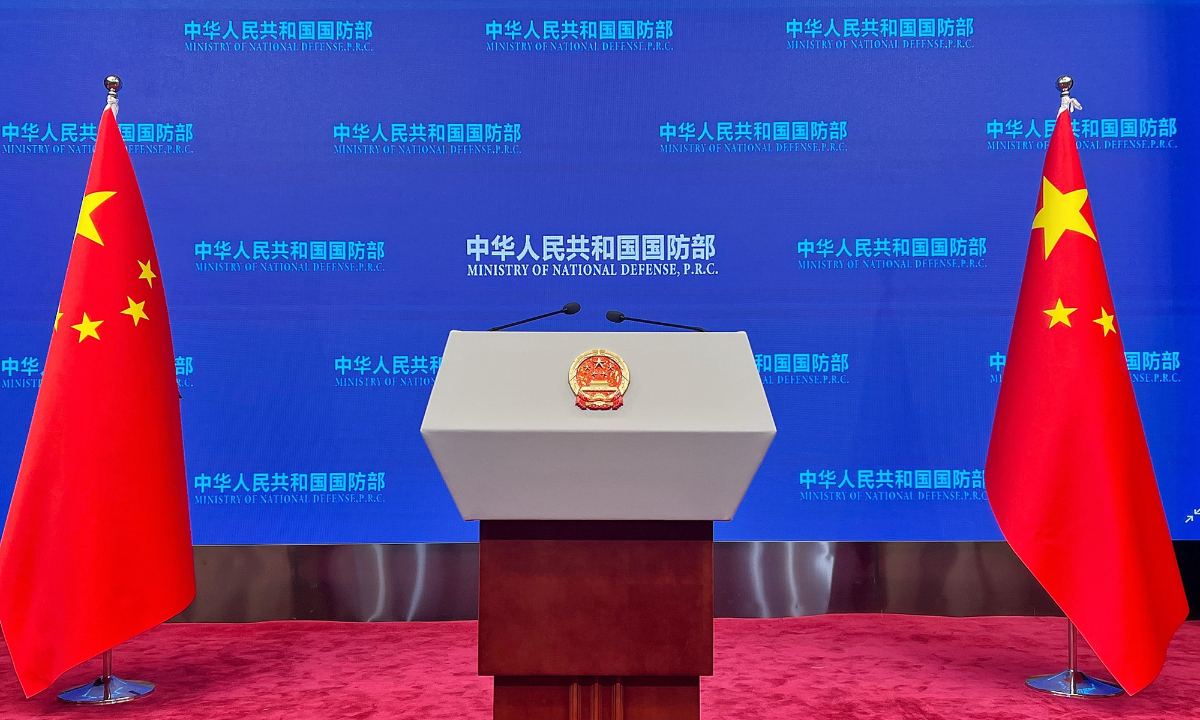
China's Ministry of National Defense. Photo: Chinese Defense Ministry
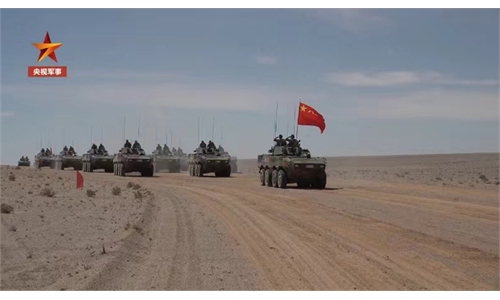
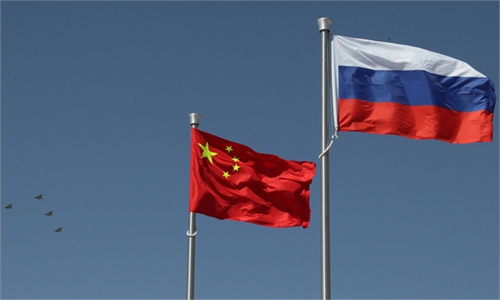
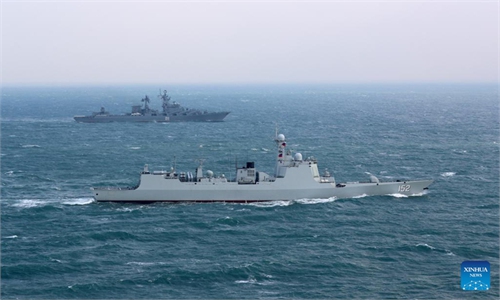
According to a statement of China's Ministry of National Defense on Saturday night, the Chinese and Russian militaries conducted their third joint anti-missile exercise within the territory of Russia in early December. The joint exercise doesn't target any third party and has nothing to do with the current international and regional situation, said the statement. A Chinese expert said that the joint anti-missile drill between China and Russia reflects the deepening strategic mutual trust between the two sides, as China and Russia must work together to reinforce the post-World War II order on issues concerning major interests.
This marks the first joint anti-missile drill between China and Russia in eight years. Compared to the previous two drills, the information about this exercise was disclosed only after its conclusion. According to publicly available media reports, the first joint command and staff anti-missile drill between China and Russia was held from May 26 to 28, 2016, with China's Ministry of National Defense announcing the news on May 3 of that year. From December 11 to 16, 2017, China and Russia conducted the second joint command and staff anti-missile computer simulation exercise, "Aerospace Security-2017," in Beijing, with China's Ministry of National Defense releasing the information on November 17 of that year.
Furthermore, the press release for the third China-Russia joint anti-missile drill was the most concise to date. However, it is worth noting that the announcements for all three joint drills have consistently emphasized the same point: "the joint exercise doesn't target any third party."
"By choosing to release the information after the exercise concluded, China's Ministry of National Defense has reduced the sensitivity and political implications of the drill, allowing it to focus more on technical-level cooperation and exchanges," Chinese military affairs expert Song Zhongping told the Global Times on Sunday. He noted that the conduct of this exercise was a natural and inevitable outcome. Guided by the strategic vision of the leaders of China and Russia, the two countries have reached broad consensus on many issues, particularly in military cooperation, where both sides will continue to strengthen collaboration in military and defense technology.
Song said that China and Russia, as major military powers, have developed a high level of mutual understanding and trust in their military cooperation. Choosing to release information after the exercise demonstrates military transparency and confidence in their own military capabilities, while also preventing certain countries with ulterior motives from seizing the opportunity to sensationalize the event.
He also noted that the emphasis in the press release on " the joint exercise doesn't target any third party" sends a clear message to the international community: the military cooperation between China and Russia is based on shared security interests and strategic needs, rather than being directed against any third party.
Just prior to the Ministry of National Defense's announcement of the third joint anti-missile drill between the Chinese and Russian militaries, according to a release from China's Ministry of Foreign Affairs, from December 1 to 2, at the invitation of Secretary of the Russian Federation Security Council Sergei Shoigu, Member of the Political Bureau of the CPC Central Committee and Director of the Office of the Central Commission for Foreign Affairs Wang Yi traveled to Russia for the 20th round of China-Russia strategic security consultation. The two sides engaged in comprehensive and in-depth discussions on major issues concerning the strategic security interests of both countries, reached new consensus, and enhanced strategic mutual trust. Both sides agreed to fully implement the important common understandings reached by the two heads of state in the field of strategic security, and advance bilateral strategic coordination toward higher quality.
"The two sides have explicitly agreed to cooperate in areas such as strategic security, which also includes collaboration in the anti-missile field, such as strengthening early warning cooperation and integrating anti-missile resources," Song said. As two of the few countries in the world possessing comprehensive anti-missile capabilities across various phases, both China and Russia have strengths in high-altitude, terminal-phase, and mid-course missile defense. Enhancing cooperation in joint anti-missile operations would be highly beneficial for both nations, and building a shared early missile defense system has become particularly necessary.
Another military expert told the Global Times on Sunday that during the China-Russia joint anti-missile drill, the air defense and anti-missile forces of both countries can exchange ideas on operational methods and tactics, learn from each other technically, complement each other's strengths, and improve their technical and tactical capabilities.
Song noted that China and Russia's emphasis on strengthening anti-missile cooperation reflects that missile defense is not only a regional security concept but also a crucial manifestation of self-defense. Currently, Japan continues to pursue neo-militarism by actively developing long-range missiles, including hypersonic missiles, introducing Tomahawk cruise missiles, as well as Type 12 anti-ship missiles and cruise missiles. These actions pose a serious threat to China, Russia, and other victorious nations of World War II, making it imperative to strengthen missile defense capabilities.
According to Song, China and Russia are building regional missile defense systems, not a global one. These systems focus more on a shared early warning framework. If any country launches missiles against either nation, the jointly shared early warning systems would alert both countries, enabling their respective missile defense systems to carry out interceptions. The development of the regional missile defense systems can be jointly advanced by the two countries. In the future, if a global missile defense system is established, the two nations could also achieve resource and information sharing.
The above-mentioned anonymous military expert also noted that the joint anti-missile drill between China and Russia reflects the deepening strategic mutual trust between the two sides. Currently, there are voices in the Asia-Pacific region advocating military intervention and armed interference in the affairs of other countries. As two major powers, this drill demonstrates China and Russia's determination and capability to cooperate in defense, serving as a clear warning to forces in the region attempting military provocation.
According to the Ministry of Foreign Affairs, during the 20th round of China-Russia strategic security consultation, the two sides conducted strategic alignment on issues related to Japan, reaching a high degree of consensus. They agreed to resolutely safeguard the outcomes of the victory of World War II won at the cost of lives and blood, firmly oppose any erroneous words and deeds that attempt to whitewash the history of colonial aggression, and resolutely counter any attempts to revive fascism or Japanese militarism. Both sides stressed that China and Russia, as major countries and permanent members of the United Nations Security Council, will shoulder their shared responsibility to safeguard world peace and security, and uphold historical truth and international justice.
Song said that these expressions highlight the determination of China and Russia to strengthen comprehensive cooperation, particularly in strategic and military security domains, aiming to uphold the post-war order and prevent certain defeated nations from acting recklessly and altering that order. This also underscores that, on issues concerning major interests, China and Russia must work together to jointly reinforce the post-World War II order.
RELATED ARTICLES