SPORT / FEATURE
Greater Bay Area Para-Special Games promote disabled athlete selection system, provide AI assistive devices, long-term education support
Cheers for ‘unheard’ competitors
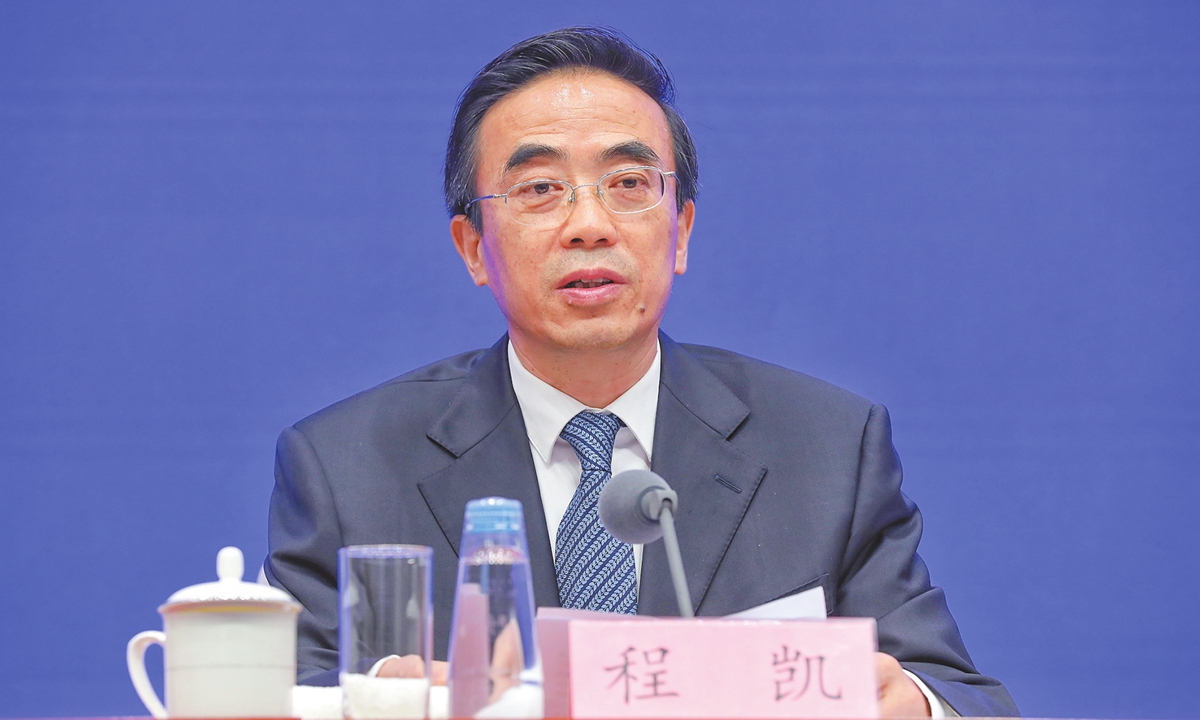
Cheng Kai Photos: VCG
In a quiet corner of Guangzhou Polytechnic of Sports in Guangzhou, South China's Guangdong Province, a door slowly closes and a special competition begins with no spectators and no applause. This is a table tennis event for visually impaired athletes in the mass participation category at the National Games for Persons with Disabilities and the National Special Olympics, a competition that unfolds almost entirely in silence.Athletes press their bodies against the table, leaning forward to listen intently to the sound of a specially designed ball rolling across the surface. From its subtle echoes, they judge direction, speed and spin. Every strike is not merely a test of technique, but an exercise in concentration, patience and trust in sound.
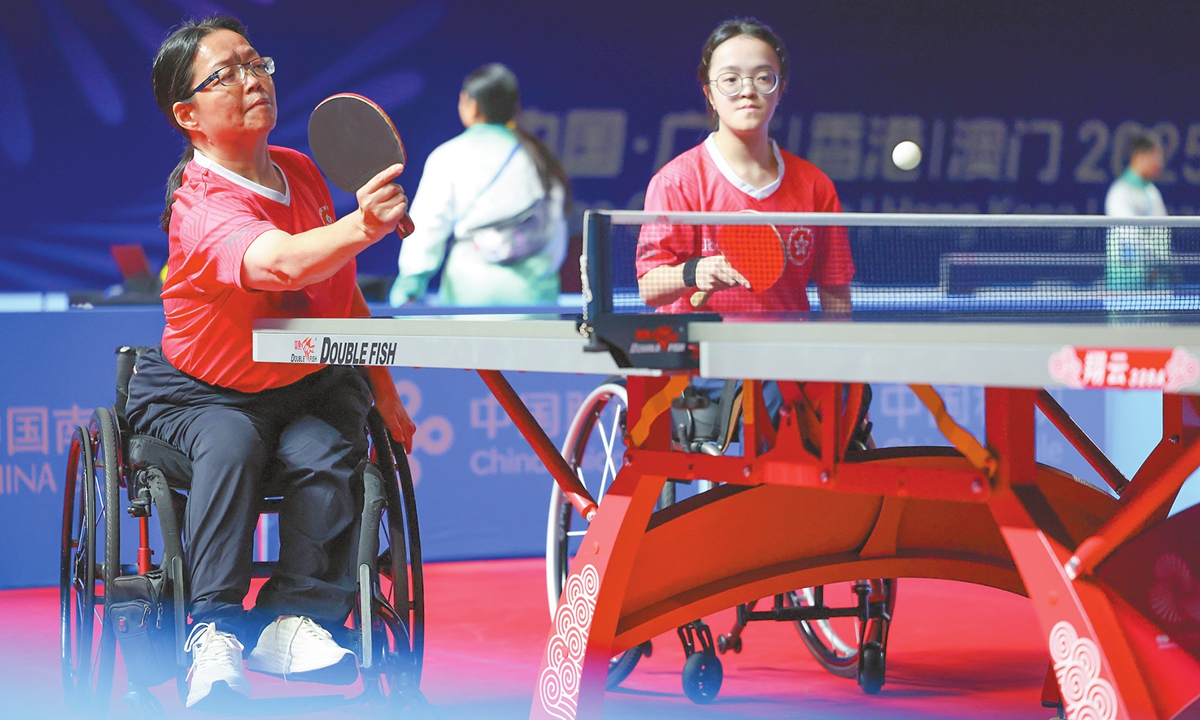
Hong Kong athletes Wong Pui-yi (left) and Yuen Wing-ki compete in the TT5 women's doubles in Guangzhou, South China's Guangdong Province, on December 9, 2025.
Scenes like this - far removed from conventional images of competitive sport - have appeared repeatedly at the National Para-Special Games jointly hosted by Guangdong Province and the Hong Kong and Macao special administrative regions - the Greater Bay Area, which conclude on Monday.During the table tennis events, Cheng Kai, chairman of the China Disabled Persons' Federation (CDPF) and president of the National Paralympic Committee of China, visited the venue and communicated with athletes. "Over the past few days, I have been able to closely experience the resilience and determination of visually impaired athletes competing intensely through their sense of hearing and touch. It was not only competitive but also highly engaging, and this 'sport played on the tip of the ears' was every bit as exciting," Cheng told the Global Times.
In an exclusive interview with the Global Times, Cheng reflected on the highlights of the Games, the experience of jointly hosting the Games across the Greater Bay Area, and the long-term support systems for athletes with disabilities beyond the competition.
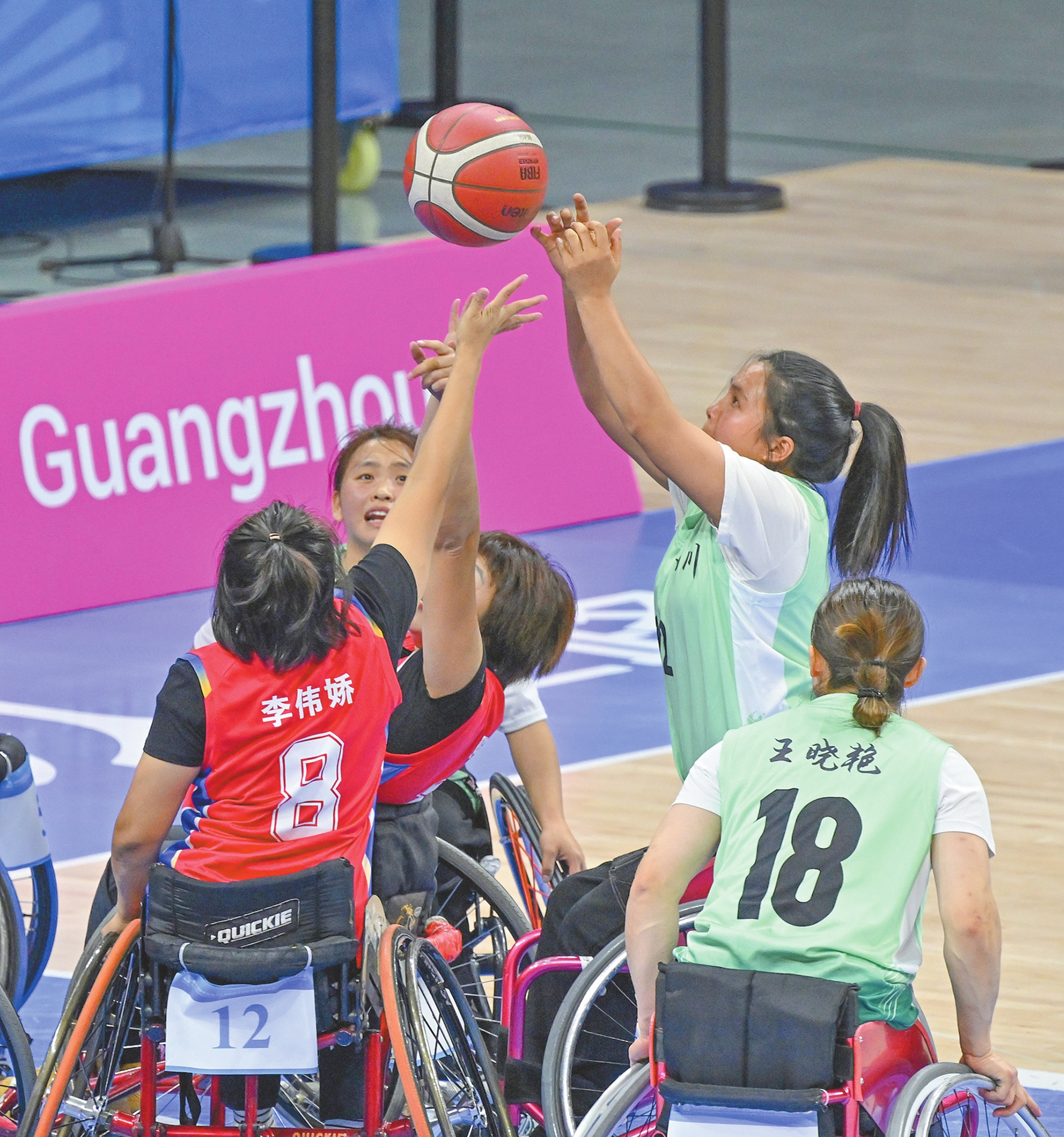
Athletes compete in the Women's Group B Match - Sichuan vs. Hebei in Guangzhou, South China's Guangdong Province, on December 11, 2025.
Customized servicesWhile deeply impressed by the performance of the athletes, if one looks carefully at the table tennis venue at Guangzhou Polytechnic of Sports, he would see it has undergone a comprehensive barrier-free upgrade, which would leave him a lasting impression even beyond the competition itself.
Guided by the principle of "ramps wherever there are steps, rounded edges wherever there are corners," the venue added three barrier-free elevators, one lifting platform, 19 wheelchair seating areas, 12 accessible restrooms and 10 accessible shower rooms.
A fully connected barrier-free circulation system enables "zero-height-difference" access from parking areas to the competition floor. Outside elevator doors, foot-operated buttons allow hands-free use.
Sign language interpreters and sign-language translation robots were deployed on site, reflecting what organizers described as a "human-centered, systematic and intelligent" approach to accessibility. A total of 238 volunteers served across competition, reception, medical and media roles. Medical security included multiple hospitals, on-site stations, ambulances and dedicated staff, offering what Cheng described as "one-person-one-plan" customized services.
"Table tennis, as one of China's most widely practiced sports, enjoys strong participation among people with disabilities at the grassroots level. At these Games, the sport ensured that athletes with physical, visual, hearing and intellectual disabilities could all compete on an equal footing, which is what we've always been expecting," Cheng said.
Cheng noted that as this is the historic first national disability sports event held beyond the Chinese mainland and into a coordinated Greater Bay Area framework, the organizing committee is pushing every possibility to allow regions to learn from one another in event operations and barrier-free facilities.
During the Games, more than 9,700 athletes and coaches participated in dozens of sports and disciplines, making it one of the largest comprehensive disability sporting events ever held in China. Beyond competition, the Games have become a catalyst for promoting barrier-free urban development and inclusive public services.
"We are not only building a stage for athletes to pursue their dreams," Cheng said.
"We are also promoting cities like Guangzhou and Shenzhen toward becoming 'zero-barrier competition zones' and national models for accessibility."
The three regions jointly formulated unified standards for competition organization, classification and anti-doping. Hong Kong and Macao drew on Guangdong's extensive experience in large-scale disability sports events, while Guangdong absorbed advanced practices from Hong Kong and Macao in accessibility services and professional disability support, forming a complementary, mutually reinforcing mechanism.
Cutting-edge assistive technologies, including AI glasses, intelligent wheelchairs and brain-controlled mobility devices, were also closely used and presented during the Games. With cities like Shenzhen and Foshan in Guangdong serving as innovation and manufacturing hubs, technologies such as artificial intelligence, brain-computer interfaces and smart rehabilitation equipment are being rapidly applied in assistive device development.
"Combined with Hong Kong and Macao's strengths in personalized services and professional standards, the Greater Bay Area is emerging as a potential international center for assistive technology innovation," Cheng said.
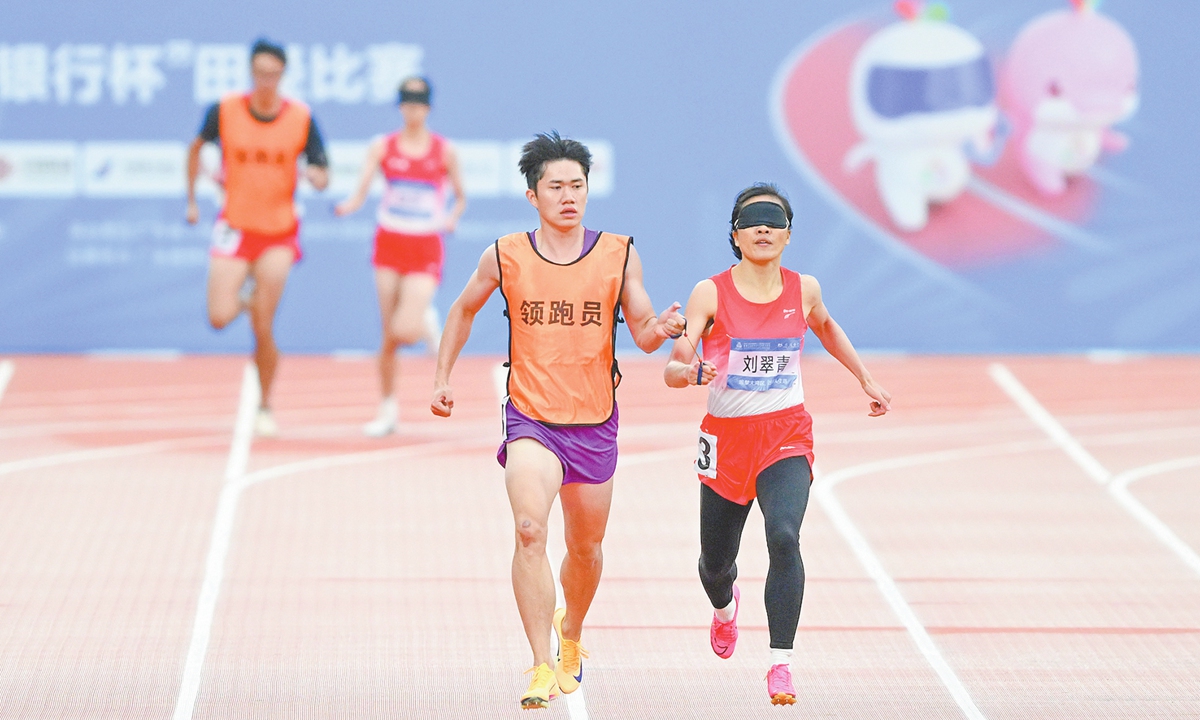
Liu Cuiqing (right) defends her title in the Women's 400m T11 final? in Guangzhou, South China's Guangdong Province, on December 13, 2025.
After the GamesYet questions remain. For instance, as the Games are temporary, how can the long-term lives and support systems for athletes with disabilities be ensured? For Cheng, the closing ceremony does not signal an ending, but a continuation.
Each year, Cheng noted, the CDPF organizes nationwide initiatives such as fitness weeks for persons with disabilities, and an ice and snow sports season for persons with disabilities, creating sustained platforms for their participation.
Across the country, diverse grassroots programs, from blind running groups to inclusive sports festivals, continue to flourish.Indeed, China has established a four-tier training system for athletes with disabilities, spanning county-level talent identification, municipal development, provincial training and national elite programs.
Youth selection camps and training bases are expanding, while coaching, refereeing and classification specialist teams are being strengthened, particularly in urgently needed areas such as visual and intellectual disability classification.
As most athletes with disabilities in China are amateur competitors such as workers, farmers, students and freelancers, national teams receive subsidies, accommodation, equipment and logistical support to ease the burden of training and competition. Outstanding results are rewarded with material incentives and honors.Still, athletes' life after the Games remains challenging.
As the competition will end, life after the Games must go on. When asked about how to support their employment after their retirement, Cheng emphasized higher education as a long-held aspiration for many athletes with disabilities.
"Supported by the General Administration of Sport of China, universities such as Beijing Sport University and Shanghai University of Sport have made historical breakthroughs in admitting elite Paralympic athletes without entrance examinations, and these are the efforts we would like to make to help disabled athletes pursue further education and better integrate them into society," Cheng noted.
In July 2023, the General Office of the State Council issued measures for rewarding outstanding athletes with disabilities and their coaches, introducing concrete policies covering bonuses, university admission without exams, employment placement, social security, household registration support and public recognition.
Looking ahead, Cheng said efforts will focus on strengthening education and vocational training systems, expanding access to higher education, promoting continuing education, and providing targeted employment services for retired athletes.
"Our aim is not only to help athletes win medals, but also help them live with dignity, opportunity and confidence long after the applause fades," he said.
RELATED ARTICLES