ARTS / CULTURE & LEISURE
Curtain falls on joint National Games for Persons with Disabilities, Special Olympic Games
12th National Games for Persons with Disabilities and the 9th National Special Olympics Photo: VCG
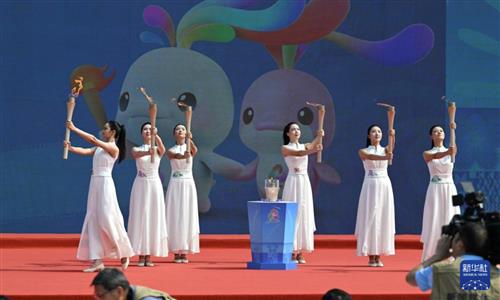
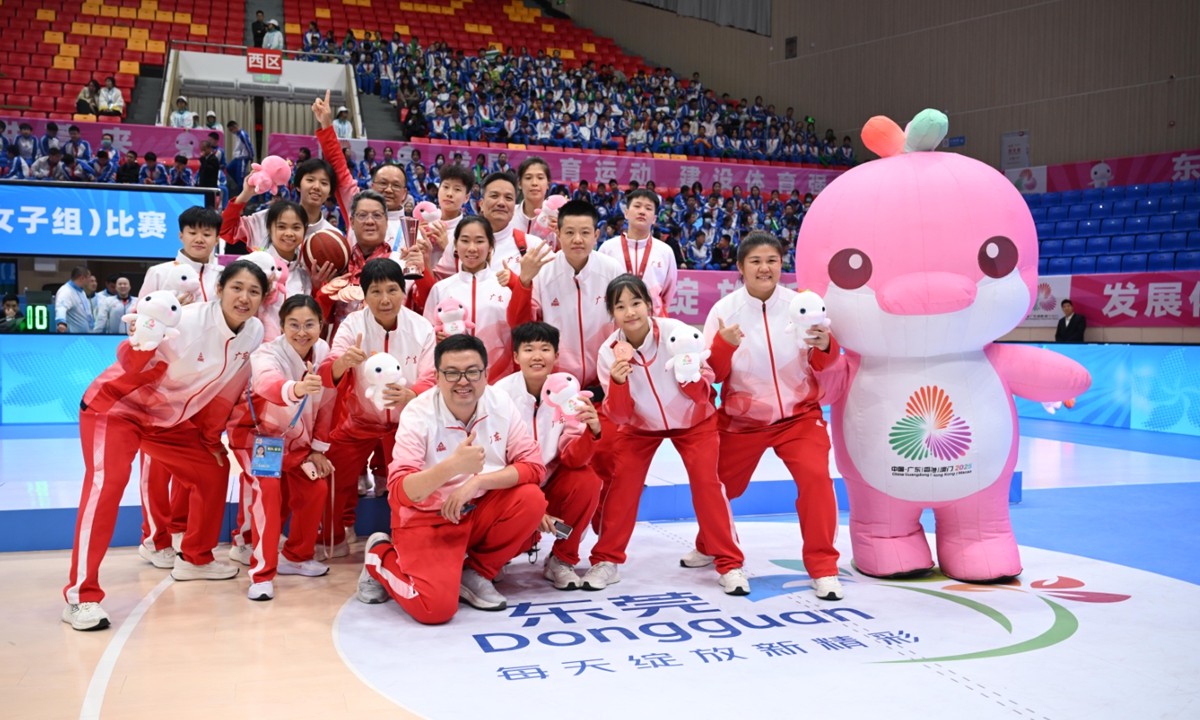
The curtain fell on the 12th National Games for Persons with Disabilities and the 9th National Special Olympics on Monday night at the Shenzhen Sports Center, closing a landmark edition of the Games that, for the first time, were jointly hosted by Guangdong Province and the Hong Kong and Macao special administrative regions.
The closing ceremony, lasting about 45 minutes, was deliberately understated yet emotionally resonant. Blending artistic performances with essential ceremonial elements such as the parade of delegations and the national anthem, the event emphasized participation over spectacle, and shared experience over grandeur.
Around 600 performers took part, including about 130 people with disabilities. The ratio of able-bodied to disabled performers stood at roughly five to one, a choice the organizers said was meant to ensure both artistic quality and safety while highlighting collaboration rather than distinction.
One of the most moving moments came during the sign-language rendition of the national anthem. Wang Yimei, an actress from the China Disabled People's Performing Art Troupe who participated in the performance, told the Global Times that hearing impairment made rehearsals particularly demanding.
"You have to control your strength, follow the rhythm, and stay perfectly in sync with others," she said. "More importantly, you need to express genuine emotion through your movements."
Another highlight featured a drum dance performed by visually impaired participants. Wang Shupei, one of the performers, said music offered him a way to experience the world beyond sight. "Even if I can't see clearly, I can hear how beautiful the world is," he said.
To ensure safety during rehearsals and performances, each blind performer was paired with an able-bodied guide, underscoring the practical cooperation behind the artistic expression on stage.
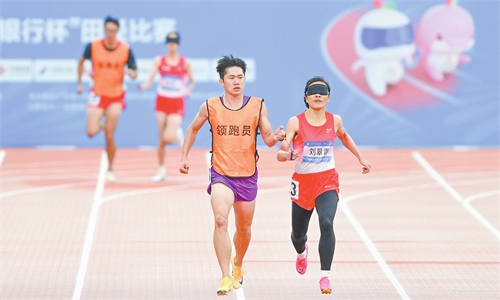
Earlier on the day of the closing ceremony, organizers released an overview of the Games' operational and competitive outcomes. In record-based events such as athletics, swimming, shooting, and track cycling, athletes broke more than 15 world records and set 156 national records, reflecting the steady advancement of China's para-sports system.
Yet beyond the numbers, many athletes said the experience itself mattered more than podium finishes. Fifteen-year-old Tashi Puntsok, a Special Olympics athlete from Southwest China's Xizang Autonomous Region, won his first gold medal at the Games. Zhou Lijiang, a table tennis player from Guizhou, described the sport as "the happiest thing in my life" in a press conference.
For 10-year-old Wang Dekang from Macao, who has autism and had trained in baseball for just three months, winning a silver medal was less significant than what the journey represented. "The real meaning of Special Olympics is taking the first step out of self-isolation," he told the Global Times on Monday.
The Games also marked a milestone for Hong Kong's para-sports development. The Hong Kong Special Administrative Region sent its largest-ever delegation, with more than 280 athletes competing across para-sports, mass participation events and Special Olympics disciplines. They finished with a total of 140 medals.
Integration across the Greater Bay Area was one of the defining features of this edition. To facilitate cross-border participation, authorities introduced a series of logistical measures, including streamlined customs procedures for food supplies, rapid clearance for doping control samples, and dedicated accessible lanes at key border crossings such as Shenzhen Bay and the West Kowloon high-speed rail station.
Hong Kong and Macao also contributed large volunteer teams, about 4,000 and 1,500 people respectively, to support competition operations, arrivals and departures, and venue guidance. Smart clearance systems and "green channels" were deployed to speed up travel for athletes and officials from 28 delegations.
Yang Tak-keung, head of Hong Kong's Games coordination office, said the joint hosting experience went beyond sports. By competing and watching events across different cities, he noted, participants and spectators gained a more tangible understanding of the Greater Bay Area's connectivity and shared future.
The Games, he added, helped deepen public recognition of inclusion, equality and participation, values that may prove just as enduring as any medal tally.
RELATED ARTICLES