ARTS / FILM
Italian film producer encourages Chinese cinema to tap into Global South creativity
Local roots, global resonance
By in Sanya Published: Dec 16, 2025 11:09 PM

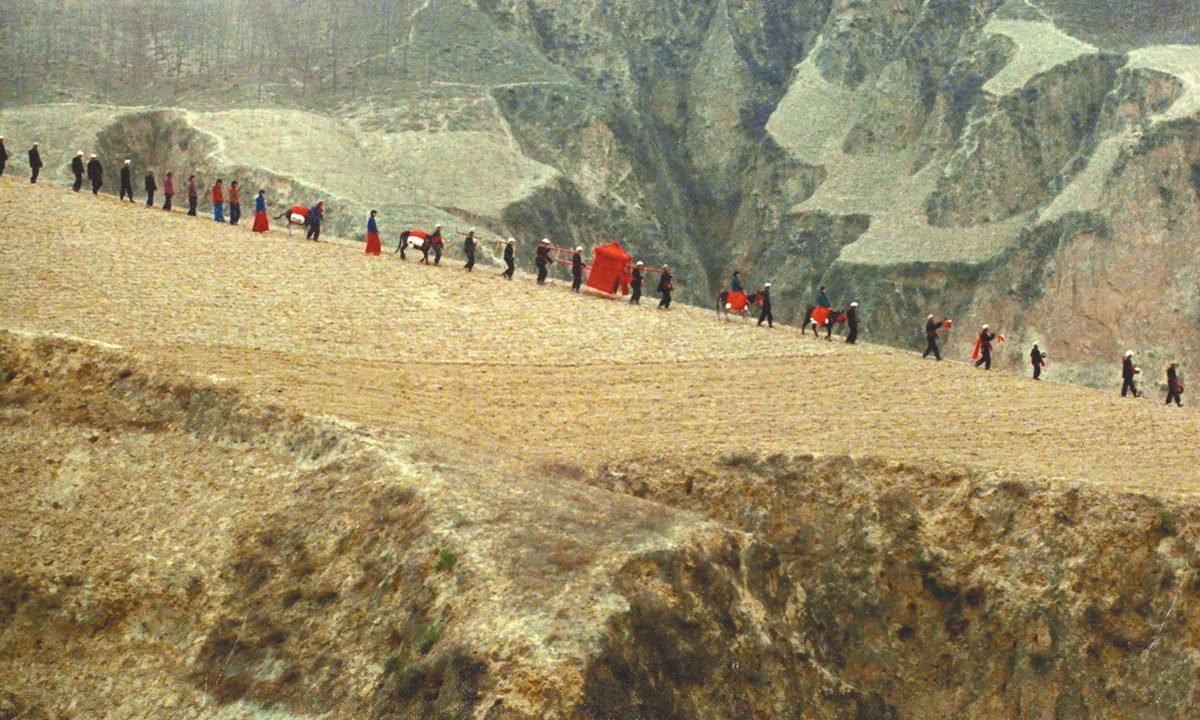
A scene from the film Yellow Earth Photo: Courtesy of Douban
When the National Film Administration announced on Saturday that China's 2025 box office had surged past the 50-billion-yuan ($7.08 billion) mark, it confirmed what industry observers had anticipated: a year of dual triumphs. This robust commercial milestone at home was mirrored by artistic recognition abroad, with Chinese films winning awards at international film festivals in Berlin, Cannes, and Venice. Yet beneath this success lies a more complex narrative and a pressing question: How does a cinematic powerhouse convert this momentum into sustained global resonance?
To explore this, the Global Times spoke with Marco Müller, an Italian film critic, film producer, and former artistic director of many international film festivals. In an exclusive interview, enriched by insights from his recent masterclass at the Hainan Island International Film Festival, Müller offers invaluable insights into the industry's evolution and future path based on his decades of collaboration with China's leading filmmakers.
A new wave
Müller's journey with Chinese cinema is deeply intertwined with the country's fifth-generation directors, a connection forged by shared generational roots.
"Except for Zhang Yimou, the eldest of the group, and Liu Miaomiao, the youngest, most fifth-generation directors like Chen Kaige were born in 1952, or 1953, the same year as me," he said in the master class.
He added that this kinship fostered unparalleled trust: Directors shared unfinished cuts of their films with him, viewing him not merely as a Venice Film Festival selector but as a peer and artistic confidant.
During his tenure as a member of the selection committee for the Venice International Film Festival in the 1980s, Müller, shortly after assuming his role, submitted Ling Zi's film The Savage Land to Venice, making it the first film from the Chinese mainland to participate in a major international film festival after the country's reform and opening-up. He also introduced Chen Kaige's Yellow Earth to the Locarno Film Festival, where it won the Silver Leopard Award. Similarly, the first film from the Chinese mainland to win an award at the Venice International Film Festival, Zhang Yimou's Raise the Red Lantern, was also recommended by him, the paper.cn reported.
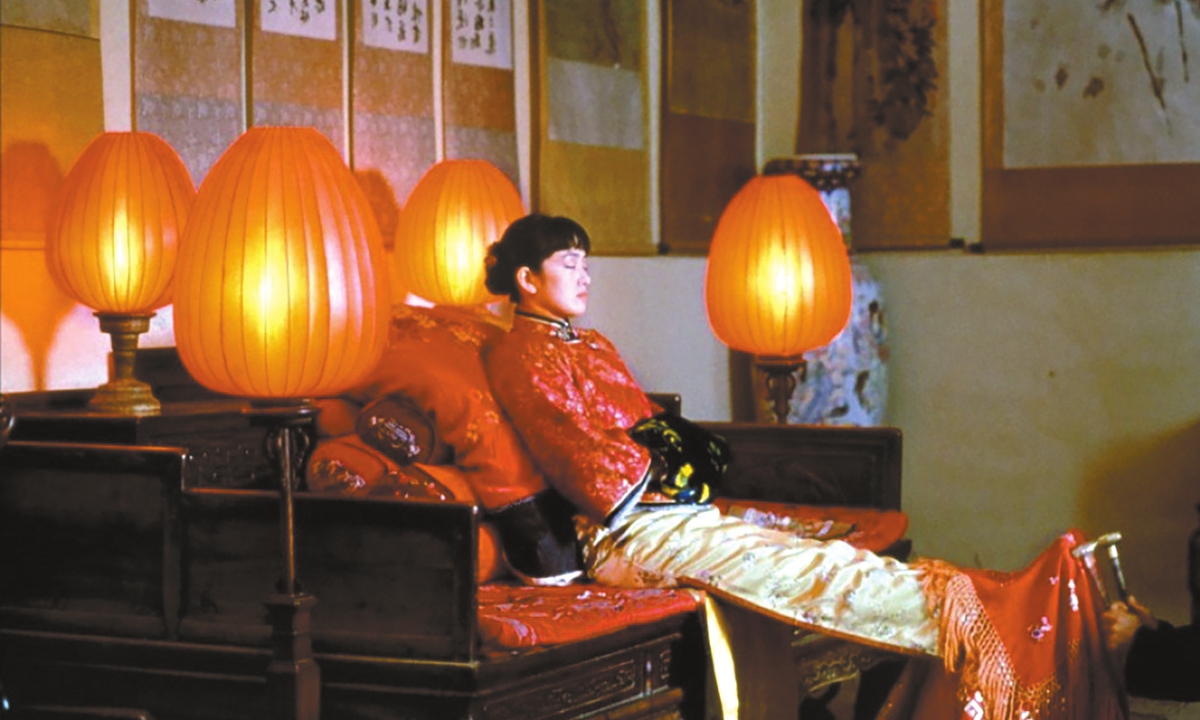
Actor Gong Li in the film Raise the Red Lantern Photo: Courtesy of Douban
Beyond the close friendships, Müller said that his perspective is also deeply informed by history.
"It was really the spirit of the times," he told the Global Times during the interview, recalling the simultaneous emergence of new wave cinema from the Chinese mainland, Hong Kong, and Taiwan in the late 20th century, a period of extraordinary creative ferment.
A key driver of this revolution, Müller emphasized, was a government policy that assigned newly graduated film academy students to studios across China, from Xi'an in Northwest China to Shanghai, Beijing, the northeast and southwest… This policy allowed directors to fully immerse themselves in local cultures, dialects and realities, creating a diversified cinema rooted in specific places.
"Liang Ming, the pioneering northeastern director, used Dongbei (Northeast China) dialect in his films, and that defined a new film language. Xi'an, too, became a creative hub thanks to Wu Tianming, who gathered filmmakers to foster a distinct northwest cinematic style," Müller recalled.
This regional authenticity, Müller stressed, was the secret to global resonance.
"Those films weren't about abstract people in abstract places, they spoke of concrete historical conditions and the feeling of the soil," he told the Global Times.
He cited Xie Jin, the Chinese legendary director revered for balancing artistic excellence and mass appeal, as a guiding light. While fifth-generation directors initially sought to distance themselves from predecessors like Xie, the rigid "generation" labels have faded and been replaced by more organic identities like "Sichuan cinema," "Yunnan cinema" or "Cantonese cinema."
"What matters is that filmmakers respond to the life experiences of their specific regions, and that's what makes stories universal," Müller argued.
Global ambition
As Chinese cinema celebrates its 2025 box-office feat, Müller outlined clear steps to amplify its global footprint: starting with embracing the Global South.
"Filmmakers and audiences in China should pay more attention to cinema from the Global South. It's a gold mine of creativity, not just in terms of politics or economics," he urged.
He further explained to the Global Times that early Chinese cinema captivated the world because its unique grammar stood apart from Soviet or Hollywood influences, just as Global South films offer fresh perspectives today.
Müller, who first fell in love with Chinese cinema for its distinctiveness, emphasized that "a good story has no borders precisely because it is deeply local."
This year's international accolades, including two awards at Berlin, one at Cannes and one at Venice, prove global audiences crave authentic Chinese narratives. But Müller pointed out that festival recognition alone is insufficient.
"Global sales companies play a crucial role," he said. "They understand global market mechanisms and can help refine films, adding visual context, not explanatory footnotes, to make multilayered stories accessible without losing cultural integrity."
Funding for post-production, Müller warned, remains a critical gap for young directors.
He shared the story of the low-budget Chinese film Stars and the Moon. He recounted that the production team lacked money for proper music and only secured it six months later, yet the film still got the nominations for the San Sebastian Film Festival and won the Best Director award at the Pingyao International Film Festival
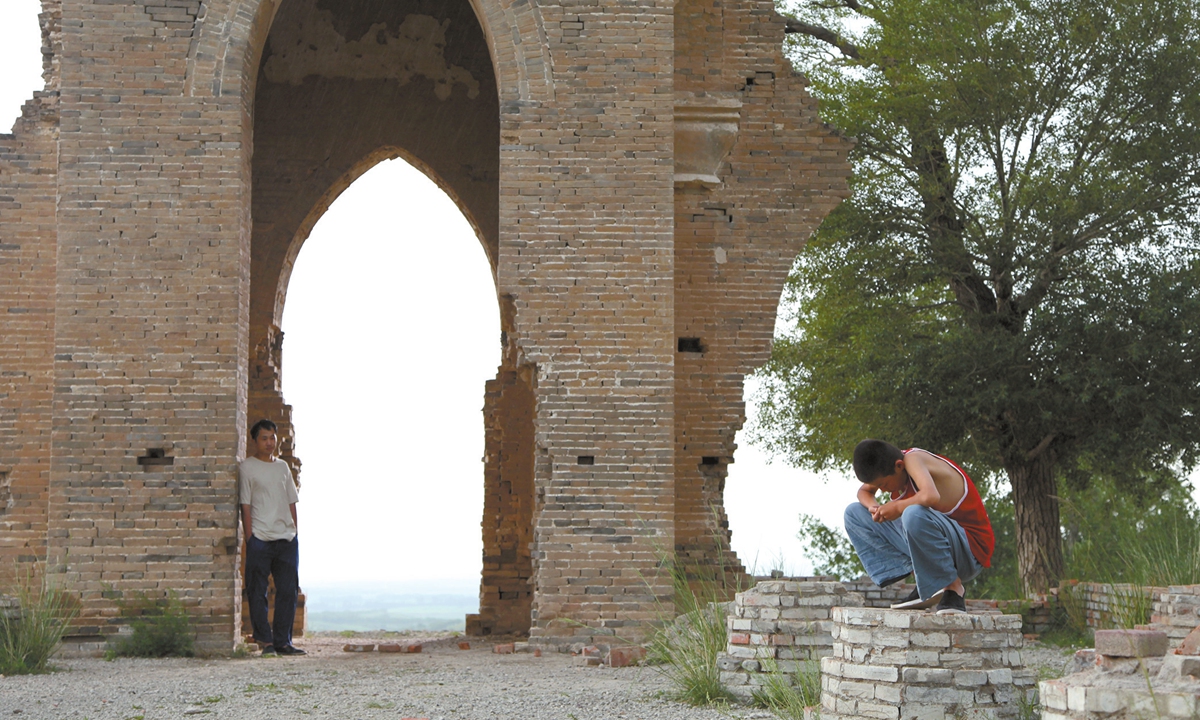
Promotional material for the film Stars and the Moon Photo: VCG
"Many promising filmmakers just need extra budget to polish their work. Expanding regional government support schemes, as Italy does, would make a world of difference," he said.
Müller expressed optimism about China's new generation of directors, having recently screened graduation films from the Beijing Film Academy and Shanghai Film Institute.
"I saw fascinating works from Henan, Heilongjiang, Hebei and beyond, films exploring uncharted territories and creating new genres," he said, adding that these young filmmakers understand local storytelling, and with the right support, they can carry forward the spirit of localized film to the world.
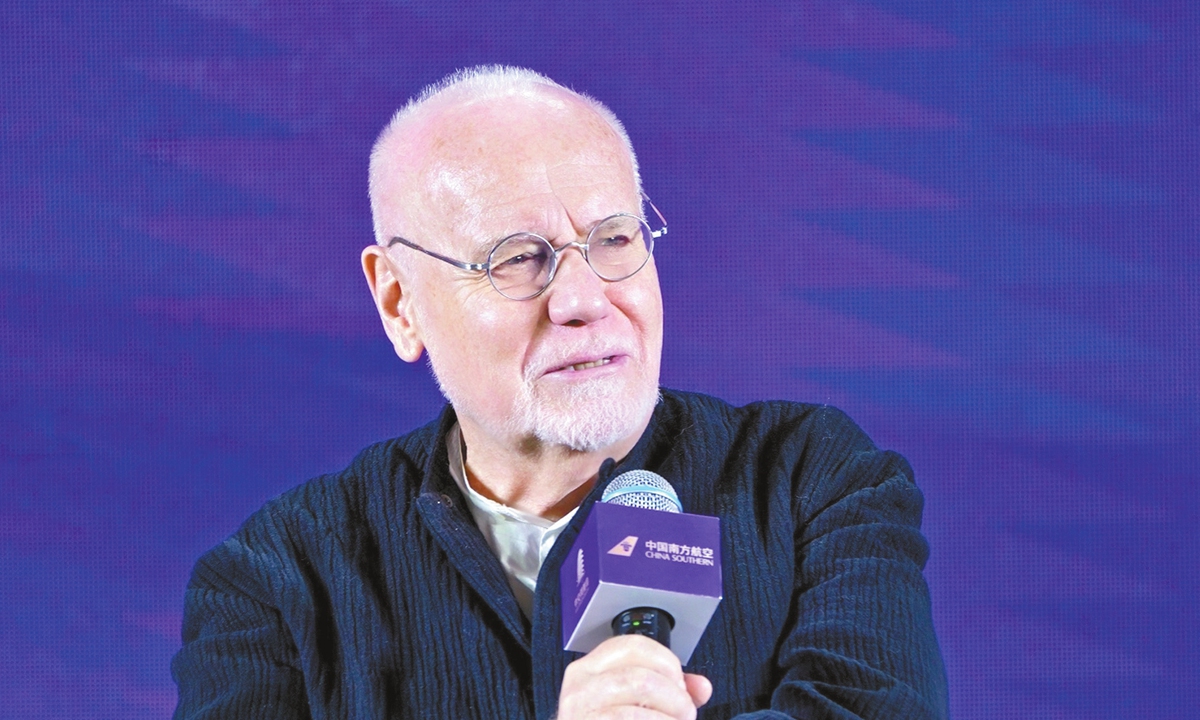
Marco Müller, the Italian film producer Photo: Courtesy of Hainan Island International Film Festival
RELATED ARTICLES